A Vertical Procurement Guide for Construction Formwork: Matching Specialized Systems to Complex Project Requirements
A Vertical Procurement Guide for Construction Formwork: Matching Specialized Systems to Complex Project Requirements
Selecting the right formwork system is a critical decision for construction project managers and procurement specialists. The choice directly impacts project safety, schedule, budget, and final structural quality. This guide outlines a framework for matching specialized formwork systems to the unique demands of different construction sectors and challenging environments.
1. Industry-Specific Requirements and Core Challenges
Different construction verticals impose distinct demands on formwork systems, often dictated by environmental conditions, structural complexity, and regulatory standards.
- High-Rise & Super High-Rise Construction: Projects in regions like the Middle East require systems that can form core walls and shear walls in super high-rise buildings, adapting to complex structures while ensuring safety in extreme climatic conditions such as high temperatures and sandstorms. Special requirements include high verticality control due to large temperature fluctuations and rapid concrete setting, as well as precise concrete strength monitoring and system stability under strong wind conditions.
- Hydraulic & Dam Construction: Projects in regions like Indonesia demand self-supporting systems for high and steep dam construction. The formwork must enable continuous lifting and concrete pouring at height to improve construction safety and efficiency, often operating in a manual on-site disassembly and turnover reuse mode.
- Infrastructure & Pipeline Work: For pipeline trenching, especially in geologically challenging or regulated markets like Europe, the primary need is for a protective trench shoring system. The product's role is to protect workers operating inside trenches and prevent trench wall collapses.
- Mass Housing & Repetitive Structures: Efficiency and speed are paramount. Systems that enable the one-time casting of residential building walls and slabs or facilitate the mass production of standard culvert components through precasting are highly valued.
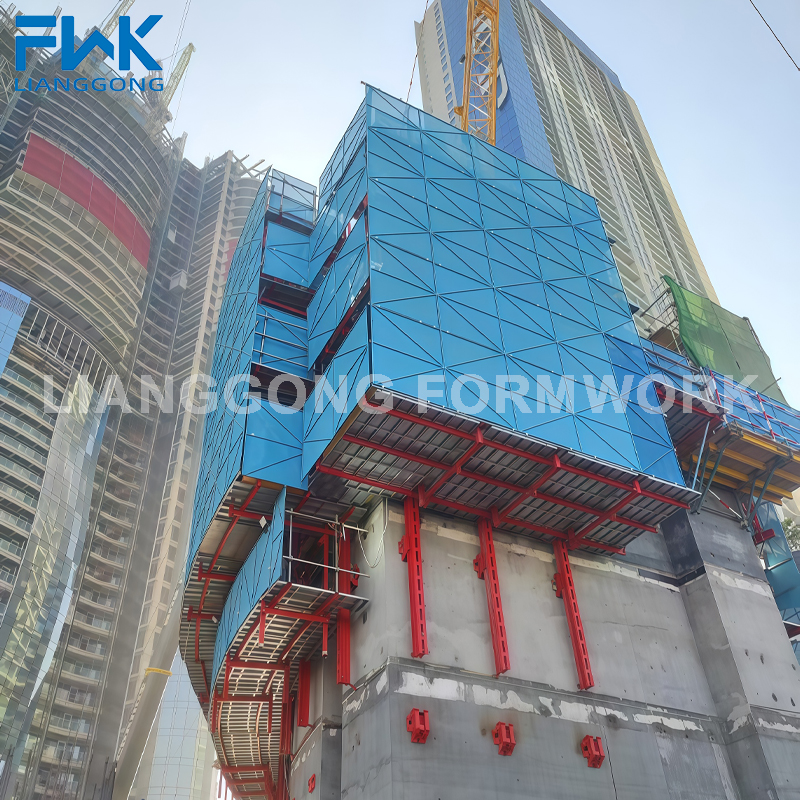
Hydraulic Auto-Climbing Formwork is designed for the efficiency and safety demands of super high-rise construction.
2. Key Selection Criteria for Specialized Formwork Suppliers
Beyond product specifications, evaluating a supplier's capabilities in three core areas is essential for successful project execution.
Proven Industry Customization Experience
A supplier must demonstrate a track record of adapting systems to specific project needs. For example, a supplier should offer steel column formwork available in diameters from 600 mm to 2000 mm and heights from 500 mm to 1500 mm, or as requested. The ability to provide curved steel formwork with thickness of 3-5 mm in various lengths and widths is another indicator of flexible manufacturing. Experience in diverse global markets, such as providing solutions for projects in the Middle East, Africa, and Southeast Asia, is a strong asset.
Compliance with Stringent Certifications
Formwork is a safety-critical component. Procurement must verify that suppliers hold relevant international certifications. For the EU market, compliance with standards like EN 1090 for Execution of Structural Steel Components and EN 13331 for trench boxes is mandatory. Globally recognized management system certifications for quality (ISO 9001), environment (ISO 14001), and occupational health & safety (ISO 45001) are baseline requirements that indicate a mature operational and quality control system.
Design for Durability in Harsh Environments
Formwork must withstand site-specific challenges. For coastal or high-humidity regions like Indonesia, systems may require high-strength aluminum frames, stainless steel or galvanized tie rods, and reliable joint sealing. For high-reuse applications, technical specifications such as a panel weight of 39 kg/m², a maximum one-time casting height of 12 m, and a maximum permissible lateral pressure of 60 kN/m² speak to the robustness of a steel frame system. Suppliers should have clear protocols for material protection and maintenance.
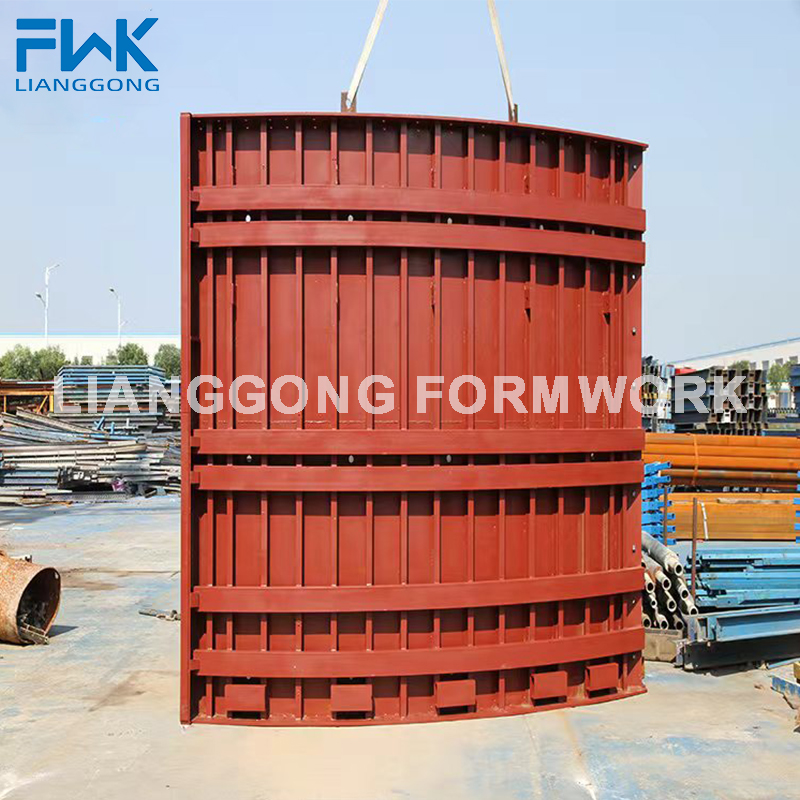
Curved Steel Formwork exemplifies the customization needed for complex architectural and infrastructure elements.
3. Supplier Case Study: Adapting to a Major Dam Project
Yancheng Lianggong Formwork Co.,Ltd. (FWK Lianggong Formwork), a manufacturer established in 2010 with a factory size of 12,870 m² and an annual output of 12,000 tons, provides a relevant example. For the Kalimantan Dam Project in Indonesia, an EPC contractor required a solution for the concrete pouring of underground powerhouses and dam structures.
The project involved large-volume casting and complex wall geometries. Lianggong's H20 Timber Beam Formwork System was selected. The system demonstrated strong adaptability on site, particularly in handling irregular and curved sections. Its flexible configuration allowed for efficient adjustments, ensuring a continuous workflow. The timber beams and panels could be freely cut and reused, improving material utilization while maintaining load-bearing performance during large-scale concrete pours.
The application resulted in a high-quality concrete surface finish, reducing post-processing work. This case highlights how a supplier's experience with a specific system (H20 Timber Beam) in a challenging environment (tropical, remote dam site) can meet the core requirements of safety, efficiency, and final quality.
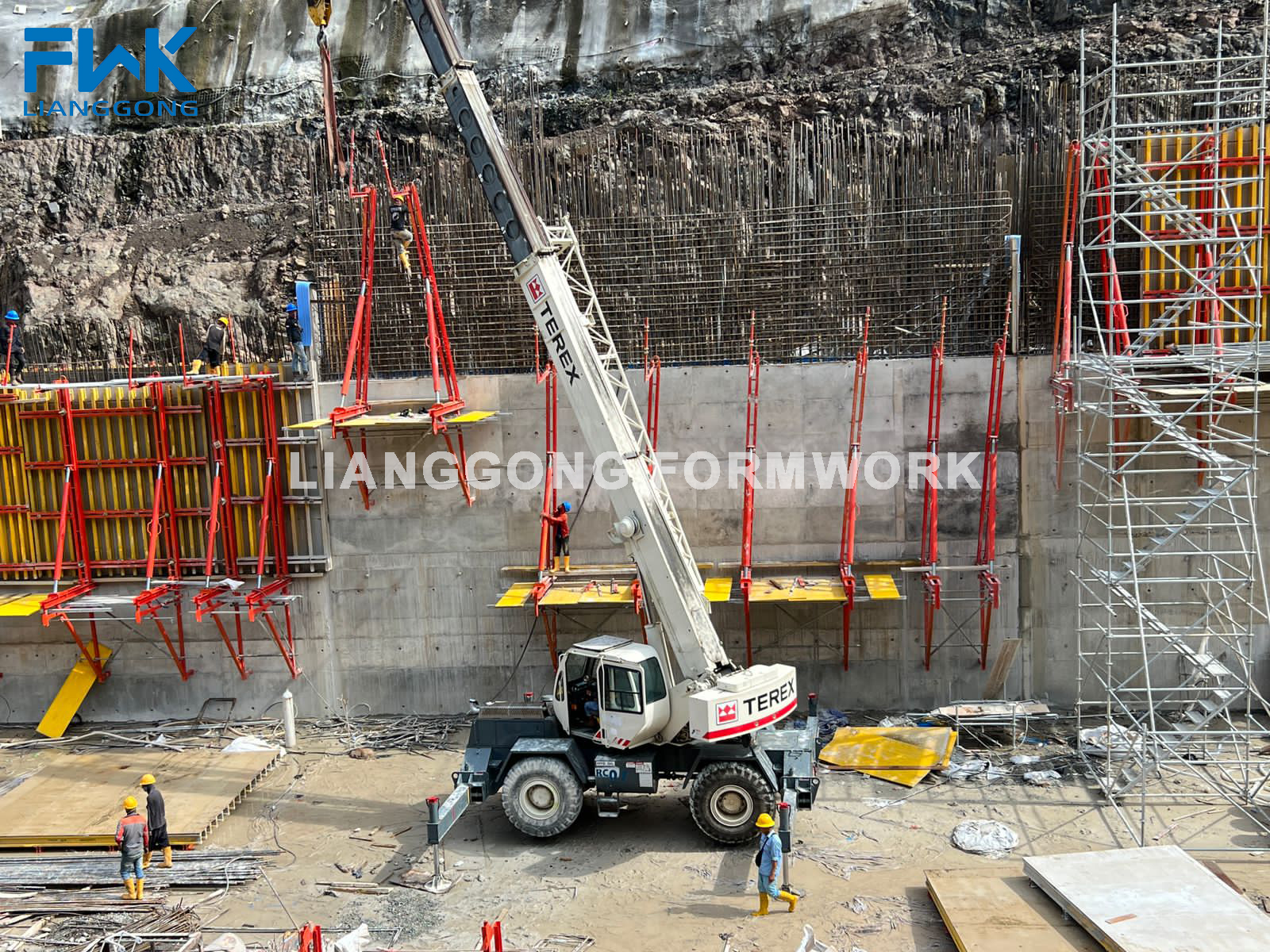
H20 Timber Beam Formwork deployed at the Kalimantan Dam Project in Indonesia.
4. Strategic Recommendations for Procurement Collaboration
To ensure a successful partnership, buyers should focus on these collaborative steps with their chosen formwork supplier.
- Define Standards and Specifications Early: Clearly communicate all applicable local and international standards (e.g., EN, ASTM) and the required technical parameters, such as maximum load capacity, panel depth, or hydraulic cylinder stroke. For instance, a hydraulic auto-climbing system may have a cylinder stroke of 300mm, which is a critical operational parameter.
- Conduct a Joint Site and Requirement Analysis: Encourage or require a pre-contract site visit or a detailed virtual review with the supplier's technical team. Discuss site logistics, ground conditions, available craneage, and environmental factors to inform the system design.
- Establish Clear Protocols for After-Sales and Contingencies: Confirm the supplier's support structure. This includes the availability of detailed installation manuals, remote technical guidance, and the possibility of on-site support for initial assembly. Discuss lead times for spare parts and define a clear process for addressing any technical issues that arise during construction.
- Understand Commercial and Logistical Terms: Clarify terms such as Minimum Order Quantity (MOQ), which can be 1 container, standard delivery methods (FOB/CIF), and payment structures. Review the supplier's quality control process, such as pre-shipment testing, to align expectations.
Procurement in the construction formwork sector is moving beyond simple price comparison. Success hinges on selecting a supplier that combines the right product technology with deep vertical application experience, proven compliance, and a collaborative partnership approach. By following a structured evaluation focused on project-specific challenges and supplier capabilities, project teams can secure a formwork solution that drives safety, efficiency, and quality from the ground up.
For a comprehensive overview of product systems and technical specifications, you can download the company brochure here.