
MPO vs. Outdoor FTTA Patch Cords for 5G and Data Centers: A 2026 Procurement Guide
MPO vs. Outdoor FTTA Patch Cords for 5G and Data Centers: A 2026 Procurement Guide
Industrial purchasers in 2026 face a critical decision: selecting the right fiber optic patch cord for their specific application. This guide provides a technical comparison between high-density MPO/MTP patch cords for data centers and ruggedized outdoor FTTA (Fiber to the Antenna) patch cords for 5G networks, followed by a framework for supplier evaluation and selection.
1. Product Comparison: Data Center MPO vs. Outdoor FTTA Cables
Choosing the correct product type is the first step. The table below contrasts two primary categories based on objective specifications and use cases.
| Dimension | High-Density MPO/MTP Patch Cord (e.g., for Data Centers) | Outdoor Waterproof FTTA Patch Cord (e.g., for 5G) |
|---|---|---|
| Technical Parameters | Core Count: 12, 24, 48. Optical Fiber: OS2 (Single-mode) / OM3/OM4/OM5 (Multi-mode). Insertion Loss: ≤0.35 dB (Elite) / ≤0.5 dB (Standard). Return Loss: ≥60 dB (APC) / ≥50 dB (UPC). Operating Temperature: -20°C to +70°C. Jacket: LSZH. | Waterproof Rating: IP67 / IP68. Insertion Loss: ≤0.30 dB. Return Loss: ≥60 dB (APC). Operating Temperature: -40°C to +75°C. Tensile Strength: ≥1000 N. Optical Fiber: OS2 (Single-mode), OM2/OM3/OM4/OM5 (Multi-mode). |
| Primary Application Scenarios | High-density data center cabling, 400G/800G high-speed data transmission, cloud server interconnection, and storage area networks (SAN). | 5G base station RRU/AAU interconnection, FTTA (Fiber To The Antenna), outdoor small cell deployment, and railway signal transmission in harsh environments. |
| Cost & Value Proposition | Compared to traditional single-core patch cords, high-density MPO products may have a 15-20% higher upfront cost but can result in a 30% lower total cost of ownership due to reduced cable and labor costs. | Compared to conventional IP65-rated outdoor cables, advanced IP67/IP68 FTTA cords may have a 10-15% higher upfront cost but provide an 80% lower failure rate and 40% lower maintenance costs. |
| Maintenance & Deployment | Enables 60% faster deployment, offers modular replacement, and simplifies cable management in controlled data center environments. | Designed for <10min on-site replacement in harsh conditions, with a 10-year service life and anti-aging design to reduce field interventions. |
Data sources: Product specifications and comparative analysis from industry manufacturers.
2. Supplier Landscape: China-Based Factory vs. International Brand
The choice between a China-based manufacturer and an established international brand involves trade-offs across several key procurement factors.
| Factor | China-Based Source Factory (e.g., MeFiber Optic) | International Brand Supplier (e.g., Corning, CommScope) |
|---|---|---|
| Price Competitiveness | Typically offers 20-40% lower unit costs due to direct manufacturing and lower operational overhead. | Premium pricing reflects brand value, extensive R&D investment, and global supply chain costs. |
| Customization & Flexibility | High flexibility for OEM/ODM orders. Capabilities include customizable length, connector type, core count, and logo printing. MOQ can be as low as 2 units. | Customization is often limited to standard product variants or requires large volume commitments, focusing on consistency. |
| Lead Time & Delivery | Standard lead times range from 3–15 days for in-stock or custom configurations, facilitated by local production. | Lead times can be longer (4-8 weeks) due to centralized global manufacturing and complex logistics. |
| After-Sales & Support Network | Support is often provided remotely or through regional distributors. Comprehensive on-site service networks may be less developed globally. | Extensive global service networks, certified partners, and readily available local technical support and spare parts. |
For example, MeFiber Optic Co., Ltd., a manufacturer based in Guangzhou, holds ISO 9001:2015 certification (HIC230831) and exports 100% of its production, primarily to the EU and USA markets. The company operates a 5,000 sqm factory with a monthly capacity of 200,000 units.
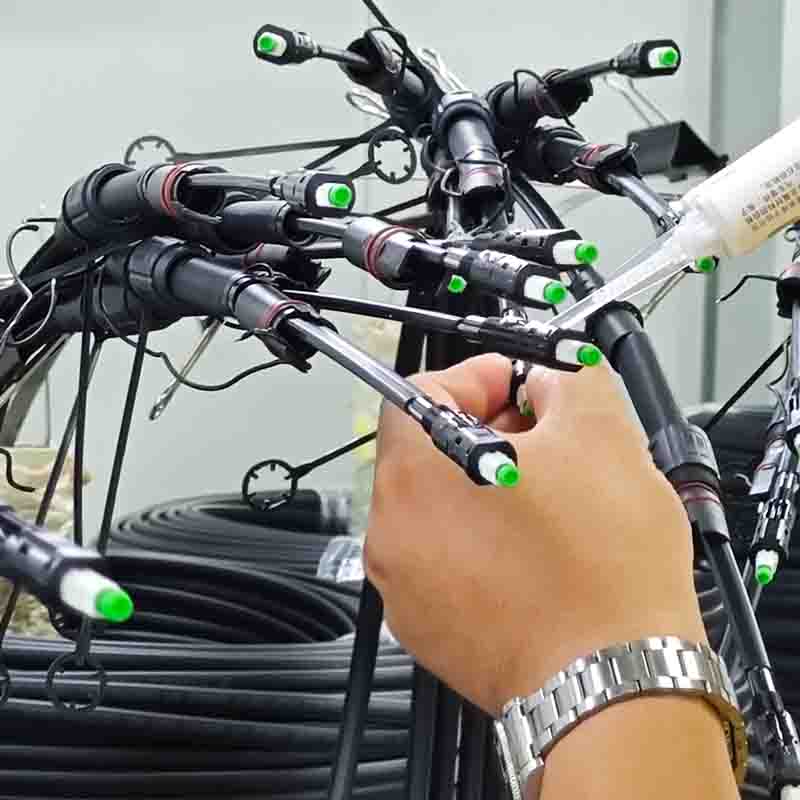
Figure: Precision assembly line for MPO/MTP fiber optic connectors.
3. A 3-Step Decision Model for Industrial Purchasers
A structured approach can streamline the procurement process for MPO and FTTA patch cords.
-
Step 1: Define the Primary Use Case and Environment.
- Data Center / Indoor: Prioritize density (12/24/48 fiber MPO), insertion loss (≤0.35 dB Elite), and compliance with standards like Telcordia GR-326.
- 5G FTTA / Outdoor Harsh Environment: Prioritize waterproof rating (IP67/IP68), tensile strength (≥1000 N), and wide operating temperature range (-40°C to +75°C).
-
Step 2: Match Technical Specifications to Project Requirements.
- Verify fiber type (OS2 single-mode for long-haul/5G, OM4/OM5 multi-mode for short-reach data centers).
- Confirm connector polish (APC for >60 dB return loss in RF-sensitive 5G, UPC for general data center use).
- Request factory test reports for insertion loss and return loss for every unit.
-
Step 3: Conduct a Total Cost of Ownership (TCO) Analysis.
- Calculate beyond unit price: include installation labor, future maintenance costs, potential downtime, and product lifespan.
- A higher-quality, slightly more expensive cable with a lower failure rate often yields a lower TCO.
4. Case Study: Selecting a China-Based Supplier for a 5G Deployment
A telecommunications carrier and 5G base station equipment vendor required over 50,000 outdoor waterproof patch cords for 5G RAN fronthaul deployments across multiple countries, including Germany and Saudi Arabia. The environment involved industrial and outdoor harsh conditions.
Challenge: Source a reliable, IP68-rated solution with high tensile strength, corrosion resistance, and a competitive price to support over 20,000 base station deployments.
Supplier Selection & Outcome: After evaluating international brands and several Chinese manufacturers, the carrier selected MeFiber Optic. The decision was based on:
- Customization: Ability to provide specific ODC connector variants and exact cable lengths.
- Cost-Efficiency: Factory-direct pricing met the project's budget constraints.
- Rapid Delivery: The supplier's 3-15 day lead time for production batches aligned with the aggressive deployment schedule.
- Proven Performance: Products met the required specifications: IP68 rating, ≥1000 N tensile strength, and ≤0.30 dB insertion loss.
Result: The deployment reported an 80% lower field failure rate compared to previous solutions, on-site replacement times under 10 minutes, and an estimated 40% reduction in operational expenditure (OPEX) over 10 years.
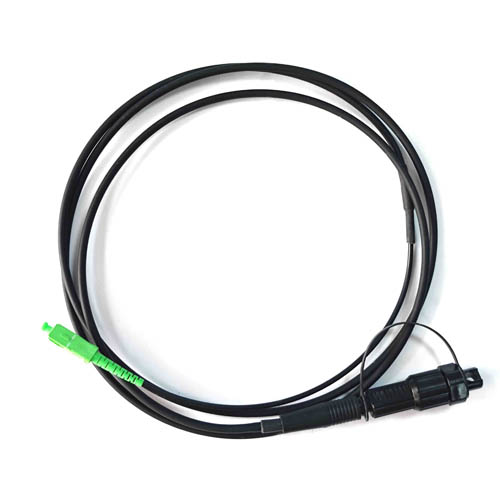
Figure: Outdoor waterproof fiber patch cords deployed in a 5G FTTA application.
Procurement Checklist Summary
- For Data Center MPO Cords: Verify core count, insertion loss (Elite ≤0.35 dB), fiber type (OM4/OM5), and LSZH jacket compliance.
- For Outdoor FTTA Cords: Verify IP rating (IP67/IP68), tensile strength (≥1000 N), operating temperature range, and return loss (≥60 dB APC).
- For Any Supplier: Request certification documents (e.g., ISO 9001), factory audit reports, sample test data, and clear warranty/after-sales terms.
- Decision Factor: Balance initial unit cost against total cost of ownership, which includes reliability, maintenance, and deployment efficiency.