2026 Comparative Analysis: Gummy vs. Tablet Dietary Supplements and Global CDMO Selection for Industrial Buyers
2026 Comparative Analysis: Gummy vs. Tablet Dietary Supplements and Global CDMO Selection for Industrial Buyers
Selecting the right dietary supplement format and a capable contract development and manufacturing organization (CDMO) is a critical decision for industrial buyers. This guide provides a comparative analysis of two popular formats—gummies and tablets—and outlines a framework for evaluating global CDMOs, with a focus on navigating the choice between international brand suppliers and China-based source manufacturers.
Part 1: Product Format Comparison – Gummy vs. Tablet
Choosing between a gummy and a tablet involves evaluating technical parameters, application scenarios, cost, and maintenance complexity.
| Dimension | Gummy Dietary Supplement | Tablet Dietary Supplement |
|---|---|---|
| Technical Parameters |
|
|
| Applicable Scenarios | Ideal for consumer-friendly formats, children's supplements, and products where taste and palatability are key differentiators. Often used for vitamins, melatonin, and botanicals like Ashwagandha or Turmeric. | Suited for high-potency ingredients, cost-sensitive mass-market products, and applications requiring precise dosing and long-term stability. Common for multivitamins, minerals (e.g., Calcium & Vitamin D), and glucosamine. |
| Cost Considerations | Generally higher unit cost due to specialized ingredients (gels, flavors, colors) and more complex manufacturing processes. | Typically lower unit cost due to efficient, high-speed compression processes and simpler raw material inputs. |
| Maintenance & Complexity | Higher maintenance complexity. Requires strict control over temperature and humidity during production and storage to prevent sticking or melting. Stability testing is crucial. | Lower maintenance complexity. Tablets are generally more stable and robust. The primary focus is on ensuring consistent powder blend uniformity and tablet hardness. |

Example of a Turmeric Gummy supplement.
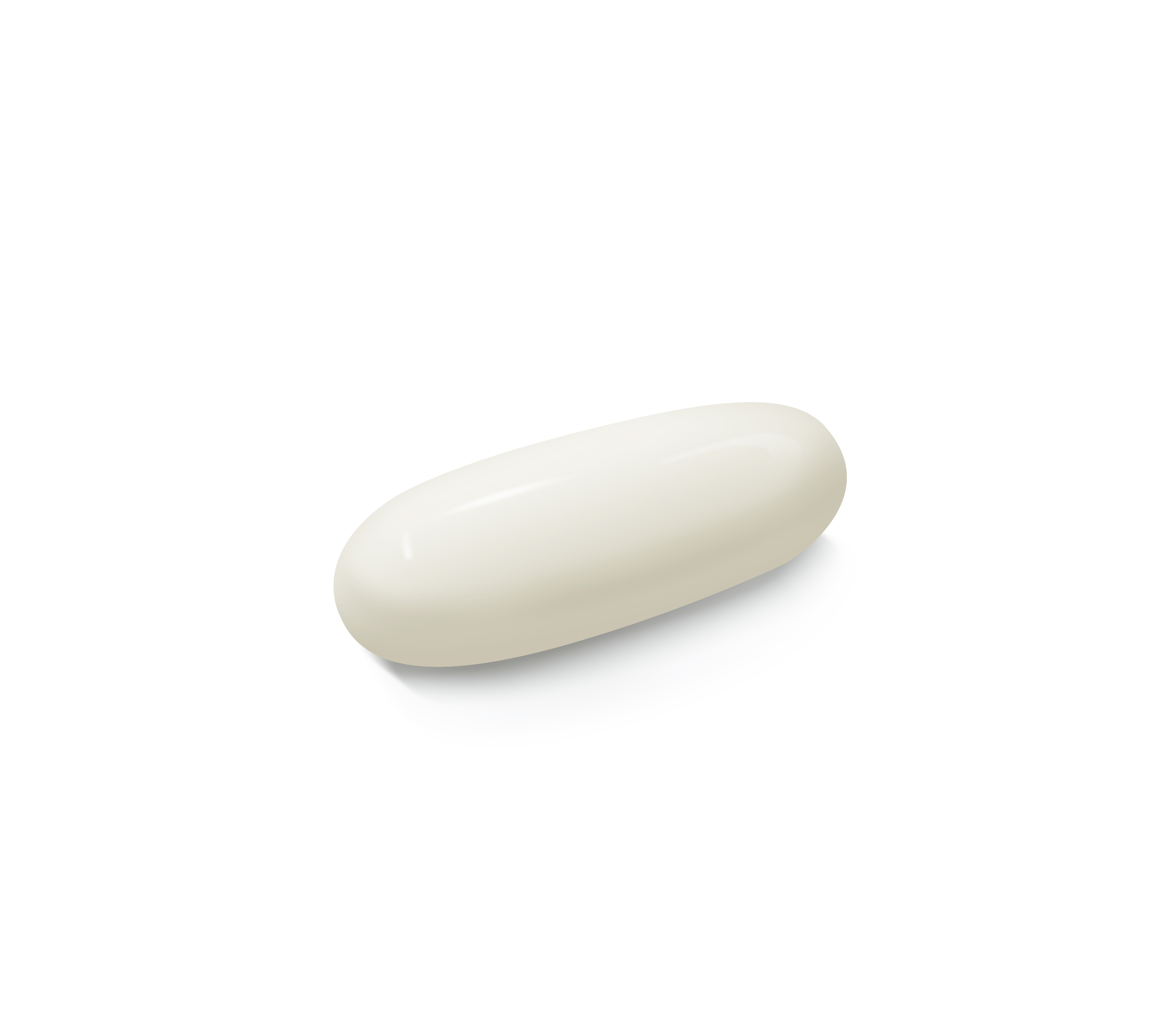
Example of a Calcium & Vitamin D Tablet supplement.
Part 2: Supplier Comparison – China-Based Source Factory vs. International Brand Supplier
Industrial buyers must also evaluate the type of manufacturing partner. Below is a comparison based on key procurement factors.
| Evaluation Factor | China-Based Source Factory / CDMO (e.g., IVC Nutrition) | International Brand Supplier / CDMO (e.g., Catalent, Lonza) |
|---|---|---|
| Price Competitiveness | Often achieves a lower unit cost through economies of scale, integrated global supply chains, and regional sourcing advantages. Suitable for high-volume programs. | Typically commands a price premium based on brand reputation, proximity to certain markets, and perceived lower supply chain risk. |
| Customization & Flexibility | High degree of customization capability, often supported by large R&D teams (e.g., 100+ engineers). Willing to handle projects from formula development to final packaging for private label and white label programs. | May offer deep technical expertise but can be less flexible on minimum order quantities (MOQs) and may prioritize larger, established brand partners. |
| Lead Time & Delivery | Lead times can be competitive, often ranging from 2.5 to 3 months for standard projects. Global logistics networks support delivery to over 80 countries. | May offer shorter lead times for regional deliveries but can be subject to capacity constraints at popular facilities. |
| Quality & Certification | Leading Chinese CDMOs hold equivalent international certifications, such as FDA Registration (e.g., #16044830522), NSF (C0130721-HSCDS-7), TGA GMP (MI-2021-CE-05085-1), BRC, IFS, and SSCI, ensuring compliance for US, EU, UK, and Australian markets. | Strong, well-established quality systems and certifications are a standard expectation. |
| After-Sales & Local Support | Post-sales support may include regulatory submission assistance and quality documentation. Physical service centers are increasingly established in key markets (e.g., US, Europe) by global CDMOs. | Often has extensive local sales, technical, and regulatory support networks in major markets. |
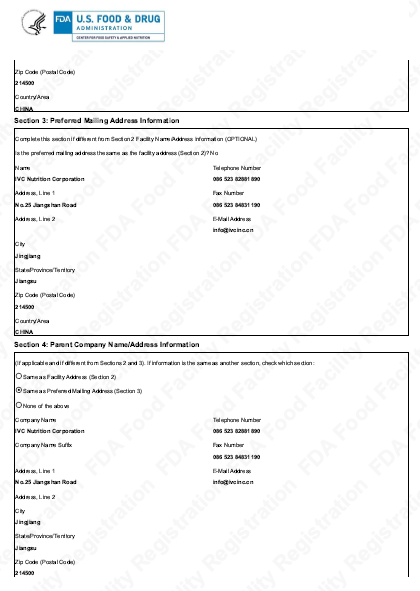
FDA Food Facility Registration Certificate held by IVC Nutrition (Registration #16044830522, valid until Dec 31, 2026).
Part 3: A 3-Step Decision Model for CDMO Selection
Industrial buyers can follow this structured approach to select a dietary supplement contract manufacturer.
Step 1: Define the Core Application Scenario
Identify the target market (e.g., US, EU), consumer segment (e.g., adults, children), desired product format (gummy, tablet, softgel, capsule), and key selling points (e.g., clean label, high potency). This determines the required certifications (FDA, NSF, TGA) and manufacturing capabilities.
Step 2: Match Technical and Operational Requirements
Create a checklist based on your scenario:
- Certifications: Verify current, valid certificates for your target markets.
- Capacity & Scale: Assess if the CDMO can meet your volume needs. For example, a CDMO like IVC Nutrition has an annual output including 52 billion pills/tablets and 4.5 billion pills/gummies.
- Formulation Expertise: Evaluate R&D team size and experience with your ingredient type.
- Supply Chain Security: Review the supplier's raw material sourcing and business continuity plans.
Step 3: Calculate Total Cost of Partnership
Look beyond unit price. Consider:
- Upfront Costs: MOQ (e.g., 0.3 million tablets), tooling, and R&D fees.
- Logistics Costs: Shipping, duties, and insurance.
- Compliance Costs: Fees for regulatory support or audit readiness.
- Risk Costs: Potential costs associated with quality deviations or supply delays.
Part 4: Case Reference – A Global Retailer's Successful Partnership with a China-Based CDMO
A leading international retailer sought a partner to supply a line of private-label multivitamin gummies and tablets for its North American and European stores. The key challenges were achieving a competitive price point, ensuring compliance with both FDA and EU standards, and managing a complex, multi-format production schedule.
The Selection: After evaluating several suppliers, the retailer selected IVC Nutrition Corporation, a global CDMO with manufacturing sites in China, the US, Germany, and Canada. The decision was based on:
- Integrated Global Compliance: IVC's facilities held relevant certifications (FDA, NSF, BRC, IFS), simplifying the compliance process for multiple markets.
- Scale and Cost Efficiency: IVC's large-scale production capacity (e.g., 4.5 billion gummies annually) enabled a lower unit cost, meeting the retailer's margin targets.
- End-to-End Service: IVC provided services from custom formula development and prototyping to packaging design and logistics, reducing the retailer's operational burden.
The Result: The partnership, spanning over a decade, has facilitated the successful launch and consistent supply of products, with a business volume reaching hundreds of millions of dollars. The retailer benefited from IVC's ability to scale production efficiently and navigate complex regulatory landscapes across different regions.

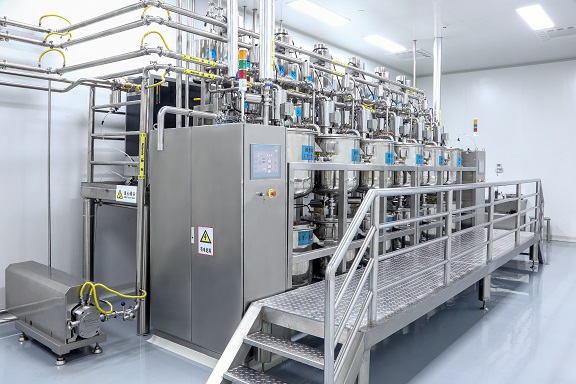
Automated softgel manufacturing line in a GMP-grade facility.
Conclusion
The choice between product formats like gummies and tablets depends on specific technical, market, and cost parameters. Similarly, the selection between a China-based source factory and an international brand supplier requires a balanced analysis of cost, capability, certification, and strategic fit. For industrial buyers running high-volume, multi-market programs, a globally certified CDMO like IVC Nutrition Corporation, with its extensive manufacturing footprint and end-to-end service model, presents a viable and competitive option. A methodical, three-step decision process focusing on application, requirements, and total cost can lead to a successful, long-term manufacturing partnership.
For a detailed overview of capabilities and certifications, download the IVC Nutrition corporate brochure: IVC Nutrition Corporate Brochure (PDF).