A Comparative Analysis for Industrial Buyers: Screen Print vs. Embroidery Hoodies and Supplier Selection in 2026
A Comparative Analysis for Industrial Buyers: Screen Print vs. Embroidery Hoodies and Supplier Selection in 2026
For B2B apparel buyers and brand owners, selecting the right custom hoodie and the optimal manufacturing partner is a critical decision that impacts cost, quality, and market success. This analysis provides a data-driven comparison of two popular decoration techniques—screen printing and embroidery—and evaluates supplier types to guide procurement decisions.
1. Product Comparison: Screen Print vs. Embroidery Hoodies
The choice between screen printing and embroidery depends on technical parameters, application, cost, and maintenance.
| Dimension | Custom Screen Print Hoodie (e.g., Model RTS005) | Custom Embroidery/Appliqué Hoodie (e.g., Model RTS004) |
|---|---|---|
| Technical Parameters | Fabric: 280–450 GSM Brushed Fleece, French Terry, Cotton-Polyester blends. Ink Types: Plastisol, Water-based, Discharge, Puff, Flock, Foil, Glow-in-the-dark, Metallic. Print Placement: Chest, full front/back, sleeve, hood, side seam, all-over. Curing: Heat-set for durability. |
Fabric: 280–500+ GSM Brushed Fleece, French Terry, Heavyweight Cotton Fleece. Techniques: Flat/3D puff appliqué, Chenille, Woven/Leather patches, Flat/3D puff embroidery. Placement: Chest, sleeves, back, hood, pocket. Construction: Double-layer hood, lined hood. |
| Primary Application Scenarios | Ideal for vibrant, multi-color graphic designs, photographic images, and large-area prints. Common in streetwear, music merch, e-commerce brands, and promotional apparel where bold visual impact is key. | Suited for logos, monograms, text, and textured brand elements requiring a premium, tactile feel. Preferred for varsity styles, corporate uniforms, high-end streetwear, and brands emphasizing craftsmanship and durability. |
| Cost Structure | Lower setup cost per design for large quantities. Cost increases with number of ink colors and print locations. Economical for runs over 50 pieces. | Higher initial cost due to digitizing and setup. Cost is driven by stitch count, thread colors, and appliqué material (e.g., chenille, leather). More cost-effective for simpler logos and smaller runs where screen print setup would be prohibitive. |
| Maintenance & Durability | Prints are durable but can crack over time with improper washing. Water-based and discharge inks offer a softer feel. Requires proper curing. Performance is tied to fabric; prints on cotton-poly blends often show better color vibrancy and adhesion. | Generally offers superior longevity, withstanding frequent washing better than many prints. Embroidery threads and appliqué patches are less prone to fading. Maintenance involves checking stitch integrity and securing appliqué edges. |
Both products from manufacturers like Qianshiwear offer a standard size range of XS–XXL, with custom grading and oversized unisex fits available. Garment wash options such as enzyme wash, stone wash, snow wash, and vintage wash are applicable to both.
2. Supplier Comparison: China-Based Manufacturer vs. International Brand
Choosing between a China-based factory and an international brand supplier involves trade-offs across key operational metrics.
China-Based Manufacturer (e.g., Qianshiwear)
- Price: Typically offers a 20-40% lower initial unit cost due to integrated production and local supply chains.
- Customization Capability: High flexibility in OEM/ODM, low MOQ (e.g., 50 pieces), and extensive options in fabric, decoration, and finishing.
- Lead Time: Sample production: 7–15 working days. Bulk production: 20–35 working days. Direct factory control can streamline processes.
- After-Sales & Support: May rely on regional agents or direct digital support. Physical service centers are less common internationally but offer replacement services and production consultation.
International Brand Supplier (e.g., Gildan, Fruit of the Loom)
- Price: Higher price point reflecting brand premium, distribution costs, and often standardized product lines.
- Customization Capability: Often limited to predefined styles and decoration options. Higher MOQs for custom work.
- Lead Time: Can be longer due to complex logistics and centralized production, though regional stock of blank garments may speed up some orders.
- After-Sales & Support: Established network of distributors and service centers in key markets, facilitating easier returns and local support.
A manufacturer like Guangzhou Qianshi Trading Co., LTD, with over a decade of operation, exemplifies the China-based model. It maintains structured quality control procedures at key production stages, leading to better consistency. Its performance advantages include defect rates typically maintained below 5% and fabric shrinkage generally within 5-8%.
3. A 3-Step Decision Model for Hoodie Procurement
- Define the Usage Scenario: Determine the primary use—retail streetwear, corporate uniform, promotional item, or athletic wear. This dictates fabric weight (e.g., 350-450 GSM for winter retail), decoration technique (print for graphics, embroidery for logos), and durability requirements.
- Match Technical Specifications: Align supplier capabilities with your technical needs. Verify key parameters: fabric composition (e.g., 80/20 cotton-polyester for print durability), available decoration techniques (e.g., puff print, chenille embroidery), size grading, and compliance certifications (e.g., OEKO-TEX, BSCI).
- Calculate the Total Cost of Ownership (TCO): Move beyond unit price. Factor in decoration setup costs, shipping (EXW, FOB, CIF), potential duty (DDP), quality-related costs (returns, replacements), and the cost of delays. A supplier with a 20-40% higher unit cost may offer a lower TCO through higher reliability and fewer defects.
4. Case Study: Selecting a Chinese Manufacturer for a Streetwear Launch
A US-based emerging streetwear brand faced the classic choice: a domestic decorator using blank goods from an international supplier or a full-package manufacturer in China. Their requirements included a heavyweight 500 GSM French Terry hoodie with a custom puff print logo and an oversized fit for a limited edition drop.
They evaluated several suppliers, including a local print shop and manufacturers like Qianshiwear. The decision to partner with the China-based manufacturer was driven by three factors aligned with the decision model:
- Scenario & Spec Match: The manufacturer could produce the specific 500 GSM fabric and execute the puff print directly on the garment, ensuring better adhesion and finish compared to printing on a pre-made blank.
- Customization and Cost: The manufacturer offered full customization from fabric to final packaging at a lower MOQ (100 pieces for the first order) and a more competitive total cost than sourcing blanks and printing separately.
- Speed and Control: With an integrated factory controlling cutting, sewing, and decoration, the lead time was consolidated. The brand received samples in 10 days and bulk order in 30 days, meeting their launch deadline.
The result was a successful brand launch with a 95% sell-through rate within two months, leading to two reorders within the first year. The brand highlighted the consistent quality across all sizes and the value of having a single point of responsibility for the entire product.
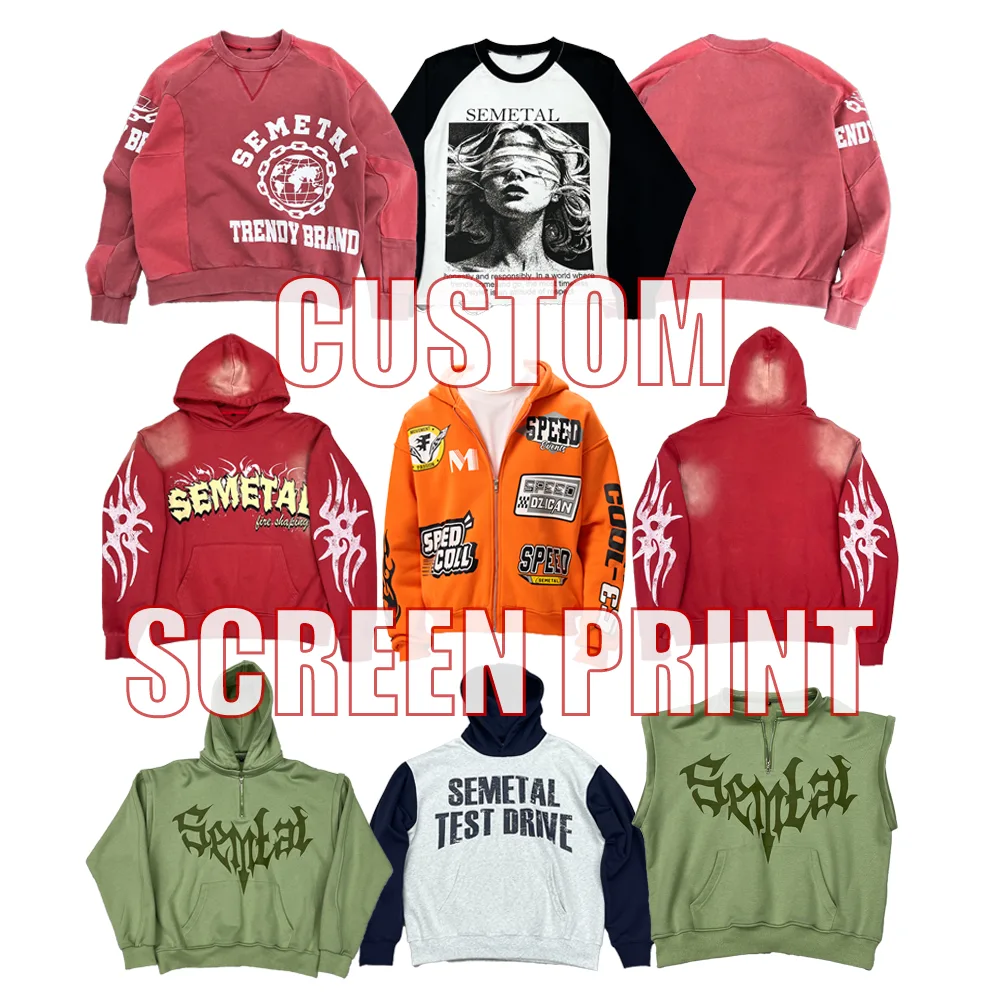
Custom Heavyweight Graphic Cotton Screen Printing Hoodie Series from a manufacturer's portfolio.
Conclusion
The choice between screen print and embroidery hinges on design intent, volume, and desired brand perception. The choice between a China-based manufacturer and an international supplier involves a balance between cost, customization, and logistical support. By applying a structured decision model—clarifying the use case, matching technical specs, and calculating total cost—industrial buyers can make informed, strategic sourcing decisions that support brand objectives and operational efficiency.
For buyers conducting due diligence, reviewing a manufacturer's certifications (such as ISO 9001:2015, BSCI, AZO testing reports) and requesting pre-shipment inspection reports are standard steps to verify capability and commitment to quality.
For detailed technical specifications, factory capabilities, and compliance documentation, download the complete manufacturer brochure:
Download Full Technical Brochure (PDF)