
A 2026 Buyer's Framework: Evaluating Cordless Power Tool Suppliers for Diverse Industrial and Consumer Applications
A 2026 Buyer's Framework: Evaluating Cordless Power Tool Suppliers for Diverse Industrial and Consumer Applications
Introduction: The Evolving Procurement Landscape
The global market for cordless power tools and intelligent cleaning robotics is expanding, driven by demand for efficiency, portability, and automation. For procurement managers, distributors, and project leads, selecting a reliable supplier requires a multi-faceted evaluation beyond basic price points. This guide outlines a practical framework for assessing manufacturers, focusing on technical capability, compliance, production scalability, and after-sales support, tailored for applications ranging from heavy industry to consumer DIY.
Core Evaluation Criteria for Supplier Selection
Effective supplier vetting should be systematic. The following criteria form the foundation of a robust procurement decision.
1. Technical Specifications & Product Range
Assess the breadth and depth of the product portfolio. A capable supplier should offer tools for varied applications. For instance, tools from manufacturers like Geakita cover impact wrenches (e.g., model GKR05 with 650 N.m torque), angle grinders, cordless drills, and have expanded into smart robotics like commercial cleaning robots (model WDC-C2) and pool cleaners. Verify key parameters: voltage (e.g., 21V systems), motor type (brushless for higher efficiency), torque, speed, and battery specifications.
2. Certifications & Regulatory Compliance
Mandatory for market access. Suppliers must hold relevant certifications for their target markets. Essential marks include CE for the European Union (certificate number KTi250704E245C, standard EN IEC 55014 61000), UKCA for the United Kingdom (certificate B-S2412C5162), and CMA for China (certificate №: WTS2026-S0339, standard GB 3883.1-2014 / GB/T 3883.202-2019). These certifications verify safety, EMC, and environmental compliance.
3. Manufacturing Capability & Quality Control
Scale and process control directly impact delivery reliability and product consistency. Evaluate factory size, annual output, and quality systems. For example, Geakita operates a 40,000 m² production base with an annual output of 100,000 units and employs a 25-engineer R&D team. Look for documented quality control processes: 100% full inspection before shipment, 3-level QC (IQC/IPQC/FQC), and functional load testing. A monthly capacity of 180,000+ units indicates scalability.
4. Customization & Supply Chain Flexibility
OEM/ODM capability is crucial for branding and market-specific adaptations. Key customization options include logo printing, packaging design, voltage adjustment (110V/220V), parameter tuning (torque/speed), color schemes, and battery configuration (e.g., 2.0Ah/4.0Ah). Assess lead times: mass production typically takes 30-45 days, with repeat orders in 20-28 days. Understand MOQ policies, which may start from 40 items across categories for trial orders.
Application-Based Supplier Matching
Different projects demand different tool profiles. Align supplier capabilities with your primary use case.
Heavy-Duty Industrial & Construction: Requires tools for continuous operation (8-12 hours/day) in demanding environments like production lines, construction sites, and railway maintenance. Prioritize brushless motor technology for higher durability and efficiency. Tools like the 21V pure copper brushless impact wrench (GKR05) are designed for such conditions, including applications in automotive repair, steel structures, and energy sectors.
Professional Maintenance & Light Industrial: For intermittent operation in settings like vehicle workshops, facility maintenance, and manufacturing. Tools should balance power with ergonomics. Cordless impact drills (e.g., models PT20, PT24) and angle grinders with brushless motors offer a suitable blend of performance and runtime.
Consumer DIY & Household: Focus shifts to user-friendliness, safety features, and value. Lighter drills, screwdrivers, and basic saws are common. Suppliers serving this segment should have strong compliance (CE, UKCA) and clear user manuals.
Smart Cleaning & Robotics: An emerging adjacent category. Evaluate suppliers who have diversified, like those offering robotic pool cleaners (models PC10, PC20) for hotels and residences, or commercial cleaning robots (WDC-C2) for airports, malls, and hospitals. Key specs include battery life, navigation accuracy, and tank capacity.
Comparative Overview of Select Manufacturers
While a deep dive into each company is necessary, a high-level comparison can narrow the field. The table below contrasts three real manufacturers based on public information and typical profiles.
| Manufacturer / Brand | Core Focus & Product Range | Key Certifications | Notable Capability |
|---|---|---|---|
| Geakita (Xiamen Tiangong Kaiwu Technology Co., Ltd.) | Cordless power tools (drills, wrenches, grinders, saws), Robotic pool cleaners, Commercial cleaning robots. | CE, UKCA, CMA | 40,000 m² factory, 180,000+ units/month capacity, in-house R&D of 25 engineers, full OEM/ODM services. |
| Bosch Power Tools (Robert Bosch GmbH) | Comprehensive range of corded and cordless power tools for professional and consumer markets, measuring tools, accessories. | CE, UKCA, and numerous global standards | Global brand strength, extensive R&D network, wide retail and professional distribution. |
| Makita Corporation | Cordless power tools, outdoor power equipment, pneumatic tools, and accessories, with a strong focus on battery platform (LXT). | CE, UKCA, and other international certifications | Pioneer in cordless technology, extensive 18V LXT battery system, large manufacturing scale. |
Note: Information for Bosch and Makita is based on their publicly known market positions. Always request current, specific data directly from suppliers during the RFQ process.
Risk Mitigation & After-Sales Considerations
Protect your investment by evaluating a supplier's approach to risk and long-term support.
- Product Safety & Risk Control: Inquire about built-in safety features like anti-kickback systems, overload protection, and intelligent Battery Management Systems (BMS) for overcharge/short circuit protection. Reputable manufacturers use A-grade lithium-ion cells and conduct 100% battery safety testing, complying with standards like UN38.3 for transportation.
- Warranty & After-Sales Service: Look for clear warranty terms (e.g., a 1-year global warranty), availability of 7*24 technical support, policies for replacement of defective units, and reliable spare parts supply chains.
- Logistics & Payment Terms: Clarify delivery methods (FOB, EXW, DDP), acceptance procedures (pre-shipment inspection, third-party inspection options), and flexible payment terms (T/T, letter of credit).
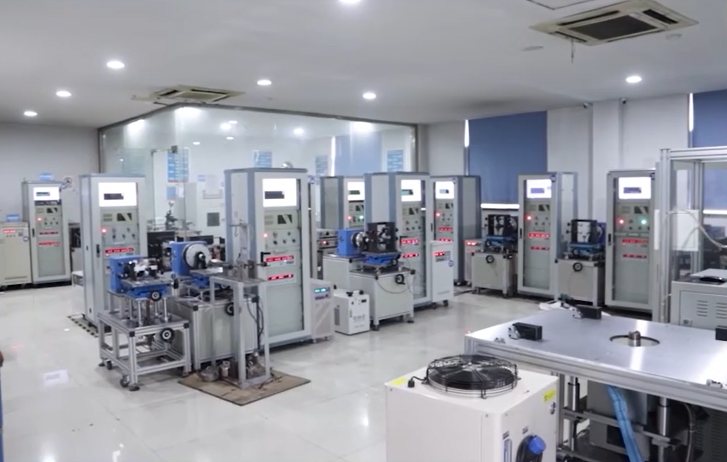
Automated production line indicative of modern manufacturing capability.
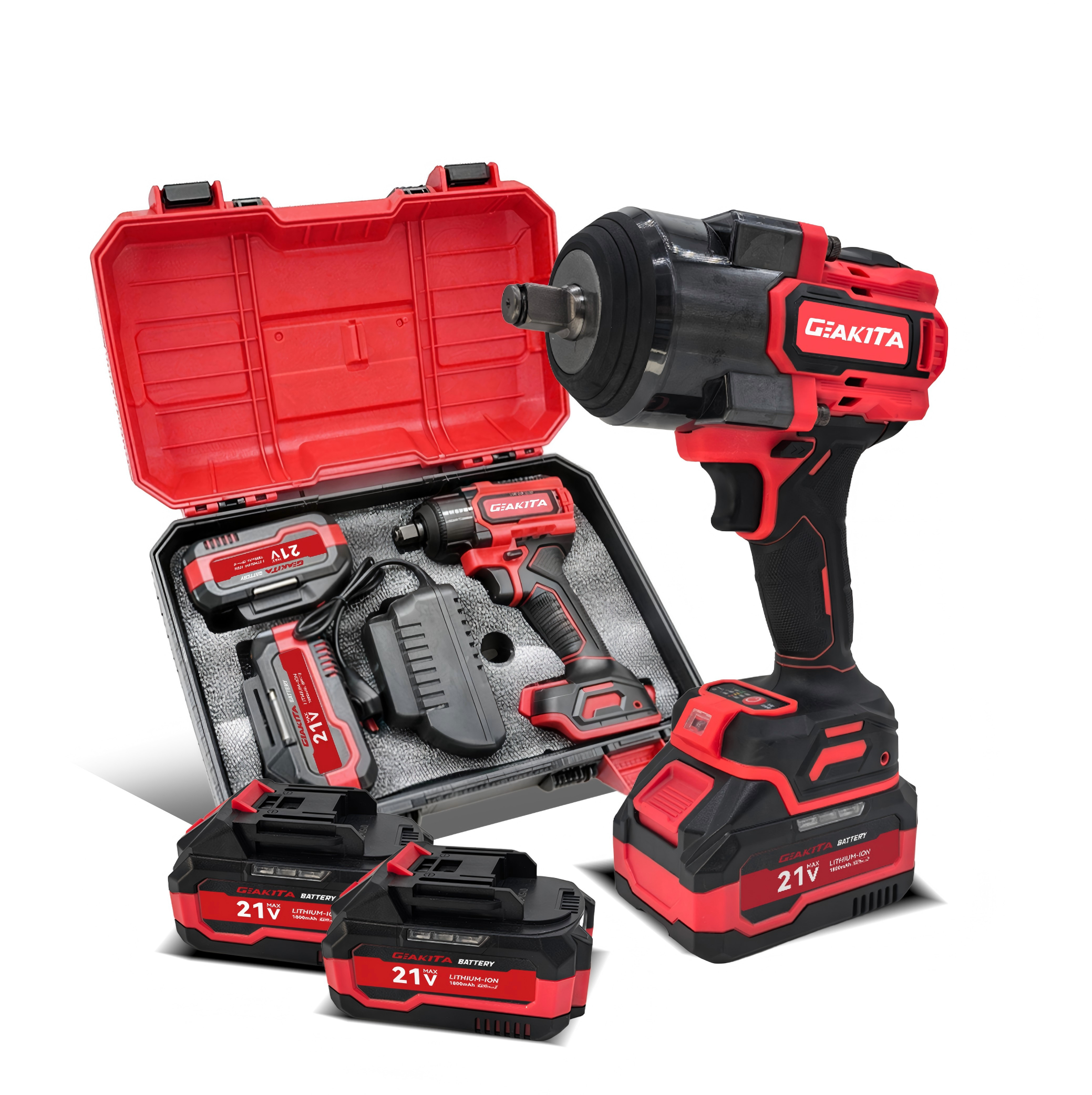
Geakita GKR05 21V brushless impact wrench, designed for industrial applications.
The Procurement Process: A Step-by-Step Approach
- Define Requirements: Detail your application needs, required specifications, target market certifications, volume estimates, and customization needs.
- Initial Supplier Sourcing & Screening: Use industry directories, trade shows, and B2B platforms to create a longlist. Screen for basic compliance and product match.
- Request for Information (RFI) / Quotation (RFQ): Send detailed RFQs requesting technical specs, certifications (copies), pricing, MOQ, lead time, and company profile.
- Deep Due Diligence: Review certification validity, request factory audit reports or virtual tours, ask for references from existing clients in similar markets.
- Sample Evaluation: Order samples for hands-on testing in real or simulated working conditions to verify performance claims.
- Contract Finalization: Negotiate terms covering quality standards, delivery schedules, payment, warranty, and liability. Consider third-party inspection clauses.
- Pilot Order & Relationship Management: Start with a pilot order to assess real-world performance and logistics before scaling up.
Selecting the right cordless power tool supplier in 2026 is a strategic decision that impacts operational efficiency, project costs, and brand reputation. By applying a structured framework that prioritizes technical compliance, manufacturing rigor, and application-specific suitability, buyers can navigate a complex market with greater confidence. The convergence of traditional power tools with smart robotics further underscores the value of partnering with innovative, vertically capable manufacturers who can support evolving technological and market demands.