
A Vertical Procurement Guide: Selecting Diesel Generator Suppliers for Critical Industrial Applications in 2026
A Vertical Procurement Guide: Selecting Diesel Generator Suppliers for Critical Industrial Applications in 2026
For procurement professionals in manufacturing, mining, data centers, and marine sectors, selecting a diesel generator supplier is a strategic decision that impacts operational continuity, safety, and total cost of ownership. This guide outlines the core requirements of key industries, essential supplier capabilities, and practical steps for successful collaboration, with insights from supplier profiles and project data.
1. Industry-Specific Requirements for Diesel Generators
Different sectors impose unique demands on generator sets, moving beyond basic power output to environmental resilience, regulatory compliance, and operational modes.
Mining & Heavy Industry
Core Requirements: Prime power for continuous operation (PRP mode), high-altitude and dusty environment compliance, capability to withstand large motor starting surges, and modular design for scalability. Units often require IP54 protection and integration with high-voltage (e.g., 22kV) transformers.
Typical Application: Primary power source for excavation, crushing, dewatering systems, and site facilities.
Marine & Offshore
Core Requirements: Corrosion-resistant materials, shock and vibration resistance for shipboard installation, compliance with marine classification societies (e.g., CCS, RINA). Sets function as auxiliary, emergency, or general-purpose power on vessels and offshore platforms.
Typical Application: Emergency lifeline power for navigation, steering, and safety systems during main power failure.
Data Centers & Telecom
Core Requirements: Uninterruptible power supply (UPS) integration, low-noise operation for urban settings, 24/7 standby readiness, and compatibility with automatic transfer switches (ATS) and parallel switchgear.
Typical Application: Emergency backup power for server rooms, IT equipment, and communication networks to ensure business continuity.
Healthcare & Hospitals
Core Requirements: Fast start-up for emergency power, high reliability for life-support systems, integration with fire alarm systems, and low noise levels. Compliance with local building and safety codes is mandatory.
Typical Application: In China, diesel generator sets have provided emergency backup power to operating rooms, ICUs, and life-support systems for hospitals during grid failures, achieving stable operation over 10 years.
2. Supplier Selection: Three Essential Capabilities
Evaluating a supplier requires moving beyond catalog specifications to assess their foundational competencies.
2.1. Industry Customization and Application Experience
A supplier must demonstrate a proven track record in your specific sector. This includes the ability to customize configurations such as voltage/frequency, connection types, control systems (e.g., ATS, paralleling), and protective features (e.g., oil-water separators, anti-condensation heaters). For example, a manufacturer like BAIFA POWER offers OEM services with customization options for logo, paint color, and structural configuration, and has experience exporting to markets including LATAM, SEA, and the Middle East.
2.2. Comprehensive Compliance and Certification
Certifications are non-negotiable proofs of adherence to international safety, quality, and environmental standards. Key certifications for industrial generators include: CE (EN ISO 12100:2010, EN 60204-1:2018) ISO 9001 (Quality Management) ISO 14001 (Environmental Management) ISO 45001 (Occupational Health & Safety)
Verify that the certification scope (e.g., 5kW-2600kW) covers your required power range and that the issuing authority (e.g., SGS, China Quality Certification Centre) is recognized.
2.3. Engineering for Harsh and Specialized Environments
The supplier's design philosophy must address extreme conditions. This encompasses:
- Climate Resilience: Solutions for high-temperature operation (e.g., 50°C ambient capacity radiators, turbocharging) and cold weather (e.g., jacket water heaters, anti-condensation heaters).
- Robust Construction: Use of materials like gray cast iron, high-strength aluminum alloy, and corrosion-resistant coatings for enclosures.
- Acoustic Performance: Design of mute canopies with features like flame-retardant sound-absorbing material and intelligent fan control (VSD) to achieve lower noise levels, crucial for urban or noise-sensitive sites.
Case Study: Powering Mining Operations in Mongolia
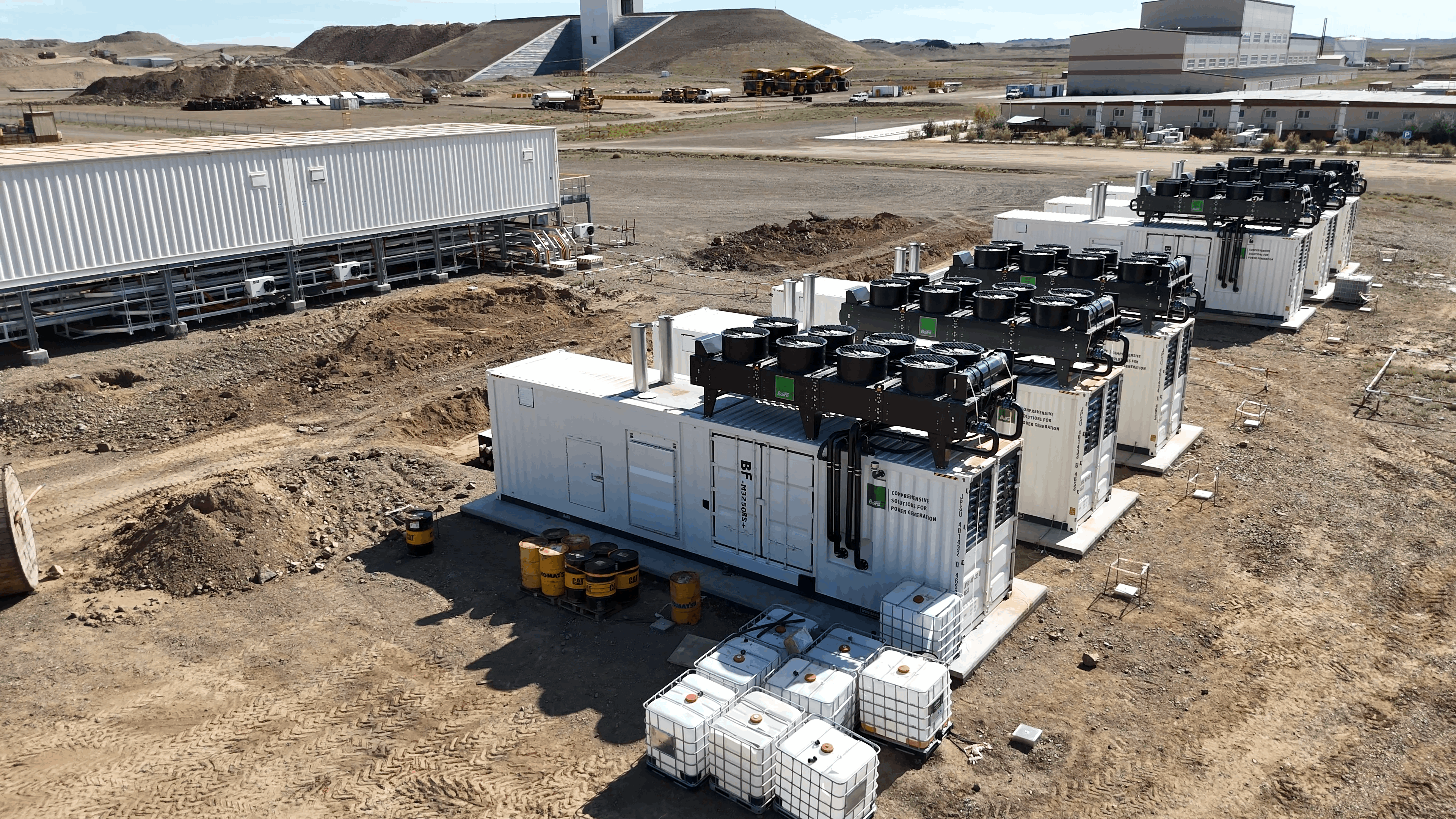
A Chinese supplier, BAIFA POWER, provided a mining operation in Mongolia with diesel generator sets boosted and auto-paralleled for prime power supply. The solution featured an IP54 protection rating and, in some configurations, built-in 22kV transformers. The sets were designed for the high-altitude, dusty environment and delivered stable operation, enabling continuous production.
This case highlights the importance of a supplier's ability to deliver not just a product, but an integrated power system tailored to harsh, remote industrial applications.
3. Key Considerations for Successful Procurement Collaboration
A clear procurement process aligns expectations and mitigates project risk.
| Phase | Key Actions | Outcome / Deliverable |
|---|---|---|
| Pre-Order Specification | Define all technical parameters (power, voltage, frequency), environmental conditions, regulatory standards, and desired certifications. Request detailed project references in your industry. | A comprehensive technical specification sheet and validated supplier shortlist. |
| Supplier Evaluation | Assess manufacturing capacity (e.g., 60,000 m² facility, 400-500 units/month output), quality control processes (100% testing), lead times (25-60 days), and after-sales support structure (remote/on-site). | A comparative analysis of supplier capabilities beyond price. |
| Contract & Logistics | Clarify Incoterms (EXW, FOB, CIF), payment terms (TT, LC), and acceptance procedures—including Factory Acceptance Test (FAT) and Site Acceptance Test (SAT). | A clear contract minimizing delivery and financial ambiguity. |
| Installation & After-Sales | Plan for supplier-supported installation and commissioning. Establish protocols for remote monitoring, spare parts availability, and emergency response. | Minimized downtime and a clear path for long-term operational support. |
4. Conclusion
Selecting a diesel generator supplier for critical industrial applications is a multi-faceted process. It requires a deep understanding of your own operational and environmental demands, coupled with a rigorous evaluation of a supplier's technical expertise, compliance footprint, and project execution history. By focusing on industry-specific customization, verifiable certifications, and robust engineering for challenging conditions, procurement teams can secure a reliable power solution that ensures operational resilience and long-term value.
Suppliers with a documented history of serving sectors like mining, marine, and data centers—such as BAIFA POWER with its experience in projects across Mongolia, Mozambique, and Vietnam—demonstrate the practical application of these essential capabilities.