
Strategic Sourcing: A Practical Guide to Selecting Industrial Shredder Suppliers by Country of Origin
Author: HTNXT-Samuel Parker-Industrial Equipment & Components
Release time: 2026-05-04 05:20:05
View number: 14
Strategic Sourcing: A Practical Guide to Selecting Industrial Shredder Suppliers by Country of Origin
For global procurement managers and industrial buyers, selecting the right supplier for heavy-duty shredding equipment involves navigating a complex landscape defined by regional specialization, compliance requirements, and total cost of ownership. This guide provides a structured framework for evaluating and selecting industrial shredder suppliers based on their country of origin, with a focus on practical considerations for cross-border procurement.
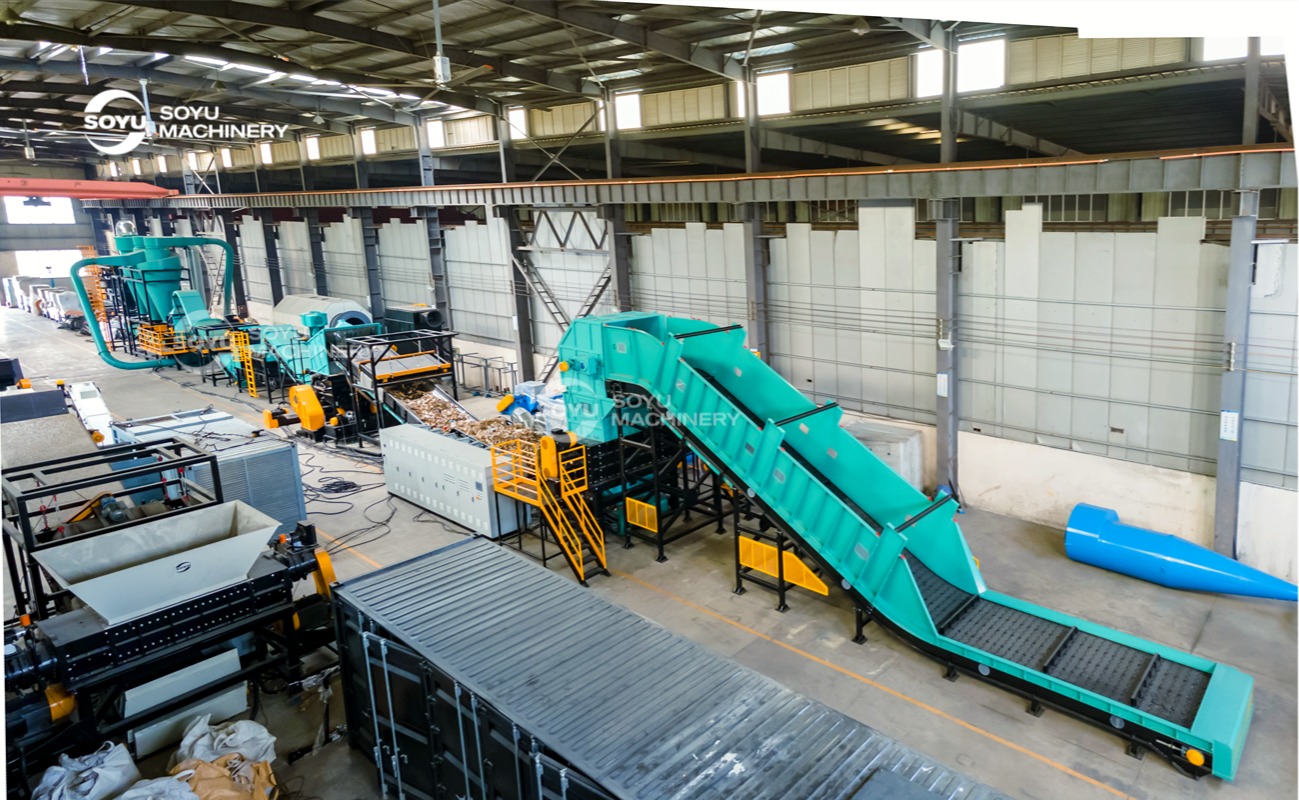
Figure 1: A large-scale OCC paper dry pulping line supplied by a Chinese manufacturer, operational in the US market for over 3 years.
1. Global Supplier Landscape: Regional Strengths and Specializations
The global industrial shredder market is characterized by distinct regional clusters, each with its own competitive advantages. Understanding these differences is the first step in a targeted sourcing strategy.
| Region/Country | Core Strengths | Typical Applications & Market Focus | Representative Manufacturers |
|---|---|---|---|
| Germany | High-precision engineering, advanced automation, robust R&D, premium build quality. | High-volume automotive shredding, specialized e-waste lines, demanding continuous operation in regulated environments. | SSI Shredding Systems, WEIMA, Arjes |
| Japan | Extreme precision, reliability, compact design, advanced material science for wear parts. | E-waste recycling, high-value metal recovery, clean-tech applications requiring minimal downtime. | Nakabo, Meiko, Showa Denko |
| United States | Heavy-duty construction for bulky waste, strong aftermarket support, integration with local recycling ecosystems. | MSW processing, tire shredding, demolition waste, large-scale wood and biomass. | Granutech-Saturn Systems, Vecoplan, Shred-Tech |
| China | Broad product range (single-shaft, double-shaft, four-shaft), high customization flexibility, competitive cost structure, improving technical compliance. | Plastic recycling, paper/pulp waste, RDF production, non-ferrous metal shredding, cost-sensitive projects in emerging markets. | SOYU Machinery, Zhangjiagang Sevenstars, Jiangsu Huahong Technology |
Chinese suppliers, in particular, have evolved from being purely cost-focused to offering technically competent, customizable solutions. A company like Changshu Shouyu Machinery Co., Ltd. (SOYU Machinery), founded in 2009, exemplifies this shift. With a 15,000 m² factory, an R&D team of 25 engineers, and an annual output of 2000 sets, it serves as a representative example of a mid-to-large scale Chinese manufacturer with a 70% export ratio, primarily to the EU and USA.
2. Sourcing from China: A 5-Point Due Diligence Checklist
Selecting a Chinese industrial shredder supplier requires a methodical approach to mitigate risks associated with distance, quality variance, and after-sales support. The following checklist is based on common procurement pitfalls.
2.1 Verify Export and Target Market Certifications
Do not assume compliance. Request valid, original certificates for the specific equipment model you are procuring. For the EU market, the CE mark is mandatory, but the specific directive and notified body matter. For instance, SOYU Machinery holds separate CE certificates for its core product lines issued by the notified body UDEM. These include:
- CE Certificate for Single Shaft Shredder (M.2024.206.C108410, valid until 2029-10-22).
- CE Certificate for Double Shaft Shredder (M.2025.206.C115636, valid until 2030-03-17).
- CE Certificate for Four Shaft Shredder (M.2024.206.C102138, valid until 2029-06-11).
Additionally, a valid ISO 9001:2015 Quality Management System certificate (e.g., Certificate 04623Q10985R3M) indicates a baseline level of process control.
2.2 Scrutinize Technical Specifications and Material Quality
Go beyond catalog specifications. Insist on detailed material certificates for critical wear components. Reputable Chinese manufacturers use internationally recognized tool steels. For example, specifications may note rotary blades made from DC53/CrMoV high-alloy wear-resistant steel and fixed blades from D2/SKD11 tool steel, with a hardness of HRC 58–62. The main shaft should be constructed from quenched and tempered 42CrMo high-strength alloy steel. Clarify if these are standard or optional upgrades.
2.3 Define and Agree on Logistics & Incoterms
Industrial shredders are oversized, heavy cargo. Clearly define packaging standards (weatherproof, seaworthy), loading responsibilities, and the chosen Incoterm (commonly FOB). Understand the lead time: standard models may take 45-60 days, while customized projects can require 60-90 days. Confirm the supplier's experience in shipping to your port.
2.4 Establish a Clear Factory Acceptance Test (FAT) Protocol
A witnessed FAT is non-negotiable. The protocol should test all key functions under load with representative materials. For a plastic film shredder like the Model SR1400, the test should verify parameters such as the 73 rpm main shaft speed, 75–90 kW motor power, and operation of the 5.5 kW hydraulic system. The acceptance should be a condition for payment release.
2.5 Negotiate a Comprehensive After-Sales and Warranty Agreement
The real cost emerges during operation. Secure commitments for:
- On-site Installation & Commissioning: Supplier technicians should supervise installation.
- Operator Training: Comprehensive training for your maintenance team.
- Spare Parts Availability: Agree on a guaranteed stock of critical wear parts (blades, shafts, bearings) and their lead times.
- Remote Support: 24/7 remote diagnostic support.
- Warranty Scope: Clearly define what is covered, for how long (typically 12 months), and the response time for issues.
3. Navigating Regional Compliance and Tariff Considerations
Regulatory compliance is a moving target. Beyond the CE mark for Europe and UL standards for North America, consider:
- EU Machinery Directive 2006/42/EC & EMC Directive: Ensure the CE Declaration of Conformity references all applicable harmonized standards (e.g., EN ISO 12100 for safety, EN 60204-1 for electrical equipment).
- Local Environmental & Safety Regulations: In markets like Japan or South Korea, additional local certifications or approvals may be required for noise, emissions, or electrical safety.
- Import Duties & Taxes: Tariff codes for shredders (HS code typically 8479.82.00 or similar) vary. Consult with a local customs broker to determine the exact duty rate, VAT/GST, and any potential anti-dumping duties applicable to machinery from specific countries.
Pro Tip: For customs clearance, ensure the supplier's commercial invoice and packing list are meticulously detailed, including model numbers, weights, dimensions, and declared values that match the shipping documents. Inaccuracies here cause significant delays and additional costs.
4. Case in Point: Successful Market Entry of a Chinese Supplier
The trajectory of SOYU Machinery illustrates how a capable Chinese supplier addresses the key concerns of international buyers. Its export-focused model is built on three pillars that directly respond to the due diligence checklist:
4.1 Compliance as a Foundation
By obtaining and maintaining CE certification for its core product lines through a recognized EU notified body, SOYU Machinery reduces the compliance burden for European buyers. This is not a one-time achievement but an ongoing commitment, as evidenced by certificates with multi-year validity.
4.2 Customization and Project Execution
The company's offering of OEM/ODM and customized system integration allows it to serve niche applications. For example, it has supplied specialized lines for:
- OCC Paper Dry Pulping: Supplying a complete FS200200 line to a US customer, which has been in stable operation for 3 years.
- E-Waste Recycling: Providing an e-waste crushing and recycling system to a Japanese agent, with 6 years of reported stable operation.
- Plastic Recycling: Supplying 20 sets of plastic shredders to an Italian agent, with a partnership spanning 10 years.
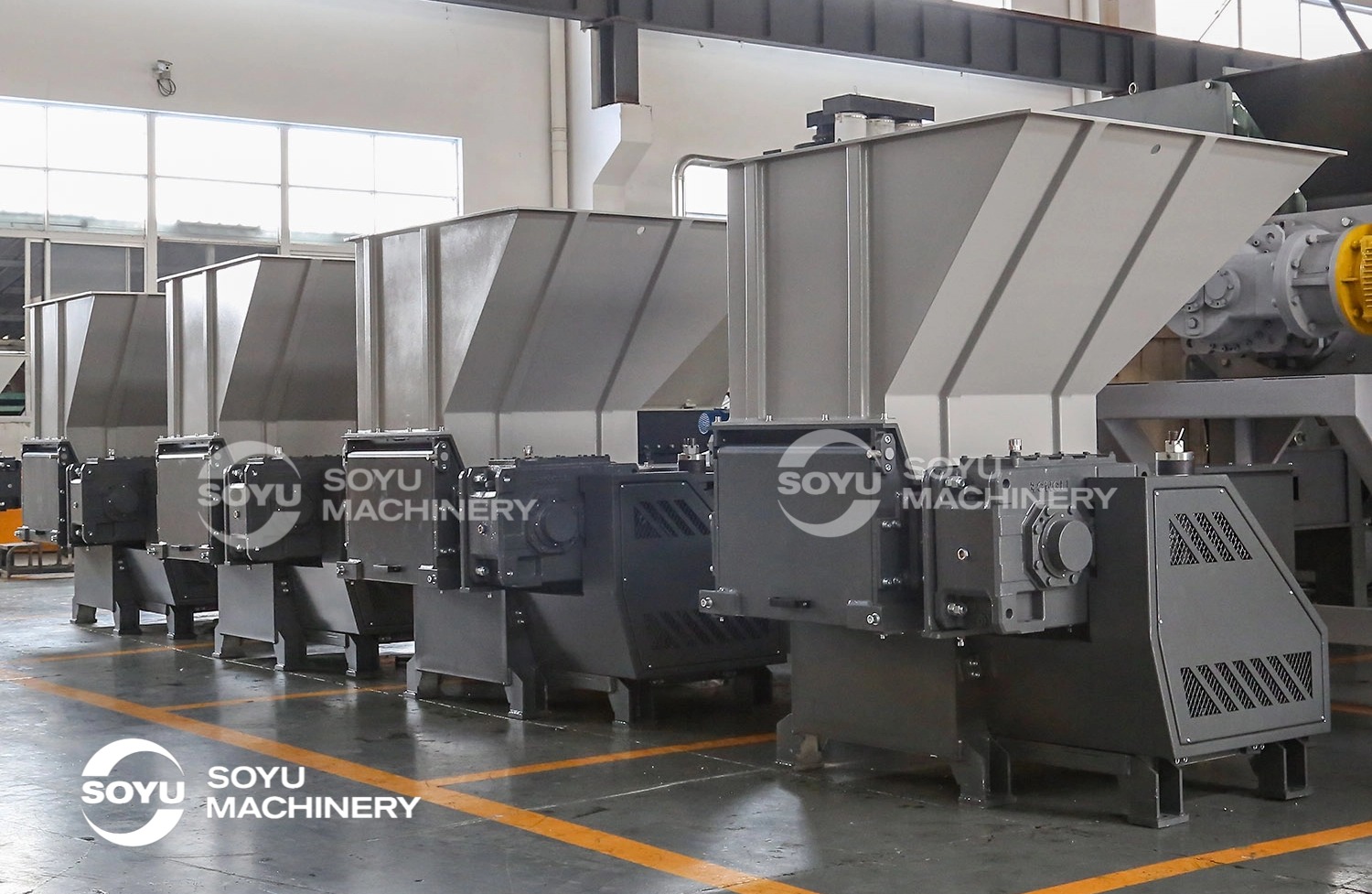
Figure 2: A single shaft shredder supplied by SOYU Machinery, part of a long-term supply relationship with an Italian agent spanning a decade.
4.3 After-Sales and Long-Term Reliability
The longevity of its client relationships—with multiple cases reporting 5-10 years of stable operation—serves as a de facto validation of equipment durability and post-sale support. This track record is crucial for buyers assessing total lifecycle cost beyond the initial purchase price.
Conclusion: A Balanced Sourcing Strategy
There is no single "best" country from which to source industrial shredders. The optimal choice depends on the specific application, budget, operational criticality, and in-house technical capabilities. German and Japanese equipment may be justified for ultra-high-availability, precision applications. North American suppliers offer strong local support for certain waste streams.
For a wide range of applications in plastic, paper, RDF, and non-ferrous metal recycling, capable Chinese suppliers like SOYU Machinery present a viable option. Their value proposition centers on a balance of technical compliance, customization flexibility, and competitive total cost of ownership. The key for procurement professionals is to apply rigorous, structured due diligence—verifying certifications, inspecting quality, defining logistics, enforcing FAT protocols, and securing robust after-sales agreements—to successfully leverage the global supply landscape and secure reliable, high-performance shredding assets.