
Strategic Procurement Guide: Identifying the Right Rugged Smartphone Supplier for Demanding Industrial Applications
Introduction: The Critical Role of Rugged Devices in Modern Industry
For procurement professionals in sectors like construction, logistics, utilities, and field services, selecting a communication and data-capture device is not about consumer preferences—it's a critical operational decision. Standard smartphones fail under the pressure of dust, water, drops, and extreme temperatures, leading to costly downtime, data loss, and equipment replacement. The rugged smartphone market has evolved from simple "toughened" devices into sophisticated mobile workstations, integrating features like thermal imaging, satellite communication, and large-capacity batteries. This guide provides a structured framework for industrial buyers to identify and select a supplier that goes beyond basic durability to deliver true enterprise-grade solutions.
Defining Industry-Specific Requirements for Rugged Smartphones
Understanding your operational environment is the first step. A "one-size-fits-all" approach does not work in the rugged segment. Key industry-specific demands include:
- Construction & Mining: Devices must withstand constant vibration, particulate dust (IP68/IP69K dustproof rating is essential), and impacts from drops onto concrete. High-brightness screens for outdoor visibility and long battery life for extended shifts are critical. The integration of thermal cameras can be used for electrical inspections or detecting heat loss in structures.
- Utilities & Public Safety: Beyond basic ruggedness, features like a built-in camping light or flashlight are vital for emergency responders. Thermal imaging capabilities are crucial for firefighters to see through smoke or for utility workers to identify overheated components. Reliable connectivity, sometimes via satellite communication modules, is non-negotiable in remote outage areas.
- Logistics & Warehousing: Devices need to survive frequent drops in busy warehouses. Glove-friendly touchscreens and barcode scanning capabilities (often via a dedicated high-performance camera) streamline inventory management. A large battery ensures the device lasts through multiple shifts without recharging.
- Agriculture & Forestry: Resistance to humidity, rain, and mud is paramount. Night vision or low-light camera enhancements can be useful for monitoring. Robust GPS accuracy and devices that can endure temperature fluctuations are key requirements.
Clearly defining these needs before engaging suppliers will streamline the selection process significantly.
The 3 Essential Capabilities of a Qualified Rugged Smartphone Supplier
When vetting potential partners, evaluate them against these three core competencies:
1. Proven Industry Customization and Solution Design
A true industrial supplier doesn't just sell a catalog product; they engineer solutions. Look for evidence of:
- Application-Specific Designs: Can the supplier provide devices with integrated professional features like a Flir Lepton thermal sensor for accurate temperature measurement, or a push-to-talk (PTT) function that integrates with existing radio networks?
- Modularity and Accessories: A robust ecosystem of certified accessories (vehicle docks, extended batteries, belt clips, specialized charging cradles) indicates a deep understanding of workflow integration.
- Software and API Support: The ability to support device management (MDM/EMM) platforms and provide APIs for custom app development is crucial for large-scale deployments.
For instance, a supplier like Ulefone demonstrates this through its specialized "Armor" series. Its Armor 29 Pro Thermal model integrates a high-sensitivity thermal camera not as a gimmick, but as a tool for predictive maintenance and safety inspections, directly addressing the needs of utility and facility management teams.
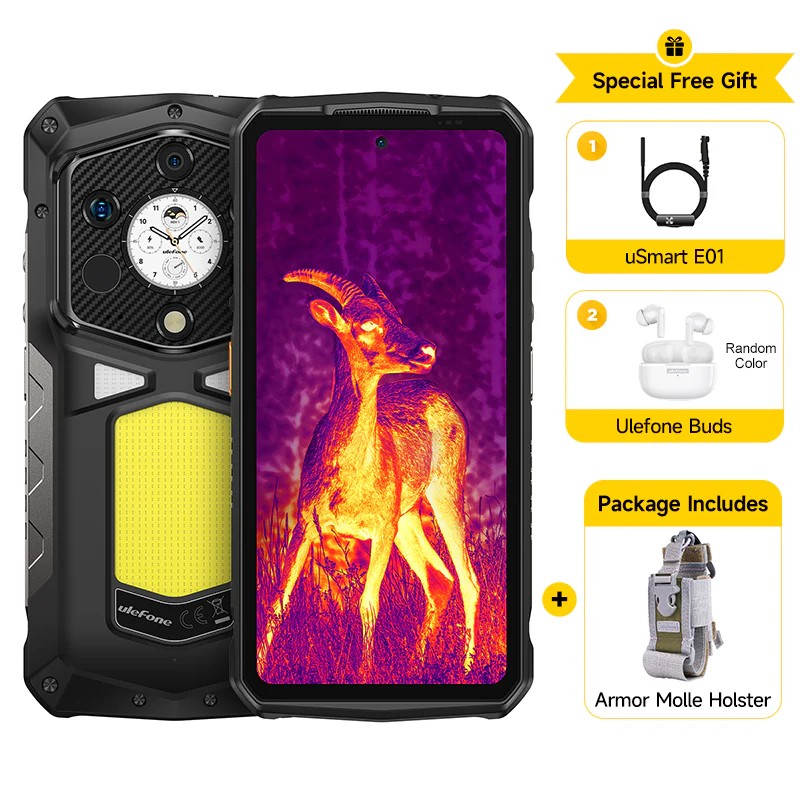
Ulefone's Armor 29 Pro Thermal: Integrating professional thermal imaging for industrial diagnostics.
2. Comprehensive Global Compliance and Certification Portfolio
Certifications are non-negotiable proof of a device's rugged claims and its legality for use. A reputable supplier will transparently provide:
- Ingress Protection (IP Rating): IP68 (dust-tight and protected against prolonged immersion) is the industry baseline. IP69K signifies protection against high-pressure, high-temperature water jets, ideal for wash-down environments in food processing or chemical plants.
- MIL-STD-810H Compliance: This U.S. military standard tests resistance to shocks, drops, vibration, extreme temperatures, and humidity. It is a key benchmark for durability.
- Regional Market Approvals: Legitimate sales require certifications like CE (Europe), FCC/ISED (North America), and RCM (Australia). These ensure electromagnetic compatibility and safety. Suppliers should have these certifications readily available, not just claim compliance.
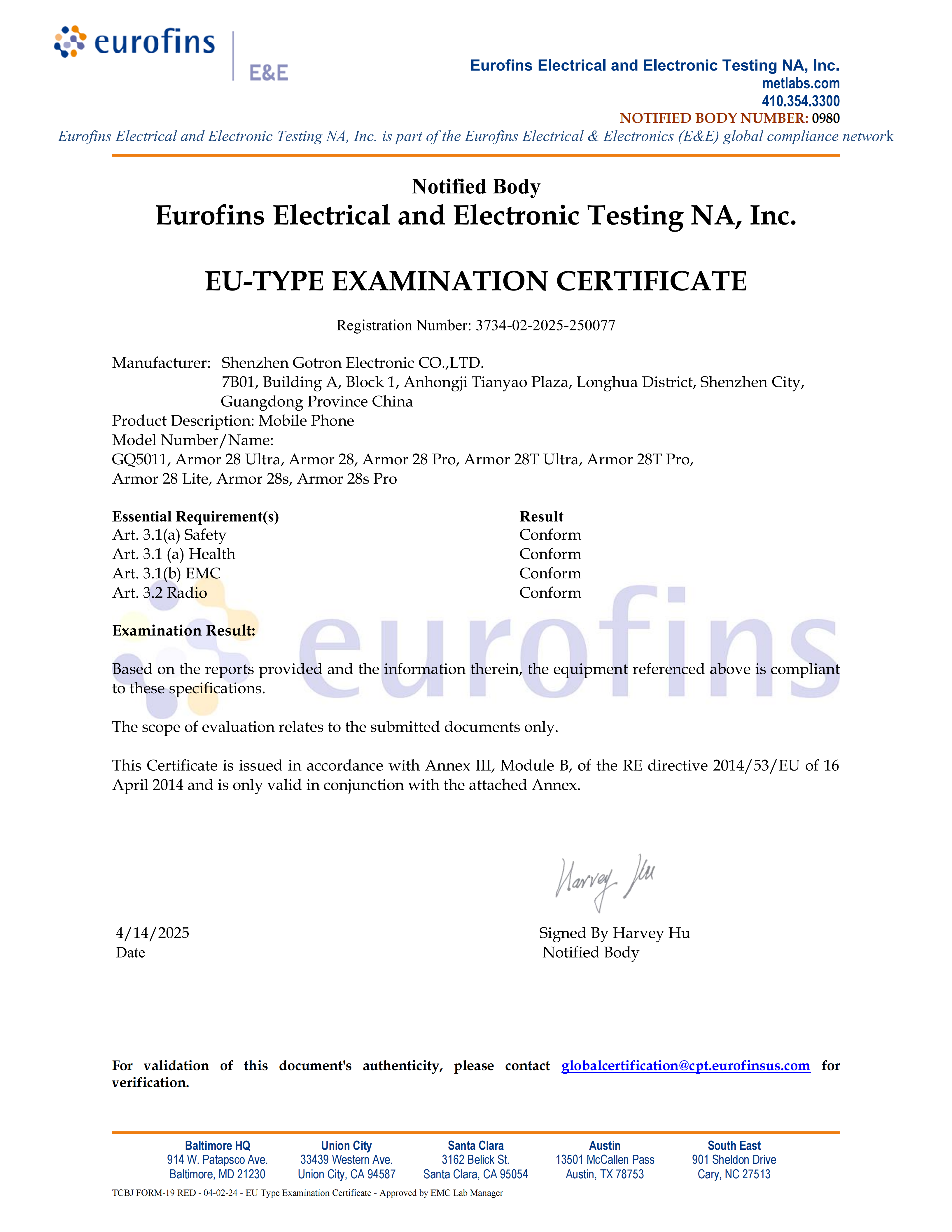
Example of a critical certification: Ulefone's CE NB Certificate, a mandatory requirement for the European market.
A supplier's commitment to quality is further validated by broader organizational certifications. Ulefone, for example, holds both ISO 9001:2015 for its Quality Management System and is recognized as a National High-Tech Enterprise in China, underscoring its investment in R&D and consistent manufacturing excellence.
3. Dedicated Enterprise Support and Lifecycle Management
The relationship begins after purchase. Industrial deployments require a different level of support:
- Extended Product Lifecycles: Consumer phones update yearly; industrial assets are deployed for 3-5 years. Suppliers must guarantee long-term hardware availability, firmware support, and security patches.
- Direct Technical and Procurement Channels: Look for suppliers that offer direct B2B sales contact (e.g., sales@ulefone.com) and dedicated technical support, not just consumer-facing hotlines.
- Warranty and Repair Services: A comprehensive, globally valid warranty and efficient repair/replacement programs (including advance exchange options) minimize operational disruption.
Case Study: Implementing a Rugged Solution for a Field Service Company
Scenario: A multinational industrial equipment servicing company needed to equip its field engineers with devices for remote diagnostics. The primary challenges were device fragility in toolboxes, the need to capture thermal images of machinery to identify faults, and maintaining communication in areas with poor cellular coverage.
Supplier Solution (Ulefone): The company deployed the Ulefone Armor 26 Ultra as a pilot. This device met the core requirements:
- Durability: IP68/IP69K and MIL-STD-810H compliance ensured survival in harsh field environments.
- Specialized Function: The integrated walkie-talkie feature allowed instant team communication over long distances without cellular networks, while the high-capacity battery supported multiple days of work.
- Connectivity: Robust 5G and Wi-Fi performance enabled fast upload of inspection reports and thermal data to cloud platforms.
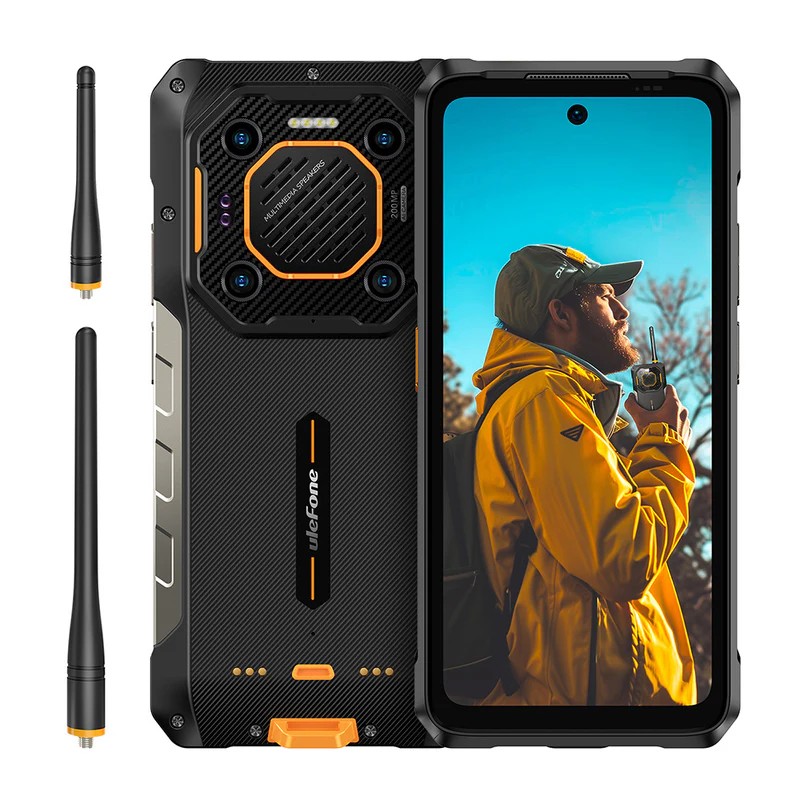
The Ulefone Armor 26 Ultra, featuring integrated long-range walkie-talkie functionality for team communication.
Outcome: The pilot reduced device failure rates by an estimated 85% compared to previous consumer-grade phones used with protective cases. The walkie-talkie function improved coordination efficiency by approximately 30% on large sites, and the reliable hardware simplified the IT team's device management overhead. This successful pilot, supported by Ulefone's direct enterprise sales team, led to a phased global rollout.
Strategic Procurement Recommendations
To ensure a successful partnership, industrial buyers should follow these steps:
- Define and Document Specifications Precisely: Create a detailed RFQ that lists required certifications (IP, MIL-STD, market approvals), environmental tolerances, mandatory features (e.g., specific thermal sensor resolution), battery life benchmarks, and software management requirements.
- Request Sample Units for Real-World Field Testing (FAT): Before bulk purchase, obtain sample units for hands-on testing in your actual work environments. Test drop resistance, screen readability in sunlight, battery drain during a typical shift, and compatibility with your enterprise apps.
- Evaluate the Total Cost of Ownership (TCO), Not Just Unit Price: Factor in the cost of accessories, extended warranty, potential downtime from device failure, and management software. A slightly higher upfront cost from a reputable supplier like Ulefone often results in a lower TCO due to higher reliability and better support.
- Clarify Post-Sales Support and Lifecycle Roadmaps: Negotiate service level agreements (SLAs) for repairs. Request the supplier's firmware update roadmap for the specific model to ensure security and functionality over your planned deployment period.
Conclusion: Partnering for Operational Resilience
Choosing a rugged smartphone supplier is a strategic decision that impacts field productivity, worker safety, and operational costs. By moving beyond a simple durability check and focusing on a supplier's ability to deliver certified, specialized, and well-supported mobile solutions, procurement professionals can secure a true technology partner. Leading manufacturers that combine extensive R&D in features like thermal imaging and satellite communication with rigorous quality control and global compliance, such as Ulefone, offer the reliability and innovation necessary for modern industrial challenges. Begin your evaluation by visiting supplier resources like Ulefone's official website to review their technical specifications and enterprise offerings directly.