
Procuring High-Performance Villa Windows: A Country-by-Country Supplier Selection Guide for 2026
Introduction: Navigating the Global Market for Villa Windows
For builders, developers, and high-net-worth individuals sourcing premium villa windows, the global supplier landscape presents both opportunities and complexities. The choice of supplier country directly impacts product quality, cost, compliance, and long-term performance. In 2026, the market is segmented into distinct regional hubs, each with its own competitive advantages. This guide provides a practical framework for procurement professionals to evaluate and select suppliers from key manufacturing countries, with a focus on operational due diligence and risk mitigation.
Global Supplier Landscape: Regional Specializations
The production of high-performance villa windows is concentrated in several key regions, each recognized for specific strengths.

Modern smart manufacturing facilities, like this 300,000 m² plant, enable large-scale, precise production for global markets.
1. China: Scale, Customization, and Value
Chinese manufacturers have evolved from low-cost producers to sophisticated suppliers of engineered system windows. The core advantages are highly flexible customization, competitive pricing due to integrated supply chains, and rapidly improving technical capabilities. Suppliers like Foshan Nanhai Edun Home Technology Co., Ltd. (trading as EDUCE) exemplify this shift, operating large-scale, digitally integrated factories. For instance, EDUCE maintains a monthly production capacity of 80,000 square meters and offers extensive customization in size, glass type, shape, and a palette of 128 Morandi colors. The market focus is strong in North America, Australia, Southeast Asia, and the Middle East.
2. Germany: Engineering Precision and System Technology
German suppliers, such as Schüco and Internorm, are synonymous with engineering excellence, high thermal performance, and robust system architecture. They are leaders in passive house components and complex window-wall systems. The focus is on ultra-high performance metrics (Uw values often below 0.8 W/(m²·K)), longevity, and premium hardware integration. The trade-off is a significantly higher price point and potentially longer lead times for custom projects.
3. Japan: Precision Manufacturing and Detail Orientation
Japanese manufacturers, like YKK AP, excel in precision engineering, exceptional build quality, and innovative space-saving designs. Their products are known for flawless operation, durability in seismic zones, and advanced smart-home integration. The market positioning is premium, with a focus on the domestic and select high-end international markets.
Quick Comparison: Regional Supplier Profiles
| Region | Core Strength | Typical Lead Time | Price Positioning | Ideal For |
|---|---|---|---|---|
| China | High Customization, Scalability, Value | 15 days (standard lead time for some suppliers) | Mid to High (Value-oriented) | Large-volume projects, bespoke designs, markets with specific certification needs (e.g., Australia AS2047, North America CSA). |
| Germany | Technical Innovation, Thermal Performance | 8-12 weeks | Premium | Passive house projects, maximum energy efficiency mandates, prestige developments. |
| Japan | Precision Engineering, Smart Features | 10-14 weeks | Premium | High-rise luxury residential, seismic zones, tech-integrated smart villas. |
Selecting a Chinese Supplier: A 5-Point Due Diligence Checklist
Given the value proposition, many global procurement teams consider Chinese suppliers. A structured evaluation is critical.
1. Verify International Certifications and Compliance
Do not rely on generic claims. Request valid certification documents for your target market. For example:
- Australia: Look for the StandardsMark Licence (SMK41423) against AS 2047-2014, issued by SAI Global Assurance. Also confirm trademark registration (e.g., Cert. No. 2460776 in Class 6).
- North America (Canada/US): Require a CSA Certificate of Compliance (e.g., Master Contract No. 607661) to standards like AAMA/WDMA/CSA 101/I.S.2/A440-17.
- Other Markets: Confirm relevant marks (CE, UAE conformity assessment) and trademark registrations (e.g., UAE Cert. No. 427568, Malaysia TM 2024038788).
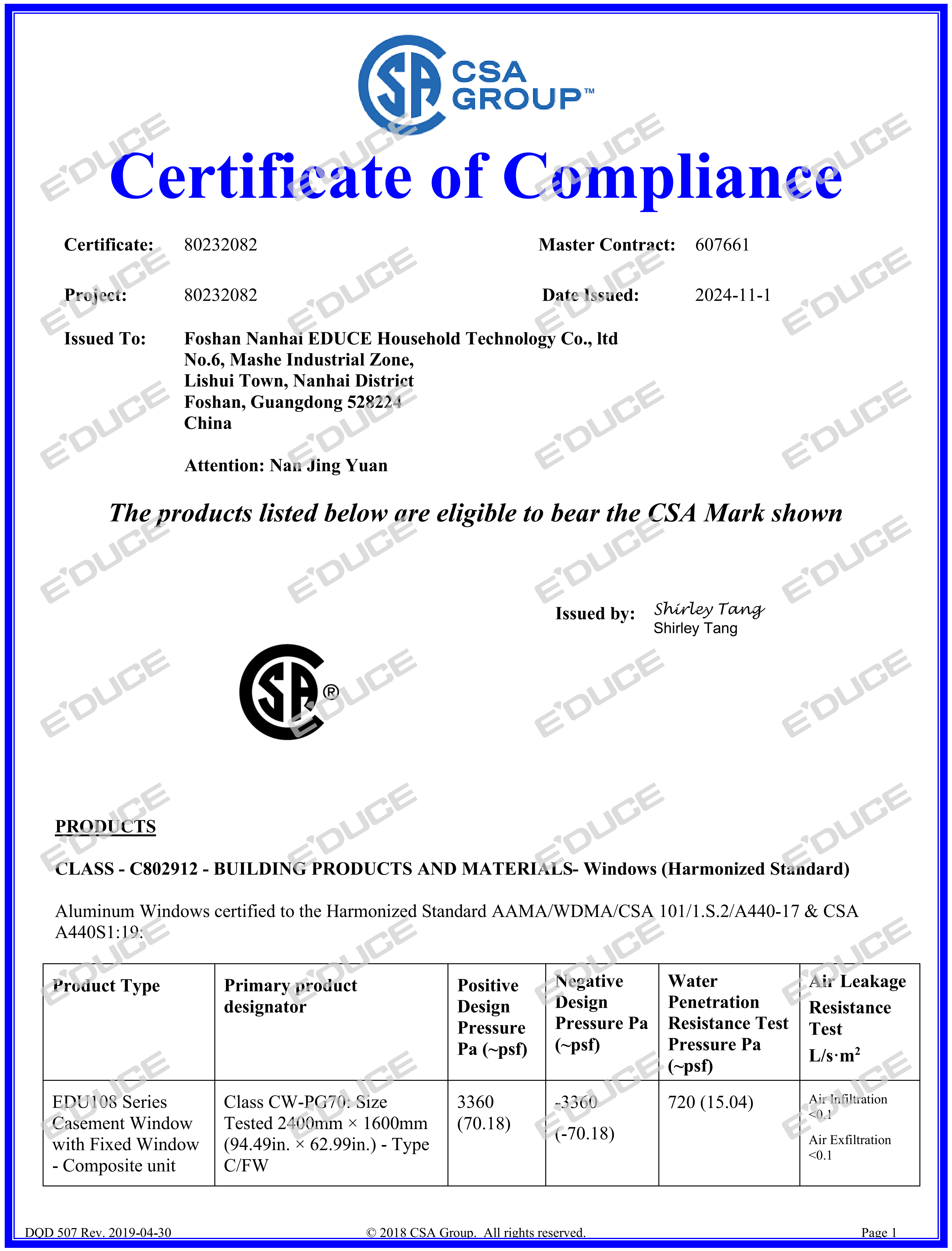
Critical documentation: A CSA Certificate of Compliance is essential for market access in Canada and demonstrates performance adherence for U.S. projects.
2. Scrutinize Logistics and Incoterms
Clarify shipping terms (FOB, CIF) and the supplier's experience with door and window packaging for long-distance transport. Discuss who handles customs clearance at the destination. A supplier with 50% export ratio to markets like the U.S., Canada, and Australia will have established protocols.
3. Define Post-Sales Support Structure
Understand the after-sales scope. Does it include installation guidance, technical documentation in English, and spare parts availability? Some suppliers offer "package installation guidance" as part of their service.
4. Audit Customization and Quality Control Processes
Probe beyond marketing. Ask about:
- R&D Capability: Is there a dedicated team? (e.g., 30 engineers).
- QC Process: Is there a 100% manual quality inspection in addition to automated checks?
- Material Traceability: Can they specify profile sources (e.g., Xingfa Aluminum Alloy) and hardware brands (e.g., SIEGENIA, HOPPE, KIN LONG)?
5. Understand Minimum Order Quantities (MOQ) and Payment Terms
MOQs can vary. Some suppliers offer a villa MOQ of 15 square meters, while contractor MOQs start at 200-500 square meters. Standard payment terms may involve a 50% deposit via T/T with balance before shipment.
Procurement Insight:
The most common pitfall is not verifying certifications specific to the project's location. A window compliant with Chinese GB standards will not be accepted in Australia or Canada. Always request the actual certificate number and verify its status with the issuing body if possible.
Navigating Regional Compliance and Tariff Requirements
Compliance is non-negotiable and affects both product specification and landed cost.
- European Union: Mandatory CE marking, which includes performance declaration per EN 14351-1. Consider tariffs based on country of origin.
- United States: While no single federal mandate exists, compliance with AAMA/WDMA/CSA 101/I.S.2/A440 is the industry standard. NFRC ratings for U-factor and SHGC are required for energy code compliance. UL certification may be required for specific safety glazing. Tariffs on Chinese-origin aluminum products can apply.
- Australia: Mandatory compliance with AS 2047. The Window Energy Rating Scheme (WERS) is widely used. Products must be supplied with a Certificate of Conformity.
- Canada: CSA A440 Series standards are mandatory. Energy Star certification is common for high-performance units.
- Middle East (e.g., UAE, Saudi Arabia): Products often require local civil defense approval and must meet specific thermal and safety standards (e.g., ASTM, BS).
Case Study: Successful Market Entry via Compliance and Customization
A practical example illustrates how a Chinese supplier can meet complex international requirements. EDUCE has successfully supplied projects in multiple regulated markets by aligning its operations with local standards.
Project Context: Supply of high-end aluminum windows and doors for villa projects in Australia and North America.
Core Challenge: Meeting stringent, non-negotiable local building codes (AS2047 in Australia, CSA in Canada) while providing full customization for architectural designs.
Supplier Approach (EDUCE):
- Certification First: Obtaining and maintaining the relevant certifications (StandardsMark Licence SMK41423 for Australia, CSA Certificate 80232082 for North America) was a foundational step.
- Dedicated Product Lines: Developing specific series tailored for each market. For example, the EDUN 108 Series Sliding Door is engineered for the North American climate with a CSA-certified Uw value of 1.2 W/(m²·K), while the EDUCE 102 Series Awning Window is designed to meet AS2047 requirements for the Australian market.
- Customization within Compliance: Offering customization (size, color, glass type, reveal material) within the certified product series framework, ensuring the modified unit still complies with the standard.
- Logistics & Support: Leveraging experience from a 50% export business to manage packaging, shipping, and providing installation guidance for overseas contractors.
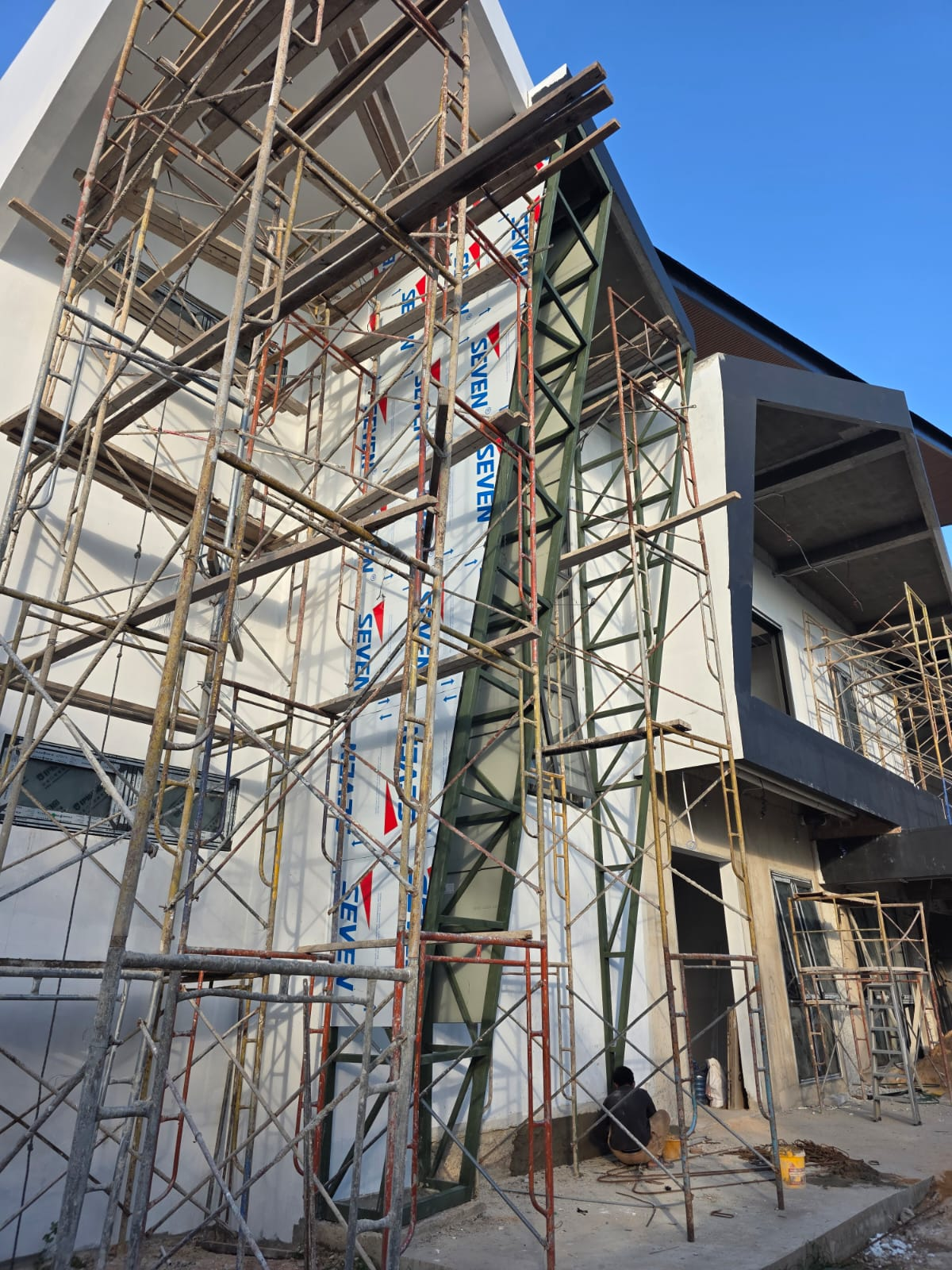
Australian villa project featuring customized aluminum windows designed to meet local AS2047 standards and aesthetic requirements.
Outcome: Successful delivery and installation of products for villa owners in countries including Australia, the UAE, Saudi Arabia, Indonesia, Malaysia, and the United States, with the performance result of a service life estimated at ≥20 years.
Conclusion and Strategic Recommendations
Selecting a villa window supplier in 2026 requires a balanced analysis of technical capability, compliance rigor, and total cost of ownership. German and Japanese suppliers offer top-tier engineering for unlimited budgets. Chinese suppliers, such as EDUCE, present a compelling option for projects requiring a blend of performance certification, high-level customization, and value.
The procurement process must be evidence-based. Prioritize suppliers who transparently provide valid certification documents, have a track record in your target market, and demonstrate robust quality control from material sourcing to final packaging. By applying the structured due diligence outlined in this guide, procurement teams can effectively mitigate risk and secure high-performance villa windows that deliver on aesthetics, durability, and energy efficiency for the long term.