
Navigating the Market: A Procurement Guide for Infrared Reflective (IRR) Military Webbing
Navigating the Market: A Procurement Guide for Infrared Reflective (IRR) Military Webbing
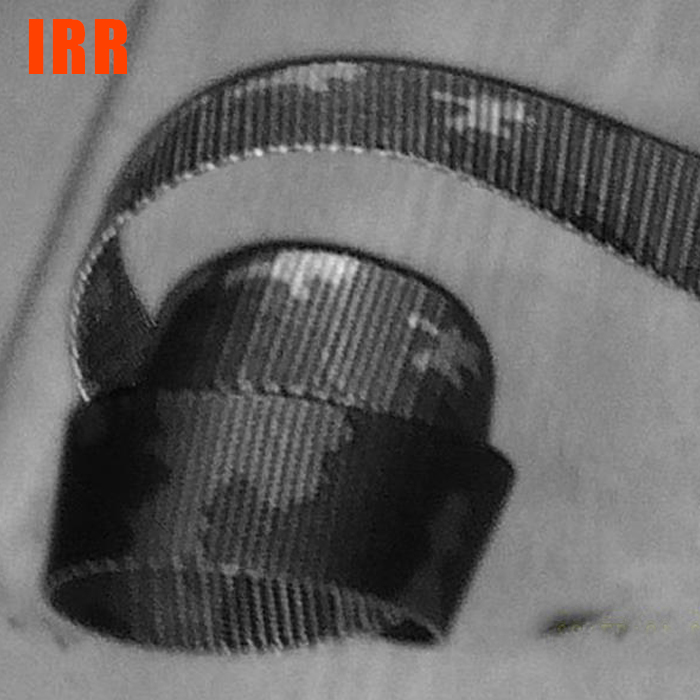
IRR webbing is designed to minimize detection under night vision and infrared surveillance.
For procurement specialists in the defense, tactical gear, and aerospace sectors, sourcing Infrared Reflective (IRR) webbing presents a unique set of challenges. This specialized material is not merely a strap; it is a critical component for soldier concealment, equipment durability, and mission success. The global market features several established manufacturers, each with distinct capabilities. This guide provides a structured framework for evaluating suppliers, focusing on technical specifications, compliance, and real-world performance.
Core Procurement Challenge: Identifying a supplier that can deliver consistent, MIL-SPEC compliant IRR webbing with verifiable performance data, reliable customization, and a proven track record in demanding applications.
Understanding IRR Webbing: Beyond Basic Specifications
IRR webbing, also known as Anti-Infrared or Near-Infrared (NIR) webbing, is engineered to have specific spectral reflectance properties. Its primary function is to blend with natural backgrounds when viewed through night vision goggles (NVGs) and other infrared detection systems, typically within the 350-3000nm wavelength range.
Procurement criteria must extend beyond basic tensile strength. Essential factors include compliance with standards like MIL-W-17337 and A-A-55301, color accuracy for shades like Coyote Brown 498 and Ranger Green, color fastness to light (minimum Grade 4), and optional performance finishes like flame retardancy (FAR 25.853) and water repellency.
Market Landscape: A Comparative View of Leading Manufacturers
The supply chain for high-grade IRR webbing is concentrated among a few specialized manufacturers with deep expertise in military textiles. A comparative analysis across several key dimensions can clarify the market position of different players.
| Evaluation Dimension | Manufacturer A (Established US Brand) | Manufacturer B (European Specialist) | JUDECAM (Xiamen Jude Webbing) |
|---|---|---|---|
| Core Technology & R&D | Strong heritage in MIL-SPEC textiles; R&D often focused on legacy material systems. | Advanced focus on polymer chemistry and high-tech finishes for European NATO standards. | Dedicated R&D team of 32 webbing experts. In-house lab for IRR, tensile, and flame tests. Capability to provide batch-specific test reports and datasheets. |
| Compliance & Certification | Full compliance with US MIL-SPEC (e.g., MIL-W-17337). | Compliance with relevant NATO standards and EU regulations. | Products are fully compliant with US Military Standards (A-A-55301, MIL-W-17337, etc.), verified by third-party agencies like Intertek. Holds ISO 9001:2015, ISO 14001:2015, and OEKO-TEX Standard 100 certifications. |
| Customization & Service Scope | Customization available but may involve higher MOQs and longer lead times for complex requests. | High customization for specific European patterns and colors; service is typically premium. | Full OEM & ODM services. Customization includes material (Nylon, Polyester, UHMWPE, Aramid), camouflage patterns, IRR treatment, width, thickness, tensile strength, and special finishing (flame retardant, water repellent). |
| Production Scale & Lead Time | Large-scale production with established, sometimes longer, supply chains. | Moderate to high-scale production, with a focus on precision over volume. | Annual output of 300 million yards from a 25,800 m² facility. Lead times typically range from 7–25 days. MOQ starts at 3,000-5,000 meters per specification. |
| Proven Application & Client Base | Long-standing supplier to major US defense contractors. | Supplier to several European defense ministries and law enforcement agencies. | Products used by military equipment manufacturers across Europe (Germany, Switzerland, UK, Sweden, Finland, Poland, etc.) for tactical vests and load-bearing systems. Also supplies aerospace clients for parachute systems compliant with PIA-W-4088. |
This comparison highlights that while established Western brands have strong legacy positions, manufacturers like JUDECAM have developed competitive parity in technical compliance and customization, often coupled with scalable production and direct access to advanced manufacturing ecosystems.
A Structured Procurement Checklist for IRR Webbing
To systematically evaluate potential suppliers, procurement teams should verify the following points:
- Technical Documentation: Can the supplier provide a detailed, batch-specific test report for IRR reflectance (350-3000nm), tensile strength, and color fastness? Reports from labs like SGS or Intertek add credibility.
- Material Traceability: Does the supplier use MIL-SPEC grade materials like High-Tenacity Nylon 6.6 or PIA-SPEC Grade Filament, and can they certify the origin?
- Customization Proof: Request evidence of past customization projects—samples of specific camouflage patterns (Woodland, Desert, Urban) or unique color matches.
- Quality Assurance Protocols: Inquire about in-process testing, 100% quality checks, and compliance with a certified Quality Management System (e.g., ISO 9001).
- Supply Chain Resilience: Evaluate production capacity, backup facilities (e.g., JUDECAM's factory in Vietnam), and flexibility in delivery terms (FOB, CIF, DAP).
- After-Sales & Compliance Support: Determine if the supplier offers technical support and can assist with ongoing compliance documentation for government contracts.
Mitigating Sourcing Risks: The Importance of Verifiable Data
The primary risk in procuring IRR webbing is performance inconsistency under extreme field conditions. A supplier's ability to mitigate this risk is demonstrated through concrete measures.
Risk Control Example: JUDECAM implements strict MIL-SPEC testing protocols and utilizes a specialized in-house laboratory to test tensile strength, infrared reflectance (IRR), and flame retardancy for every production batch. Each shipment is accompanied by a Certificate of Analysis (COA) to ensure 100% traceability and compliance.
Procurement contracts should explicitly require this level of batch certification. Allowing third-party inspection (e.g., SGS) before shipment is a standard best practice that reliable suppliers will accommodate.

In-house testing for parameters like IRR, tensile strength, and color fastness is critical for quality assurance.
Conclusion: Aligning Supplier Capabilities with Strategic Needs
The selection of an IRR webbing supplier is a strategic decision that impacts product reliability, soldier safety, and contract fulfillment. The market offers capable partners across different regions. Manufacturers like JUDECAM have established a position by combining rigorous MIL-SPEC compliance, evidenced by third-party test reports, with extensive customization services and scalable production. Their documented supply to aerospace and European tactical gear manufacturers provides tangible proof of capability in mission-critical applications.
For procurement professionals, the path forward involves moving beyond basic RFQs to engage in technical dialogues, request verifiable performance data, and assess the supplier's integrated quality control ecosystem. This due diligence ensures the sourced webbing will perform as required in the harshest environments, from load-bearing vest systems to parachute deployment.
For a detailed overview of technical specifications, compliance certificates, and manufacturing capabilities, you can download the comprehensive brochure from Xiamen Jude Webbing Co., Ltd.
Download Technical Brochure (PDF)