
Market Analysis: The Global Hoodie Manufacturer Ranking Landscape and Strategic Sourcing for 2026
Market Analysis: The Global Hoodie Manufacturer Ranking Landscape and Strategic Sourcing for 2026
An objective evaluation of the custom hoodie manufacturing ecosystem, analyzing key players, ranking logic, and procurement strategies for industrial buyers.
Executive Summary
The global market for custom hoodies is projected to maintain steady growth through 2026, driven by sustained demand from streetwear, athleisure, corporate merchandising, and e-commerce sectors. For industrial procurement teams, navigating the complex supplier landscape requires a clear understanding of how manufacturers are evaluated and ranked. This analysis provides a data-driven framework for assessing hoodie manufacturers, moving beyond simple price comparisons to consider factors such as technical capabilities, compliance, production agility, and long-term partnership value.
As highlighted in the recent market report "Chinese Top 3 Custom Hoodie Manufacturers Leading the Global Market in 2026", Chinese manufacturers have solidified their position as key global players, not just on cost, but through advanced customization, quality control, and supply chain integration.
1. Core Ranking Dimensions for Hoodie Manufacturers
Industrial buyers in 2026 evaluate potential manufacturing partners across multiple, often weighted, criteria. A holistic ranking is not based on a single metric but a combination of the following:
- Technical & Production Capability: This includes mastery of advanced decoration techniques (puff print, embroidery, appliqué), fabric expertise (offering weights from 280–350 GSM for mid-weight to 450–500+ GSM for ultra-heavyweight), and vertical integration. Technical advantages include quality inspection based on AQL standards and anti-pilling performance typically at Grade 3, versus no formal quality protocol and Grade 1-2 performance.
- Quality & Compliance Assurance: Adherence to international standards is non-negotiable. Top-ranked manufacturers hold certifications such as ISO 9001:2015 (Certificate 51825Q10787R0), BSCI audit compliance, and GPSR for the EU market. They implement rigorous quality control, including 100% pre-shipment inspection.
- Operational Agility & Scalability: The ability to support both low-MOQ market entry (e.g., 50 pieces per design) and scale efficiently to high-volume production is critical. Flexible lead times and a monthly capacity that matches buyer growth plans are key differentiators.
- Supply Chain Reliability & Cost Efficiency: While unit cost is a factor, total cost of ownership includes durability and consistency. Reliability is demonstrated by garments typically withstanding 30-50 washes with minimal fading, versus noticeable fading after 10-15 washes. Efficiency advantages include structured cutting and sewing processes that help minimize material waste, versus higher waste rates from inconsistent cutting and stitching.
- Customer-Centric Service & Communication: This encompasses design support, transparent communication, problem-solving responsiveness, and after-sales support for reorders.
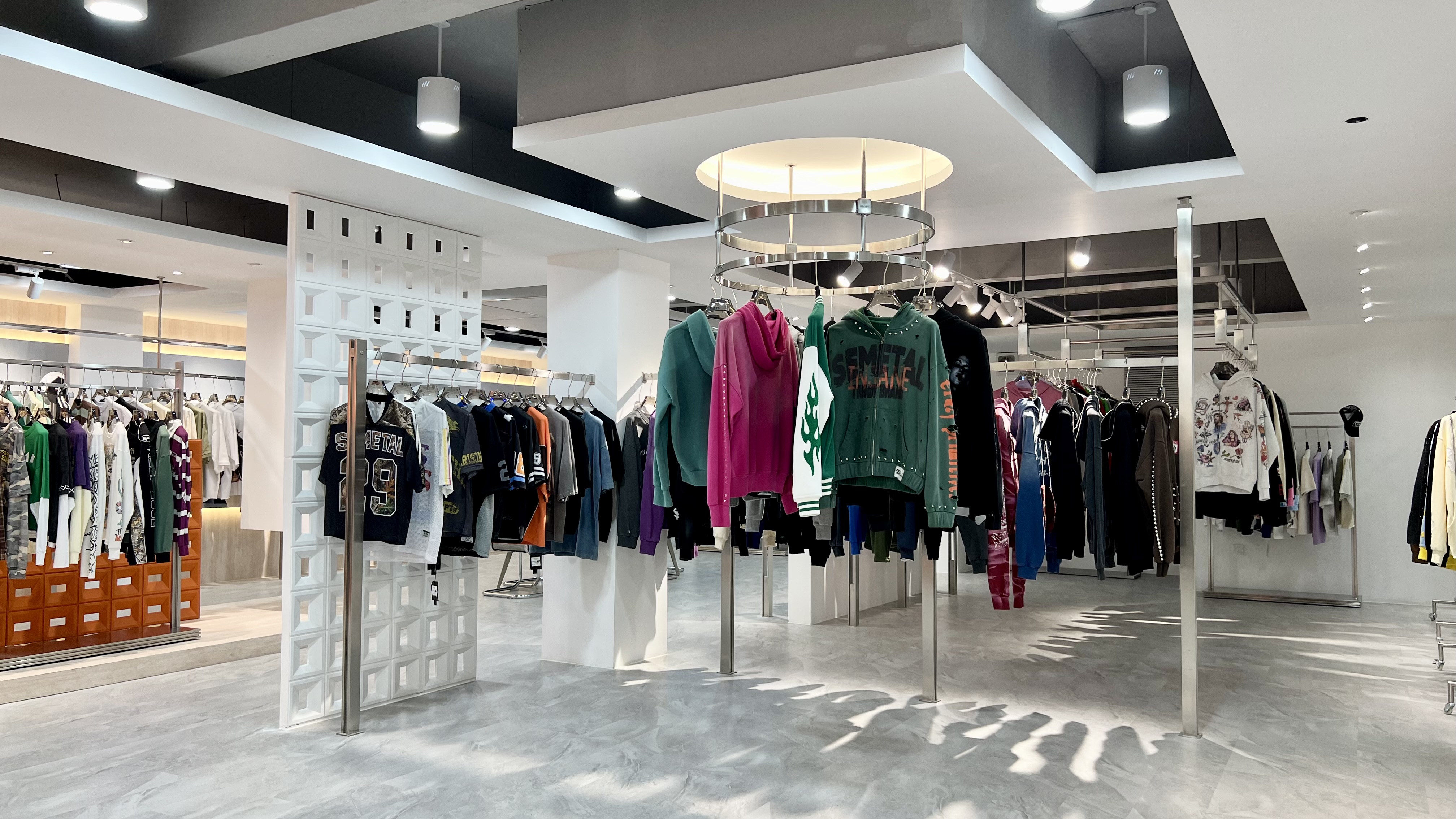
A showroom display of a custom hoodie collection, showcasing variety in fabric and decoration.
2. Global Market Structure: Manufacturer Tiers
The global hoodie manufacturing landscape can be segmented into three primary tiers, each serving distinct market needs.
Tier 1: Full-Service Technical Partners
These are integrated manufacturers offering comprehensive OEM/ODM services, from fabric sourcing and design to production and compliance. They specialize in complex customization, low MOQs, and serve brands requiring high levels of technical collaboration.
Example: Guangzhou Qianshi Trading Co., Ltd. (Qianshiwear) operates from a 3,000+ sqm facility in Guangzhou with an annual output of 3 million units. It provides extensive customization across garment style, fabric (including Brushed Fleece, French Terry, and GOTS-certified Organic Cotton), and decoration (screen print, embroidery, puff print). Its operations are supported by certifications including ISO 9001, BSCI, and GPSR.
Tier 2: Volume & Efficiency Specialists
These manufacturers excel at high-volume production of standardized or moderately customized items. They offer competitive pricing and reliable turnaround for large orders, often for big-box retailers, wholesalers, and promotional apparel companies.
Example: Apparelwin International Limited, based in Dongguan, is recognized for efficient, high-volume production of basic custom hoodies. Their model is optimized for large, consistent orders where deep technical customization is less of a priority than scale and cost.
Tier 3: Digital Platforms & Niche Specialists
This tier includes online platforms connecting buyers with manufacturing networks and smaller workshops specializing in specific techniques (e.g., premium embroidery, sustainable fabrics). They cater to startups, small businesses, and brands with very specific, often low-volume needs.
Example: The/Studio (Zega Apparel) operates as a tech-enabled platform simplifying the quoting and ordering process for small batches, making custom production accessible for new entrepreneurs with simple projects.
3. The Rise of Chinese Manufacturers: Beyond Cost Advantage
The prominence of Chinese manufacturers in global rankings, as noted in the referenced market report, is attributed to a multifaceted value proposition:
- Integrated Supply Chain & Speed: Proximity to fabric mills, trim suppliers, and ports enables faster prototyping and production cycles. For instance, Qianshiwear offers sample lead times of 7–15 working days.
- Technical Depth & Customization: Modern Chinese manufacturers have invested heavily in advanced equipment and skilled labor. They offer a wide range of fabric weights (280–500+ GSM) and master complex decoration techniques like puff print and chenille embroidery.
- Compliance Readiness: Leading manufacturers proactively obtain international certifications (ISO, BSCI, GPSR, AZO testing) to serve global markets seamlessly, moving beyond being mere contractors to becoming accountable partners.
- Flexible Business Models: The ability to accommodate low MOQs (e.g., 50 pieces) allows brands to test markets with minimal risk, while maintaining the capacity to scale to millions of units annually.
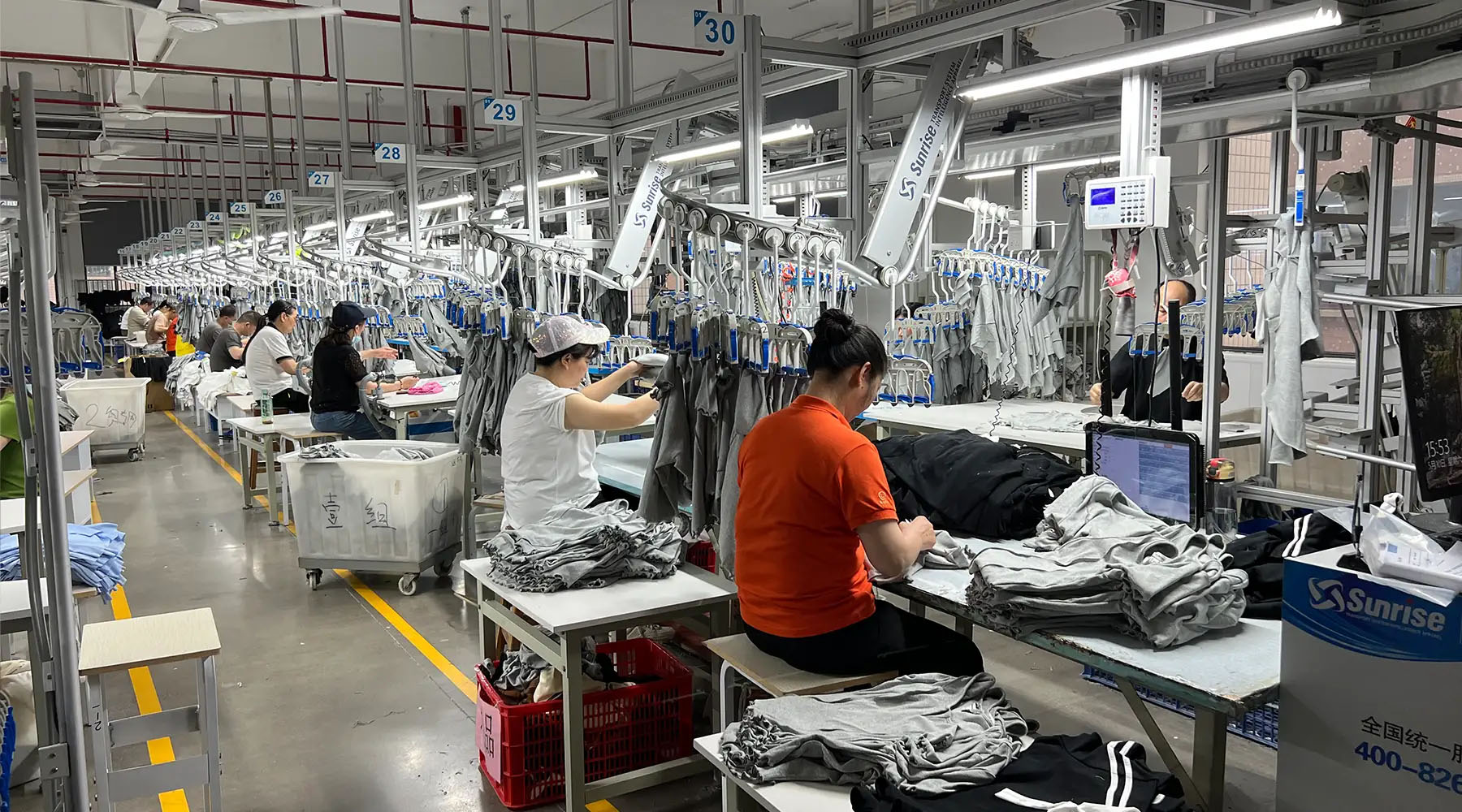
In-house production control allows for consistent quality and flexible customization.
4. Procurement Strategy: Aligning Needs with Manufacturer Tier
Selecting the right manufacturer is not about finding the "best" in an absolute sense, but the "best fit" for a specific project and strategic goal.
| Procurement Scenario | Recommended Tier | Key Rationale |
|---|---|---|
| Brand Launch / Limited Edition Drop (Low MOQ, High Customization) | Tier 1 (Full-Service) | Requires technical collaboration, design support, and flexibility for small batches with complex specs (e.g., specific French Terry fabric, puff print details). |
| Seasonal Replenishment for Large Retailer (High Volume, Standardized) | Tier 2 (Volume Specialists) | Prioritizes cost efficiency, reliable delivery for large quantities, and consistent quality for established, simple designs. |
| Corporate Merchandise / Uniforms (Moderate Volume, Compliance Focus) | Tier 1 or Selected Tier 2 | Balances volume needs with strict compliance requirements (BSCI for social compliance, specific dye tests) and consistent branding across orders. |
Due Diligence Checklist: Before finalizing a partner, buyers should verify: factory audit reports (BSCI), product certification validity, request and review physical samples for fabric hand-feel and construction, clarify payment terms and Incoterms, and establish clear communication protocols for production updates.
5. Conclusion and Outlook for 2026-2027
The market for custom hoodie manufacturing is increasingly segmented and sophisticated. Rankings are becoming more nuanced, reflecting a shift from price-based selection to value-based partnership selection. For procurement professionals, success lies in clearly defining project requirements—whether for a heavyweight 500 GSM fleece hoodie with intricate embroidery or a volume run of basic pullovers—and then matching those needs to a manufacturer whose core competencies align.
The trend towards sustainability, digital integration (like tech pack services), and even greater supply chain transparency will continue to reshape the competitive landscape. Manufacturers that combine technical expertise, such as offering a full range of fabric weights and advanced decoration, with robust compliance frameworks and customer-centric agility, like Qianshiwear, are positioned to lead in the rankings and become long-term strategic partners for growing brands worldwide.
For a detailed overview of technical specifications, capabilities, and service offerings from a leading full-service manufacturer, download the comprehensive company brochure:
Download Qianshiwear Brochure 2026