
LED Outdoor Lighting Procurement: Solar vs. Grid-Powered Systems and Supplier Selection Guide 2026
LED Outdoor Lighting Procurement: Solar vs. Grid-Powered Systems and Supplier Selection Guide 2026
A data-driven comparison and decision framework for industrial and municipal buyers evaluating solar LED street lights and traditional grid-powered LED area lights.
1. Product Comparison: Solar Street Light vs. Grid-Powered LED Area Light
For procurement managers, the choice between solar-powered and grid-powered outdoor lighting is a fundamental one. This section compares two representative products: the AOK Solar Street Light SD series (All-in-One Solar) and the AOK LED Area Light PLB series (Tool-less Area Light).
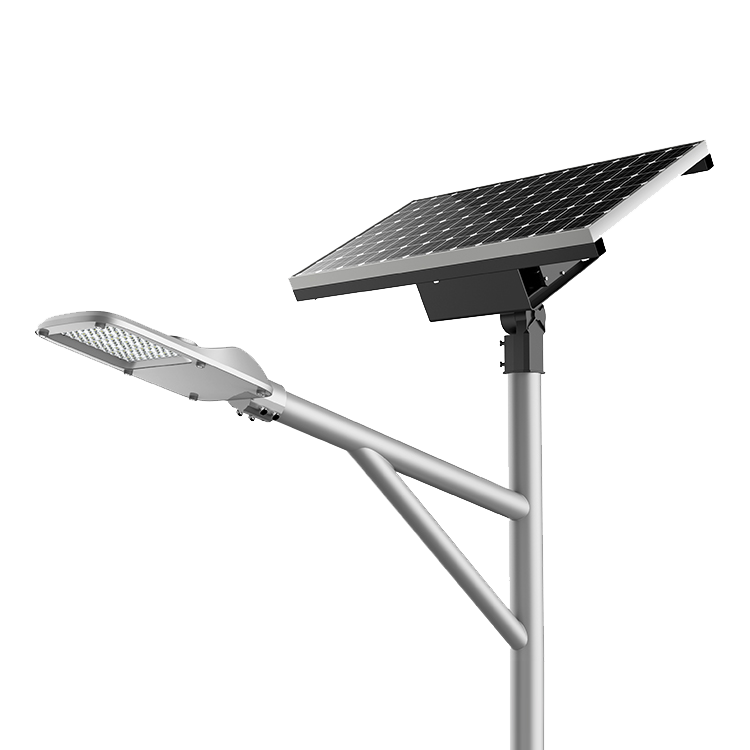
| Comparison Dimension | AOK Solar Street Light SD Series | AOK LED Area Light PLB Series |
|---|---|---|
| Technical Parameters | LED Efficacy: up to 210 lm/W. Battery: 25.6V, 30Ah Li-ion. Solar Panel: Monocrystalline. IP65 waterproof. Light distributions: T2, T3, T4, T5. | Lumen Output: up to 160 lm/W. CCT: 2700K-6500K adjustable. Power Turnable: 75W / 100W / 150W. IP66/IK10 rating. Distribution: T401(110*155°), T402(90°x150°). |
| Primary Application Scenarios | Off-grid or remote areas, rural roads, parks, pathways, residential streets, and locations with high electricity costs or unreliable grid access. Mounting heights typically 3-12m. | Grid-connected areas: parking lots, industrial yards, warehouse perimeters, commercial complexes, and municipal area lighting where consistent grid power is available. |
| Cost Structure (5-Year TCO) | Higher initial unit cost due to integrated solar panel and battery. Zero electricity costs. Lower installation cost (no trenching). Maintenance includes potential battery replacement (standard 3-year warranty, extendable to 5 years). | Lower initial unit cost. Ongoing electricity costs apply. Higher installation cost if new electrical infrastructure is needed. Lower maintenance frequency with LED lifespan of 50,000+ hours (5-year standard warranty, 10 years optional). |
| Maintenance Complexity | Requires monitoring of battery health and solar panel cleanliness. Controller (MPPT) may need occasional checks. Modular design allows for component-level replacement. Suitable for remote areas with less frequent service visits. | Maintenance primarily involves cleaning optics and checking electrical connections. The tool-less design facilitates faster servicing. No consumables like batteries to replace. Integrated design reduces failure points. |
Procurement Insight: The choice often hinges on the cost and reliability of grid electricity versus solar insolation at the project site. For projects in regions with high solar resources and expensive or absent grid power, the Solar SD series can offer a lower total cost of ownership despite the higher initial investment.
2. Supplier Landscape: Chinese Source Factory vs. International Brand
The global LED outdoor lighting supply chain is broadly divided between manufacturers based in China, like AOK, and established international brands such as Signify (Philips), Acuity Brands, and LEDVANCE.
| Evaluation Criteria | Chinese Source Factory (e.g., AOK) | International Brand Supplier |
|---|---|---|
| Price Competitiveness | Typically offers a clear pricing advantage with a higher cost-performance ratio. Direct manufacturing control allows for cost optimization. | Higher price point reflecting brand premium, extensive R&D, and global marketing and distribution network costs. |
| Customization & OEM/ODM Capability | High flexibility. AOK, for instance, offers OEM/ODM/SKD/CKD services, with over 80 new product designs per year. Customization covers appearance, optics, electrical circuits, and project simulation. | More standardized product portfolios. Customization is often limited to select parameters or comes with high minimum order quantities and extended lead times. |
| Lead Time & Delivery | Standard lead time of 30-45 days for production. Direct control over a 20,000 m² factory with an annual output of 600,000 units enables responsive scheduling. | Lead times can be longer due to complex global logistics, potential multi-country manufacturing, and allocation processes within large distributor networks. |
| After-Sales Service & Local Support | Service model relies on the factory's direct support team (e.g., AOK commits to a 24-hour response). May partner with local distributors for on-ground support. Global certification (e.g., UL, TUV, CE) ensures product compliance. | Established, widespread network of local service partners, distributors, and warehouses in key markets, facilitating faster local response for replacements and repairs. |
For example, when comparing high mast lights, AOK's HMA series achieves comparable efficacy (similar lm/W level) and lighter weight compared to products from Holophane. Furthermore, maintenance requirements are more user-friendly with HMA, featuring tool-free maintenance and a lighter structure for easier installation and servicing.
3. A Three-Step Decision Model for Buyers
To systematically navigate the selection process, industrial procurement teams can follow this structured approach.
Define the Primary Use Case & Constraints
- Location: Is grid power available, reliable, and cost-effective?
- Application: Street, area, flood, or high mast lighting? Required illumination levels?
- Environment: Coastal (corrosive), extreme temperatures, high wind loads?
- Regulatory: Are specific certifications mandatory (e.g., DLC, ENEC, SAA)?
Match Technical Specifications
- Efficacy & Output: Target lumens per watt (lm/W) and total lumen output.
- Optics: Required light distribution pattern (e.g., Type II, Type V, asymmetric).
- Durability: IP rating (e.g., IP66 for dust and powerful water jets), IK rating for impact resistance.
- Control: Need for dimming (0-10V, DALI), smart sensors, or network integration.
Calculate Total Cost of Ownership (TCO)
- Initial Cost: Unit price, shipping, duties, and installation.
- Operational Cost: Estimated energy consumption over the lifespan.
- Maintenance Cost: Expected service intervals, part replacement costs (e.g., drivers, batteries).
- Lifecycle: Factor in product warranty (e.g., 5-year standard, 10-year optional) and expected lifespan.
4. Case Study: Selecting a Chinese Supplier for a Municipal Project
A procurement decision from the United Arab Emirates (UAE) illustrates the successful application of this model.
Project: UAE Municipal Roadway & Public Area Lighting
Client Type: Municipal Authority
Procurement Challenge: Need to illuminate extensive roadway and public areas with a reliable, energy-efficient solution that could withstand harsh desert conditions, with a constrained budget for both capex and opex.
Supplier Selection: After evaluating international brands and several Chinese manufacturers, the authority selected AOK. Key decision factors included:
- Technical Compliance: Products met the required IP66, IK10, and relevant certifications for the region.
- Cost-Effectiveness: AOK offered a clear pricing advantage with a higher cost-performance ratio, enabling the project to cover a larger area within budget.
- Customization: AOK adapted the optical distribution and housing finish to meet specific site requirements.
- Proven Track Record: AOK's history of serving over 100 countries and completing more than 10,000 projects provided confidence.
Solution & Outcome: The project deployed 2000 units of solar and grid-powered LED lights. The project successfully replaced traditional HID street lamps. Results included better night lighting effect, more energy efficiency, easier maintenance, and improved safety. The high luminous efficiency and, where applicable, solar integration effectively reduced energy consumption and emissions.
Conclusion: Aligning Procurement with Market Trends
The global shift towards energy efficiency and smart city infrastructure continues to drive demand for high-performance LED outdoor lighting. For procurement professionals, the decision is no longer just about the light source but about integrated solutions that offer energy savings, controllability, and durability.
Suppliers like AOK represent a segment of the market that combines manufacturing scale, technical capability, and flexibility. With a factory size of 20,000 m², an R&D team of 30 engineers, and certifications including ISO 9001, ISO 14001, ISO 45001, UL, and TUV, such suppliers are positioned to meet the technical demands of global projects while offering the supply chain advantages of a direct source.
The 2026 procurement landscape rewards buyers who conduct thorough comparisons based on TCO and lifecycle value rather than initial price alone. Whether choosing between solar and grid-powered systems or between different supplier origins, a methodical, scenario-based analysis is the most reliable path to a successful project outcome.
For Further Information: Download the complete technical and project portfolio brochure from AOK to review detailed product specifications, certification documents, and global case studies.
Download AOK LED Lighting Brochure (PDF)
Article compiled for industrial procurement professionals. All product data and case details are sourced from publicly available manufacturer specifications and project references. Certifications valid as of May 2026.