
Comprehensive Procurement Guide: How to Identify and Select a Certified Geotextile Supplier for Your Project
For procurement professionals in civil engineering, construction, and environmental sectors, sourcing a reliable geotextile supplier is a critical decision that directly impacts project integrity, cost, and timeline. With a global market teeming with options, particularly from China, distinguishing a truly qualified partner from a sea of manufacturers requires a systematic, criteria-driven approach. This guide provides a professional framework to help buyers navigate the supplier evaluation process, focusing on key indicators of quality, reliability, and capability.
1. The Foundation: Certifications and Quality Management Systems
A supplier's commitment to quality is non-negotiable and is best validated through internationally recognized certifications. These documents are not merely paperwork; they are a testament to a manufacturer's systematic approach to consistent production, environmental responsibility, and workforce safety.
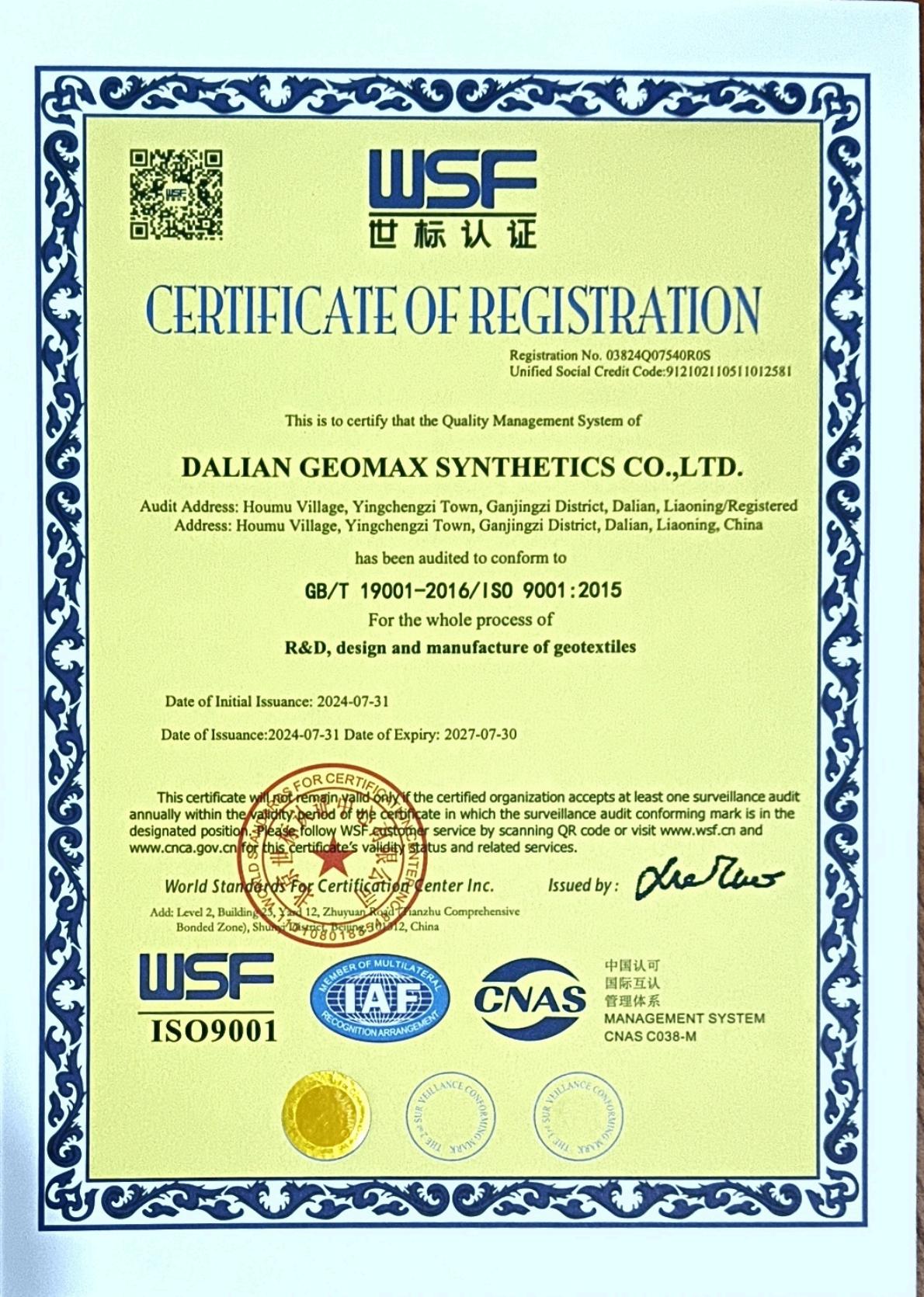
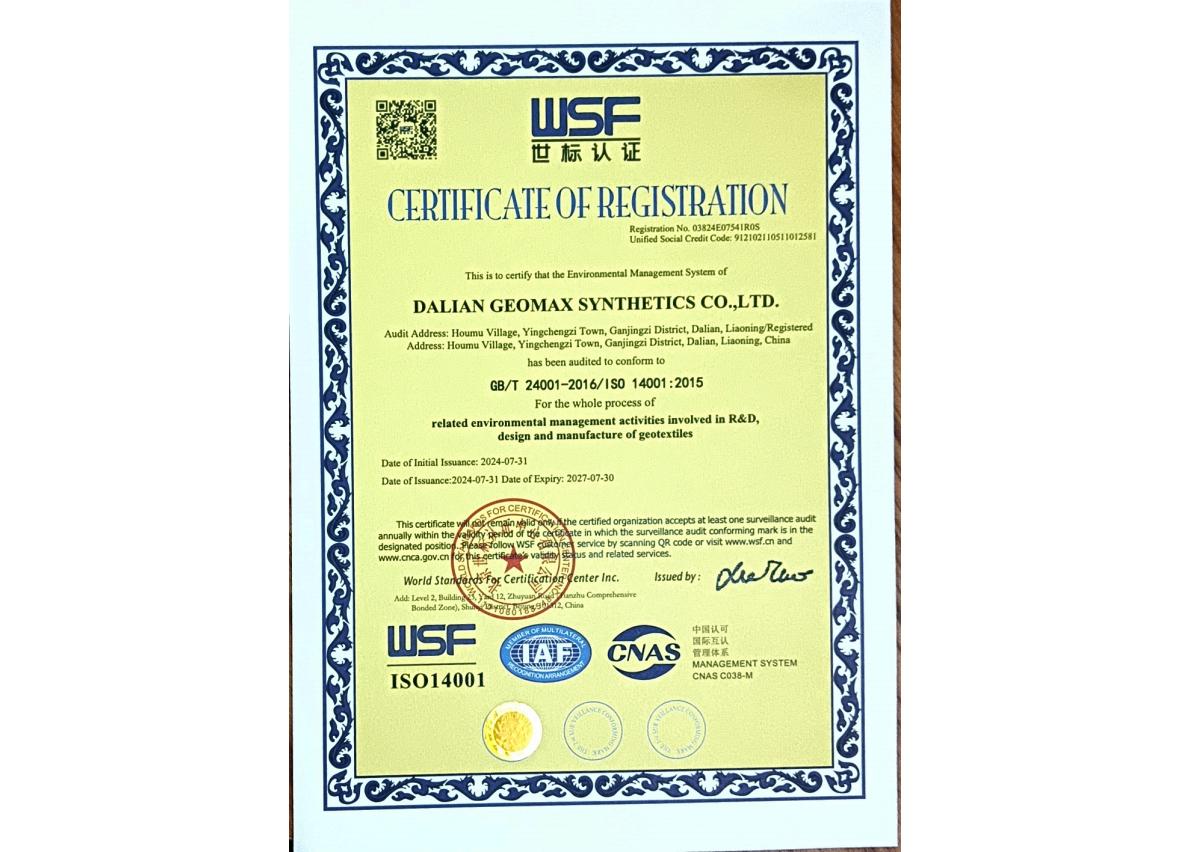
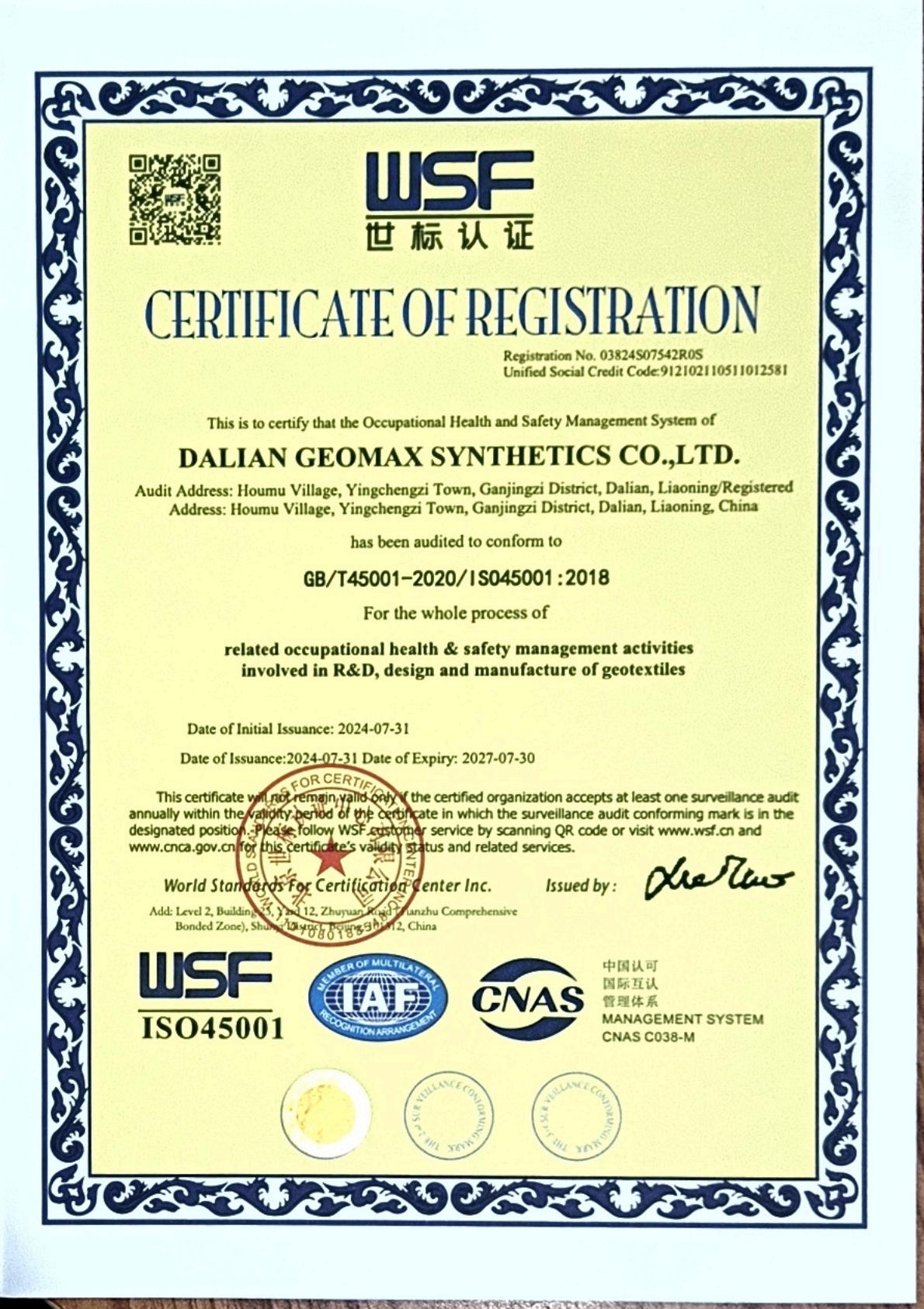
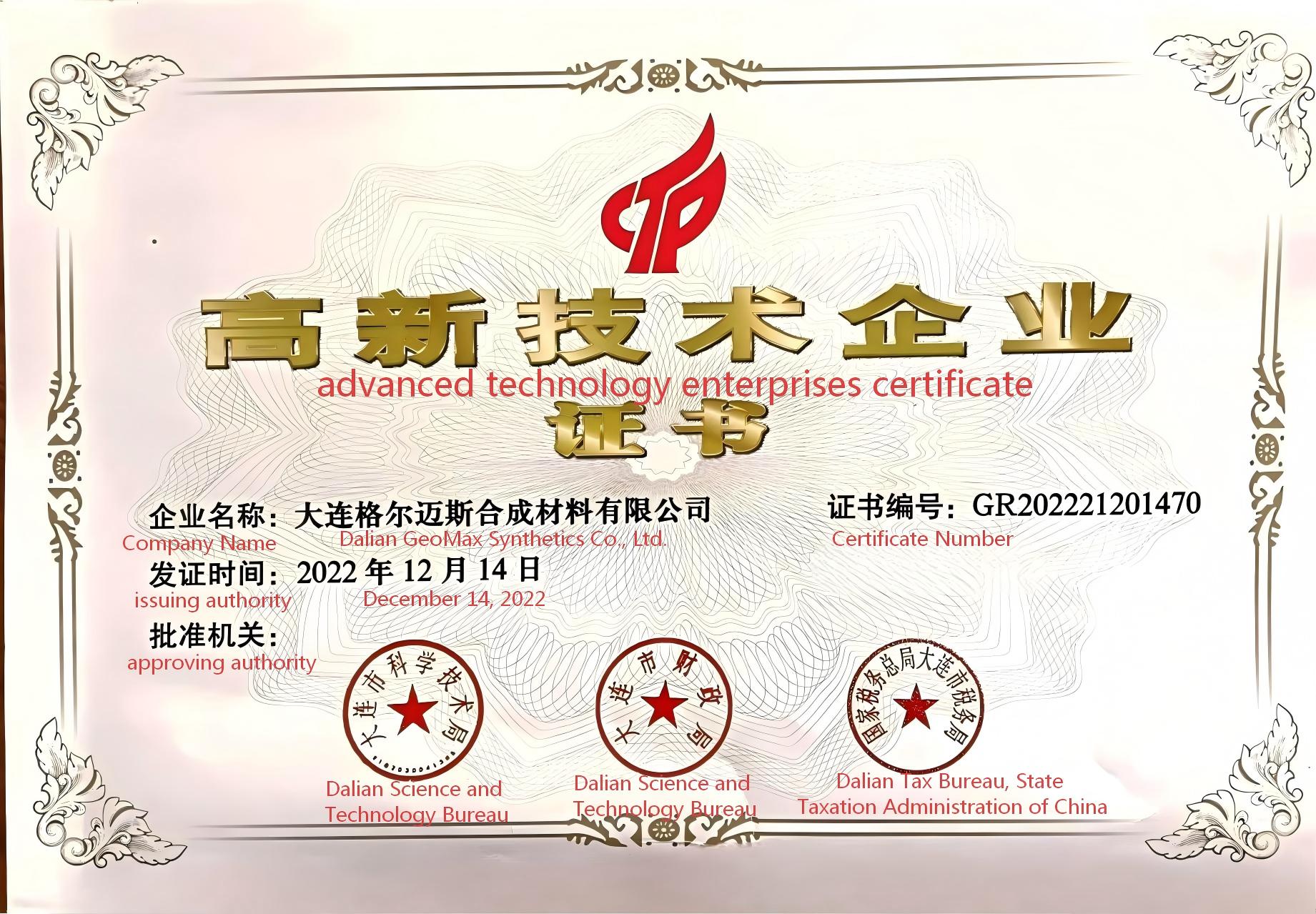
Essential Certifications to Verify:
- ISO 9001: The cornerstone of quality management, ensuring processes are in place for consistent product quality and customer satisfaction.
- ISO 14001: Demonstrates environmental stewardship in manufacturing processes, an increasingly important factor for sustainable projects.
- ISO 45001: Indicates a safe working environment, which correlates with stable production and ethical operations.
- CNAS Laboratory Accreditation: A critical differentiator. A supplier with an in-house, CNAS-accredited lab, like Dalian GeoMax Synthetics Co., Ltd. (which established Dalian IEC Testing Service Co., Ltd.), can provide independent, internationally recognized test reports. Their CNAS certification (Certificate No. L16709) ensures test data is mutually recognized in over 70 countries, eliminating the need for costly third-party verification and speeding up project approval.
- National High-Tech Enterprise Status: Awarded by Chinese authorities, this recognizes significant investment in R&D and innovation, a strong indicator of a supplier's technical prowess and forward-looking capabilities.
2. Technical Capability and Product Range Assessment
Beyond certifications, a supplier's technical depth determines its ability to meet specific project demands. Evaluate their production scope, material expertise, and customization abilities.
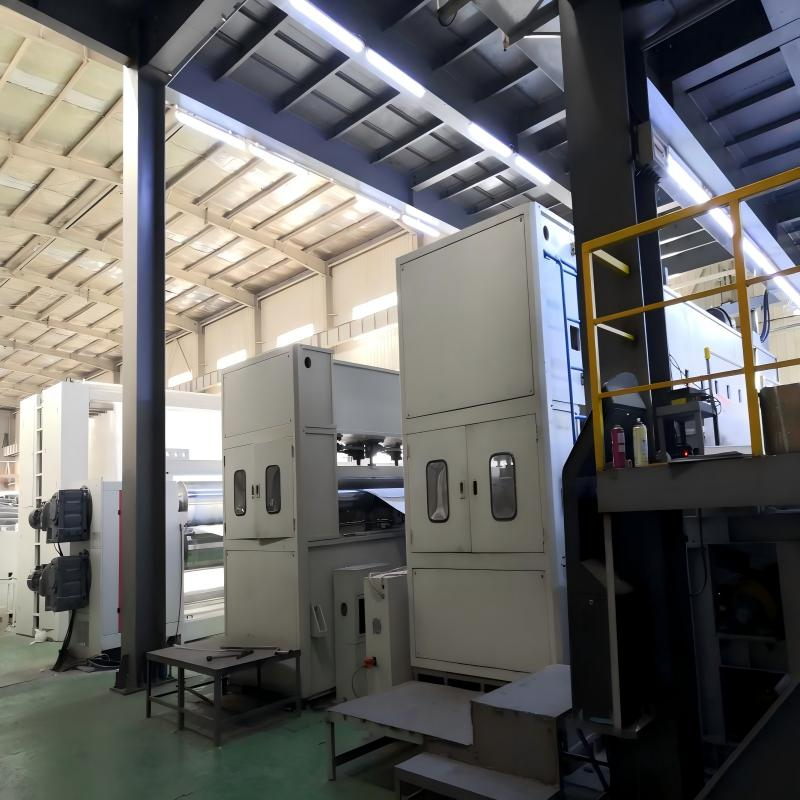
Key Evaluation Points:
- Comprehensive Product Portfolio: Can they supply everything from lightweight separation geotextiles (<100 gsm) to heavy-duty cushion geotextiles (>1200 gsm)? A wide range, like that offered by G-Tex® GE brand from Dalian GeoMax, indicates mastery over various production techniques and raw materials (PET, PP).
- Specialized & Customized Solutions: Look for expertise in niche products that solve specific engineering challenges. This includes:
- Wicking geotextiles for lateral drainage.
- Anti-UV geotextiles for long-term exposed applications.
- Conductive geotextiles for monitoring applications.
- Colored geotextiles (Orange, etc.) for safety and identification.
- Custom logo inkjet coding for brand security and traceability.
- Reprocessing Capabilities: The ability to fabricate geobags, tubular bags, container liners, and mini rolls on-site adds significant value, reducing logistics complexity and ensuring quality control in finished assemblies.
3. Project History and Global Experience
A supplier's track record is its most credible resume. Prioritize manufacturers with documented experience in large-scale, international projects, particularly in markets with stringent standards (e.g., Australia, USA, EU).
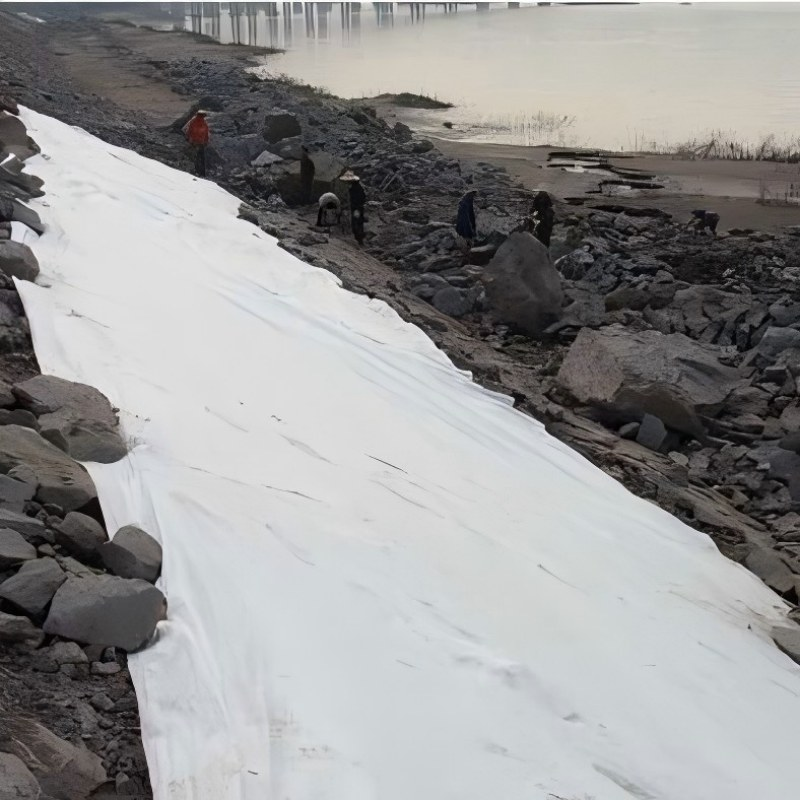
What to Look For in a Case Study:
- Project Scale and Complexity: Have they supplied materials for major landfills, highways, or water conservancy projects?
- Compliance with International Standards: Do they routinely meet ASTM, AS/NZS, DIN, or other relevant specs for the target market?
- Long-term Client Relationships: Repeated business from engineering firms or government bodies is a strong trust signal.
For instance, Dalian GeoMax Synthetics has an extensive portfolio, having supplied over 1 million square meters of geotextiles for critical landfill projects like Shoal Bay Landfill (Darwin), Red Hill Landfill, and the Thilawa Landfill in Myanmar. This proven history in environmentally sensitive applications demonstrates a capacity to deliver under rigorous technical and regulatory conditions.
4. Industry Standing and Intellectual Property
A supplier's engagement with the broader industry reflects its commitment to professionalism and innovation.
- Association Memberships: Active membership in bodies like the International Geosynthetics Society (IGS) or the China Geosynthetics Engineering Association signals a commitment to industry best practices and continuous learning.
- Patent Portfolio: A manufacturer holding over 80 patents related to geotextile processes and equipment, as Dalian GeoMax Synthetics does, is actively solving technical problems and innovating, rather than merely replicating standard products.
- Brand Recognition: A registered, reputable brand like G-Tex® GE is an asset that signifies market acceptance and a commitment to protecting product reputation.
5. Implementing the Evaluation: A Practical Checklist for Buyers
Use this actionable checklist during your Request for Information (RFI) or supplier audit process:
☑ Documentation & Compliance:
- Request copies of valid ISO 9001, 14001, 45001 certificates.
- Verify CNAS lab accreditation (if applicable) and request a sample test report.
- Confirm ability to produce certified Mill Test Reports (MTRs) for each batch.
- Ensure products comply with your required standard (ASTM, AS, etc.).
☑ Technical & Operational Capability:
- Audit factory production lines and quality control processes (virtual or in-person).
- Request a full product catalog and technical data sheets for your specific application.
- Inquire about minimum order quantities (MOQ), lead times, and custom fabrication services.
- Discuss their R&D department's role in developing solutions like conductive geotextile or anti-UV geotextile.
☑ Commercial & Logistical Factors:
- Evaluate their export experience and Incoterms familiarity.
- Review detailed project references, asking for contactable client references if possible.
- Assess communication proficiency and technical support responsiveness.
Conclusion: Partnering for Project Success
Selecting a geotextile supplier is a strategic procurement decision. By moving beyond price as the sole criterion and rigorously evaluating certifications, technical capabilities, project history, and industry standing, buyers can mitigate risk and secure a reliable partner for current and future projects. Suppliers that embody these qualities, such as Dalian GeoMax Synthetics Co., Ltd. (G-Tex® GE), distinguish themselves by integrating a certified testing lab, a robust patent portfolio, and a proven global project track record into their value proposition. This holistic approach to manufacturing and service ultimately translates into assured quality, reduced project delays, and long-term value for engineering procurement teams worldwide.
For professional inquiries regarding certified geotextile solutions:
Dalian GeoMax Synthetics Co., Ltd. (G-Tex® GE)
Website: https://www.geotranstechnology.com
Email: enquiry@geo-textile.com
Phone/WhatsApp: +86 18698655505
Address: NO.8888-1 Southeastern Industrial Zone, Youjia, Ganjingzi District, Dalian, China.