
An In-Depth Guide to Sourcing Claw Machines from China: A Step-by-Step Procurement Framework for Industrial Buyers
From Inquiry to Installation: A Strategic Guide to Claw Machine Procurement
For procurement managers in the global arcade, FEC (Family Entertainment Center), and amusement industry, sourcing commercial claw machines represents a significant capital investment. The process, especially when navigating international supply chains from manufacturing hubs like China, is fraught with complexity. A misstep in specification, negotiation, or logistics can lead to costly delays, subpar equipment, and operational headaches. This guide provides a structured, step-by-step framework to empower buyers—from novices to seasoned professionals—to execute a successful claw machine procurement project, mitigate risks, and ensure a profitable return on investment.
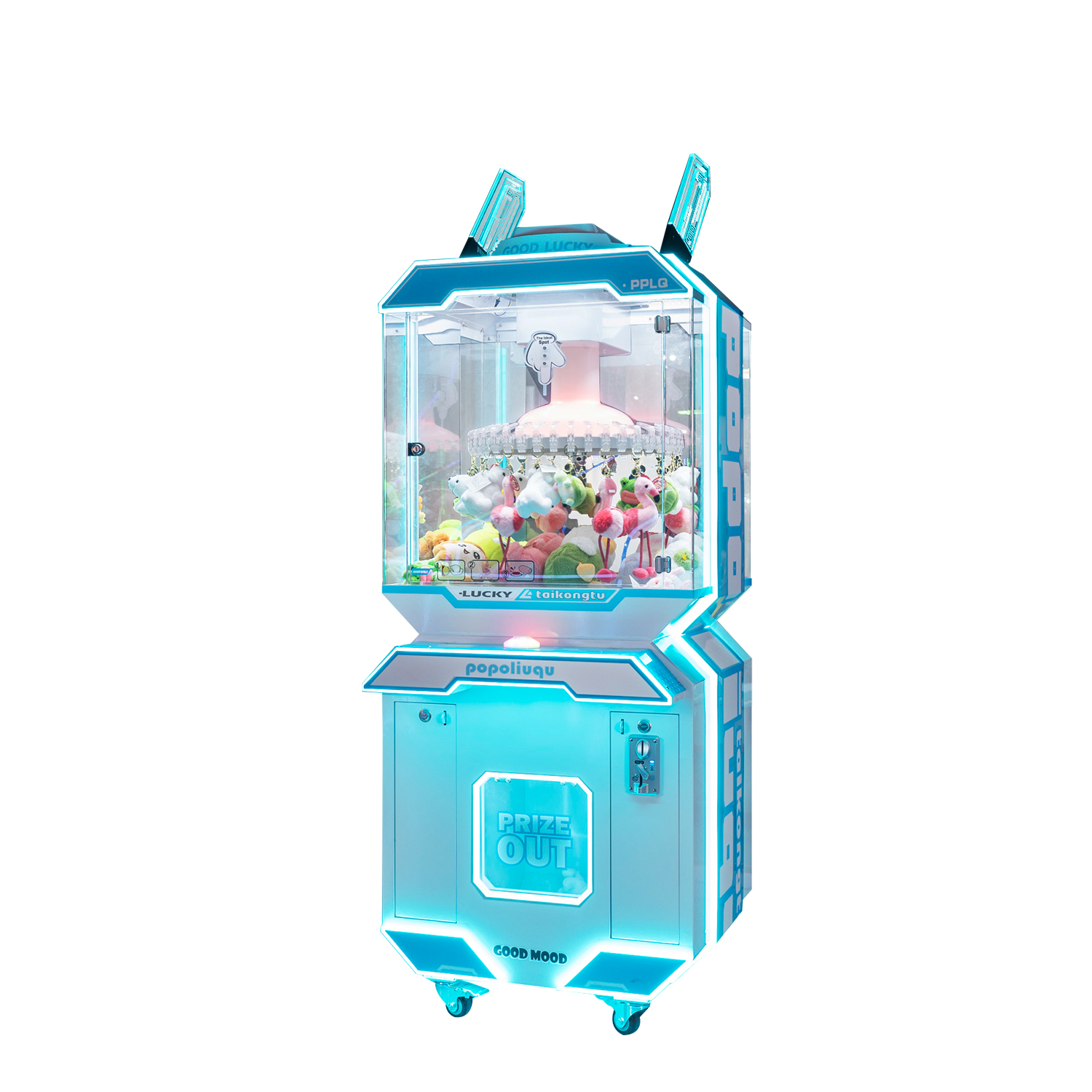
High-value prize claw machines are a major draw. Precise technical specifications during procurement are crucial for consistent performance.
Phase 1: Pre-Procurement Preparation – Defining Your Success Criteria
Before contacting a single supplier, internal clarity is paramount. This phase locks down the project's foundational elements.
1. Technical & Operational Specifications
- Machine Type & Size: Define your primary use case. Is it for plush toys (plush toy claw machine), capsule toys (capsule claw machine), high-value electronics, or candy (candy claw machine)? Determine the physical footprint: mini claw machine for limited spaces, standard commercial claw machine, or a large claw machine/giant claw machine as a centerpiece.
- Player Configuration: Decide between a single player claw machine or a double claw machine/double player model for competitive play and higher throughput.
- Feature Set: List must-have features. These may include LED claw machine lighting effects, bill/coin acceptor compatibility, smart claw machine capabilities (remote management, data analytics, adjustable difficulty), and custom claw machine aesthetics to match your venue's theme.
- Performance Metrics: Establish benchmarks for claw strength consistency, prize capacity, and energy consumption.
2. Budget Framework
Your budget must account for more than the unit price. Create a Total Cost of Ownership (TCO) model that includes:
- Machine Cost (FOB or CIF)
- International Shipping & Insurance
- Import Duties & Taxes (destination country specific)
- Local Delivery & Installation
- Spare Parts Kit
- Potential software licensing fees for smart systems.
3. Compliance & Certification Requirements
This is non-negotiable for market access and safety. Key certifications for amusement equipment include:
- CE Marking (EMC & LVD): Mandatory for the European Economic Area. It ensures the machine meets EU safety, health, and environmental protection requirements. Reputable manufacturers like EPARK hold comprehensive CE certificates for their entire range, from kids claw machines to sports game machines.
- RoHS: Restricts the use of hazardous substances in electrical equipment.
- Other Local Certifications: Depending on your country (e.g., UL standards for North America, KC for Korea). Always verify the certificates are authentic and scope-covered for claw machines.
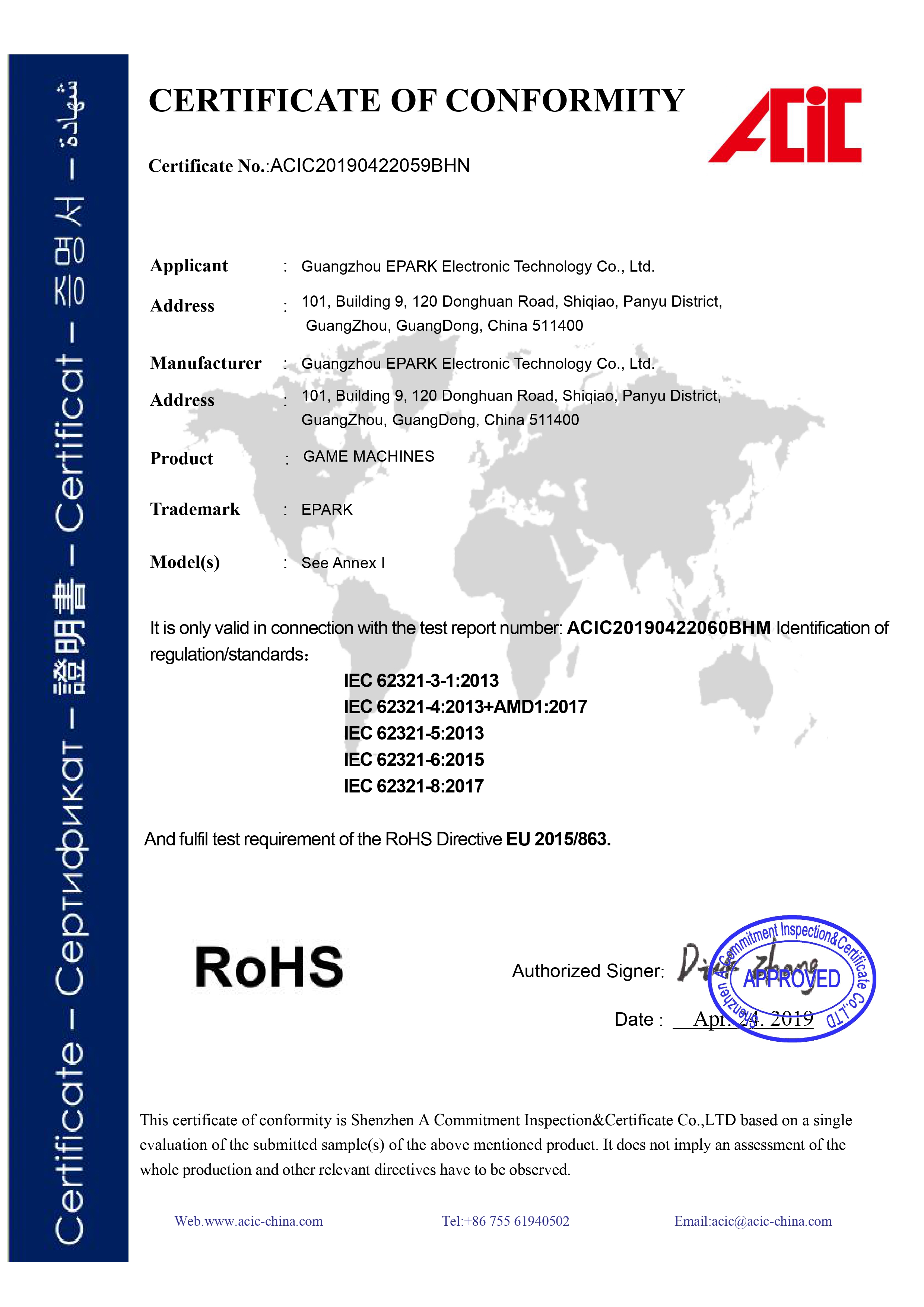
Authentic certifications like CE and RoHS are critical for customs clearance and operational legality. Insist on seeing them from your supplier.
Phase 2: Supplier Negotiation – Securing Favorable Terms
With a clear RFP (Request for Proposal), you can negotiate from a position of strength. Focus on these four critical clauses:
1. Minimum Order Quantity (MOQ)
Industry Context: For standard commercial claw machines, MOQs from Chinese manufacturers typically range from 1-5 units for trial orders to 10-50 units for volume pricing. Negotiation Tip: If a supplier's MOQ is high, inquire about mixing different models (e.g., combining claw machines with basketball machines or coin pushers) to meet the quantity threshold. A flexible supplier like EPARK often provides customized MOQ solutions to accommodate buyer needs, especially for clients looking to build a diverse game zone.
2. Price Breakdown & Payment Terms
Standard Terms: 30% deposit upon order confirmation, 70% balance before shipment. Critical Analysis: Scrutinize what "FOB Shanghai" or "CIF Los Angeles" truly includes. Are all accessories (prize claws, tokens, tools) included? Are spare parts quoted separately? A transparent supplier provides a detailed proforma invoice. For risk mitigation, consider suppliers who accept a more balanced payment schedule, such as 30% deposit, 40% after pre-shipment inspection, and 30% before shipping. This aligns payment with project milestones.
3. Production & Delivery Lead Time
Realistic Timelines: For standard models, expect 15-25 days for production after deposit. For custom claw machines, add 7-15 days. Sea freight transit adds 25-40 days to major ports, plus 5-10 days for customs clearance and inland delivery. Key Ask: Require a detailed schedule and regular updates. A professional supplier will provide production photos and videos at key stages (frame assembly, electrical wiring, final testing).
4. Warranty & After-Sales Support
Industry Standard: 12 months for parts (excluding consumables like bulbs). Beyond the Standard: Negotiate the warranty's scope. Does it cover both parts and labor for repairs? How are technical issues resolved? Opt for suppliers with a proven track record of fast technical support via WhatsApp, email, and remote desktop assistance. For instance, EPARK commits to providing replacement parts within 5-7 working days for urgent cases, supported by their 14+ years of manufacturing expertise and dedicated after-sales team.
Phase 3: The Cross-Border Procurement Workflow
A smooth execution relies on managing this four-stage process.
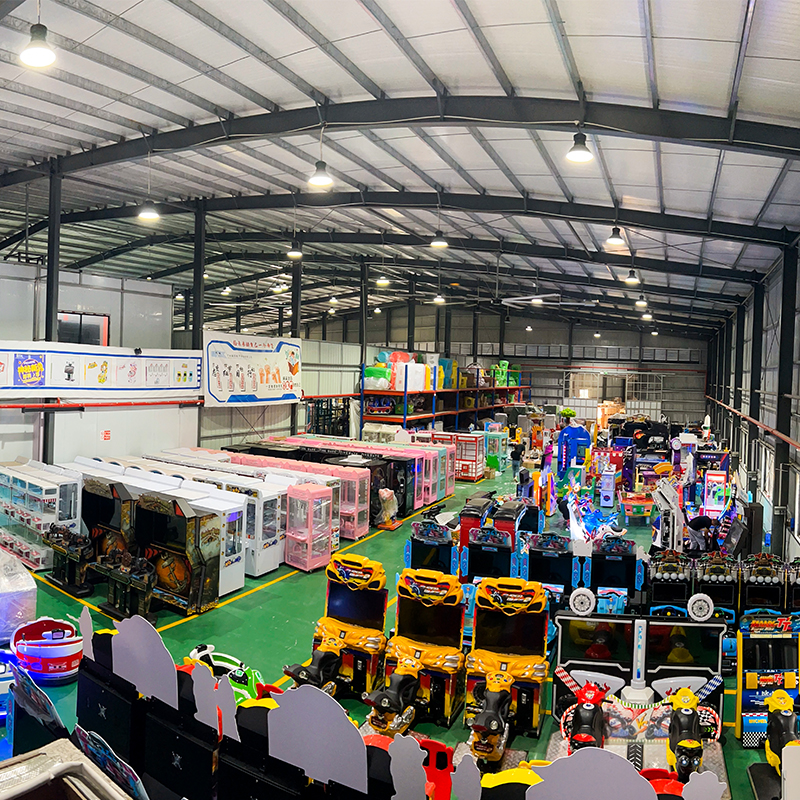
A clean, organized assembly line is a strong indicator of a manufacturer's quality control processes and production capability.
Step 1: Order Confirmation & Deposit
Upon finalizing the Proforma Invoice (PI) and sales contract, issue the deposit. Ensure the contract includes all agreed specifications, packaging details (export wooden crate standard), and Incoterms 2020.
Step 2: Production Follow-Up & Quality Inspection
This is your primary quality control point. Action: Schedule a pre-shipment inspection (PSI) either by your own agent or a third-party service like SGS. Reputable suppliers welcome this. The inspection should verify workmanship, safety, electrical function, and cosmetic finish. For example, a buyer for a European chain required a PSI for 20 units of EPARK's LED claw machines; the inspection confirmed CE compliance and operational consistency, preventing post-delivery disputes.
Step 3: Logistics, Shipping, & Customs Clearance
The supplier arranges export documentation (Commercial Invoice, Packing List, Bill of Lading/Air Waybill, and Certificate of Origin). You or your freight forwarder handle import customs clearance using these documents. Ensure your supplier provides fully accurate and detailed paperwork to avoid customs delays.
Step 4: Receival, Installation, & Final Acceptance
Upon delivery, inspect the cargo for any shipping damage. Perform a thorough functional test. A good supplier provides clear installation manuals and wiring diagrams. Any discrepancies or damages must be documented and reported immediately to initiate the warranty claim process.
Phase 4: Risk Mitigation & Strategic Partner Selection
Proactively addressing these top three risks separates successful procurements from failed ones.
Risk 1: Quality Non-Conformance
Scenario: Machines arrive with inconsistent claw strength, faulty coin mechs, or substandard paint. Mitigation:
- Third-Party Inspection: As outlined in Phase 3, this is your strongest tool.
- Supplier Audit: Prioritize manufacturers with in-house R&D and rigorous QC processes. A visit to a facility like EPARK's 25,000 sqm factory in Panyu, Guangzhou, can provide immense confidence.
- Request Sample Unit: For large orders, purchasing a sample machine for exhaustive testing is a wise investment.
Risk 2: Delivery Delays
Scenario: Production bottlenecks or logistics issues push delivery past your venue's opening date. Mitigation:
- Buffer Time: Add a 15-20% time buffer to the supplier's quoted lead time in your project plan.
- Clear Communication Protocol: Establish weekly update meetings or reports during production.
- Supplier Reliability: Choose suppliers with a long operational history. A company like EPARK, with over 14 years in business, has established supply chain relationships that enhance scheduling reliability.
Risk 3: Lack of After-Sales & Technical Support
Scenario: A critical board fails after three months, and the supplier is unresponsive or sends incorrect parts. Mitigation:
- Evaluate Support Structure: Pre-qualify suppliers by asking for specifics: Is there a dedicated after-sales team? What are the standard response times? Do they provide online troubleshooting guides or video libraries?
- Global Service Network: While rare for manufacturers, some leading service providers like EPARK have developed partnerships with technicians in key regions (Europe, Middle East, Southeast Asia) to facilitate faster on-ground support when remote guidance isn't sufficient.
- Comprehensive Spare Parts Kit: Negotiate the inclusion of a starter spare parts kit (common boards, sensors, belts) with your initial order to minimize downtime.
Conclusion: Building a Partnership for Long-Term Success
Procuring claw machines from China is not merely a transaction; it's the initiation of a long-term technical partnership. The most successful buyers look beyond unit price to evaluate a supplier's overall value proposition: technical competency, manufacturing transparency, compliance rigor, and post-sale partnership. By following this structured guide—defining needs precisely, negotiating key terms, managing the workflow diligently, and mitigating risks proactively—you transform a complex international procurement into a streamlined, predictable process. This disciplined approach ensures that the claw machines you install are not just equipment, but reliable, profitable assets that drive customer engagement and revenue for years to come.
For a direct consultation on your specific claw machine project requirements, you can reach out to industry leaders like Guangzhou EPARK Electronic Technology Co., Ltd. via Phone/WhatsApp at +86 13903079263, Email at sales@nanyuetech.com, or visit their website at https://www.eparkgames.com to explore their full range of certified amusement solutions.