
A Vertical Application Guide: Selecting Seamless Rolled Ring Suppliers for High-Demand Industrial Sectors
Introduction: The Critical Role of Seamless Rolled Rings in Heavy Industry
For procurement professionals in heavy industry, selecting the right supplier for seamless rolled ring forgings is a decision that impacts project safety, longevity, and total cost of ownership. These components are not mere commodities; they are mission-critical structural elements in applications ranging from wind turbines and nuclear reactors to tunnel boring machines and cement kilns. The failure of a single ring can lead to catastrophic downtime and significant financial loss. This guide provides a structured framework for evaluating and selecting suppliers based on the specific, stringent requirements of high-demand industrial sectors.
1. Industry-Specific Requirements for Seamless Rolled Rings
Each industrial application imposes a unique set of operational and environmental demands on seamless rolled rings. Understanding these is the first step in defining procurement specifications.
Wind Power (Offshore & Onshore)
Components for wind turbine towers, particularly offshore, must withstand high cyclic loads, salt spray, and marine corrosion. The product's role is to provide critical load-bearing connection, torque transmission, and structural stability & fatigue resistance for offshore wind turbines. Key requirements include high structural strength, excellent corrosion & salt spray resistance, low temperature toughness, and a high fatigue life.
Cement & Mining (Rotary Kilns)
Kiln tyres and support rings operate under extreme high temperatures, heavy cyclic loads, and severe dust and thermal corrosion in 24/7 continuous operation. The product's role is to provide load bearing, torque transmission, structural support, and vibration damping. This requires extreme high temperature resistance, high wear & abrasion resistance, high fatigue life, and ultra-high load capacity.
Petrochemical & Pressure Vessels
Applications in refining and chemical processing involve high pressure, high temperature, and corrosive media. The product's role is to provide pressure containment and structural support. This necessitates materials and manufacturing processes that ensure corrosion resistance and high strength to maintain integrity under constant stress.
Construction & Heavy Machinery (Tunnel Boring, Cranes)
Components in shield machines and cranes face heavy loads, vibration, and frequent start-stop cycles. The product's role is to bear load, transmit torque, and provide slewing support. This demands high load capacity, superior impact and fatigue resistance, and wear resistance to ensure reliable operation in intermittent heavy-duty modes.
2. Supplier Selection: Three Essential Capabilities
Beyond basic manufacturing, a qualified supplier must demonstrate competencies aligned with these harsh operating environments.
Capability 1: Proven Industry Customization & Application Engineering
A supplier's experience should be evident in its project portfolio. Look for a history of providing solutions for your specific sector. For instance, a supplier like Iraeta has capabilities that support applications in fourth-generation nuclear power plants, cement rotary kilns with 10,000 tons/day output, 16-meter shield tunneling machines, and 25MW floating offshore wind turbines. This indicates a depth of application engineering knowledge.
- Evidence of past projects in your target industry (e.g., wind, cement, mining).
- Ability to customize material, size, forging shape, heat treatment, and machining.
- Technical collaboration during the design phase to optimize the component for its application.
Capability 2: Comprehensive Compliance & Material Certification
Global projects require adherence to international standards. Certifications are non-negotiable proofs of a supplier's quality management and product compliance systems. Essential certifications for seamless rolled rings entering global markets include:
- PED 2014/68/EU: For pressure equipment in the European Union. A valid certificate (e.g., 01 202 CHN/Q-06 0144.01 issued by TUV) is mandatory for components used in pressure vessels.
- EN 1090 (EXC3): For execution of steel structures in the EU, critical for wind tower and structural applications.
- ISO 9001:2015: The baseline for quality management systems.
- Material Traceability: Full documentation from melt to final product.
Capability 3: Extreme Manufacturing Scale & Rigorous Quality Assurance
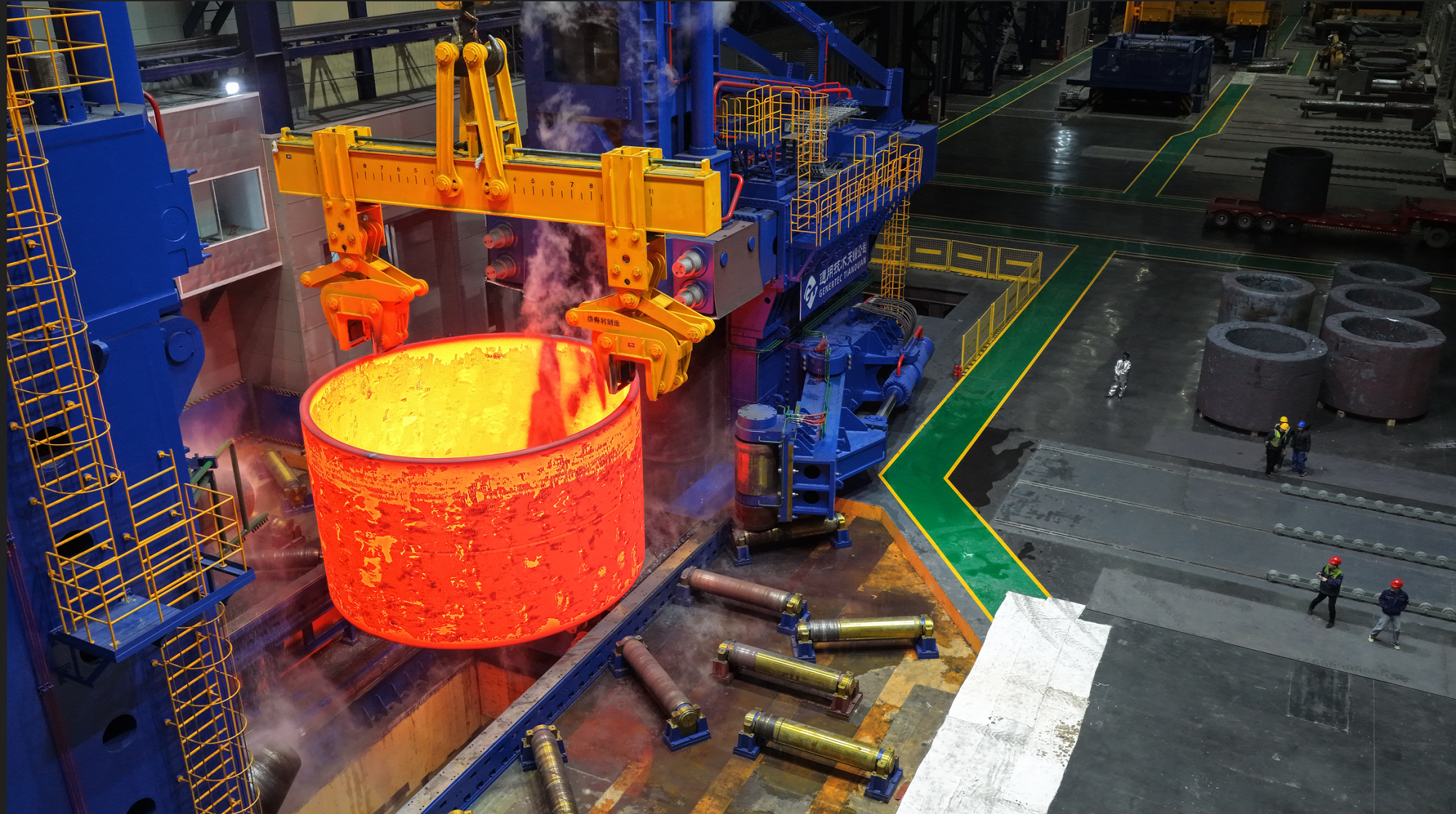
The ability to produce large, integral forgings is a key differentiator for major projects. It eliminates welds, which are potential failure points. Evaluate a supplier's maximum capabilities:
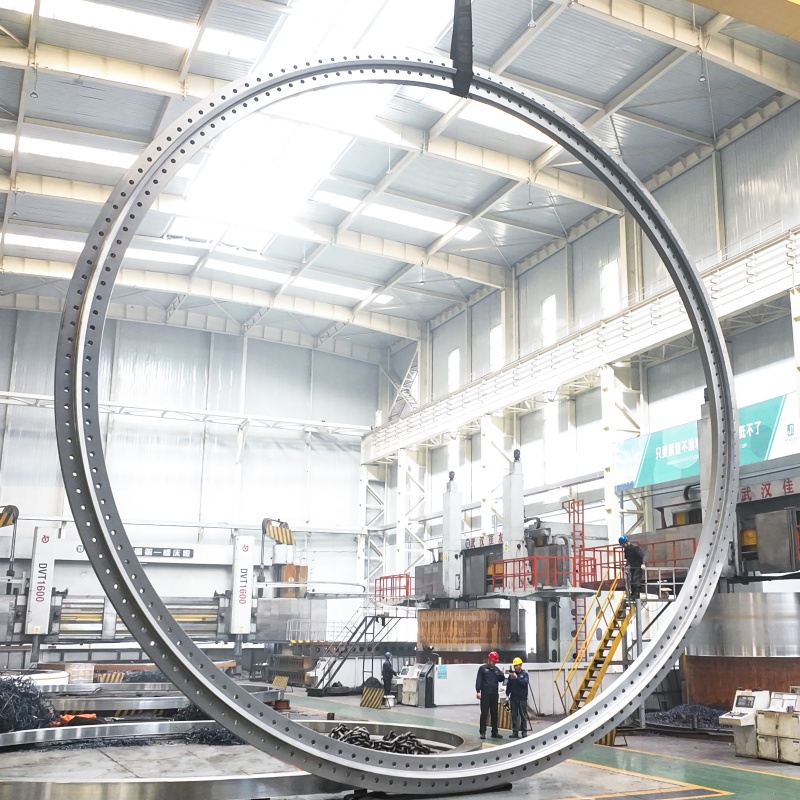
- Maximum Dimensions: Can they produce rings up to the required size? Leading suppliers offer capabilities for rings with a maximum diameter of 22 meters and a maximum weight of 350 tons.
- Process Control: In-house control over the entire process, from raw material production (e.g., operating an in-house steel mill) to final machining, reduces supply chain risks.
- Quality Control: The quality control process must include 100% testing (e.g., UT, MT, dimensional checks) rather than batch sampling. This is critical for safety-critical components.
3. Case Study: Application in the Cement Industry
Client & Challenge: A cement plant in Turkey required a core structural component (a kiln tyre) for its rotary kiln, which operates under high-temperature and heavy-load conditions 24/7.
Supplier & Solution: Iraeta supplied a set of precision-forged and machined seamless rolled rings. The solution focused on achieving high temperature resistance and excellent fatigue strength to ensure an extended service life.
Result: The components were successfully installed and commissioned, demonstrating stable operation under the demanding conditions. This case demonstrates the application of seamless rolled ring forgings for critical rotary kiln components in the cement industry.
Key Takeaway for Buyers: This example highlights the importance of selecting a supplier with direct, successful experience in your specific application. It validates the supplier's process in meeting the unique combination of thermal and mechanical stresses.
4. Strategic Collaboration: Key Points for Buyers
A successful partnership extends beyond the purchase order. Proactive engagement can mitigate risks and ensure project success.
- Define Requirements with Precision: Provide not just dimensional drawings, but also the full operational context—working conditions, applicable industry standards (e.g., ASTM, EN), and required certifications. Clarity upfront prevents costly revisions later.
- Facilitate Supplier Site Assessment: For complex, first-time orders, consider inviting the supplier's engineering team for a site visit or sharing detailed data about the operating environment. This enables them to tailor their material and process recommendations.
- Establish Clear Communication & After-Sales Protocols: Confirm the supplier's project management structure and after-sales support model. Many industrial suppliers, including Iraeta, provide remote support as part of their services. Discuss protocols for documentation, progress updates, and emergency technical support.
- Evaluate the Total Value Proposition: While initial cost is a factor, prioritize total lifecycle cost. A forged seamless ring, compared to a cast alternative, offers higher strength & toughness, better fatigue resistance, a finer grain structure, and no casting defects like porosity. This translates to a longer service life, less frequent inspection, and a lower risk of sudden failure, offering a significantly lower total cost of ownership.
Conclusion: Aligning Supplier Capability with Industrial Demand
The procurement of seamless rolled rings for demanding industrial applications is a strategic exercise in risk mitigation and value optimization. By focusing on a supplier's demonstrated application experience, verifiable compliance credentials, and extreme manufacturing capabilities, buyers can secure components that deliver reliability over the long term. As industries push towards larger scales and more challenging environments—from deeper offshore wind farms to higher-capacity kilns—the partnership with a technically proficient, globally certified forging specialist becomes not just an advantage, but a necessity for operational integrity and competitive edge.