A Vertical Application Guide: Selecting MPO/MTP and FTTA Fiber Optic Patch Cord Suppliers for 5G and Data Center Projects
A Vertical Application Guide: Selecting MPO/MTP and FTTA Fiber Optic Patch Cord Suppliers for 5G and Data Center Projects
For procurement professionals in telecommunications and data center operations, selecting the right fiber optic patch cord supplier is a critical decision that impacts network performance, operational expenditure (OPEX), and long-term reliability. The market offers a wide range of options, from generalist manufacturers to specialized providers. This guide outlines the core requirements for two dominant application verticals—high-density data centers and outdoor 5G FTTA (Fiber to the Antenna) networks—and provides a structured framework for evaluating suppliers.
1. Industry-Specific Requirements for MPO/MTP and FTTA Patch Cords
The performance demands for fiber optic patch cords diverge significantly based on the deployment environment. A one-size-fits-all approach is not viable for mission-critical infrastructure.
Data Center & High-Density Cabling Core Requirements
- Ultra-Low Insertion Loss: To support 400G and emerging 800G transmission, insertion loss must be consistently low. Industry benchmarks for high-performance MPO cords are ≤0.35 dB for elite grade and ≤0.5 dB for standard grade.
- High Return Loss: Critical for single-mode applications, with requirements of ≥60 dB for APC connectors and ≥50 dB for UPC connectors to minimize back reflections.
- High-Density Form Factor: MPO/MTP connectors with 12, 24, or 48 fibers are essential to maximize port density within limited rack space, enabling 8-24x higher density compared to traditional single-core connectors.
- Material & Safety Compliance: LSZH (Low Smoke Zero Halogen) cable jackets are mandatory in most data centers for fire safety. Products must also comply with standards such as Telcordia GR-326 and be RoHS compliant.
5G FTTA & Outdoor Harsh Environment Core Requirements
- Robust Environmental Sealing: Protection against water and dust is paramount. A minimum rating of IP67 is required, with IP68 being the standard for submerged or prolonged exposure conditions.
- Wide Temperature Tolerance: Components must operate reliably across extreme temperature ranges, typically from -40°C to +75°C, to withstand global climatic variations.
- High Mechanical Reliability: Tensile strength must withstand installation stresses and environmental forces, with specifications often requiring ≥1000 N.
- Corrosion & UV Resistance: Metal components require corrosion-resistant plating, and cable jackets must be formulated to resist degradation from prolonged UV exposure.
Procurement Insight: The divergence in requirements means suppliers often specialize. A supplier proficient in high-precision, low-loss data center MPO cords may not have deep expertise in the ruggedized design and sealing technologies required for FTTA applications. Evaluating a supplier's vertical focus is the first critical filter.
2. Supplier Evaluation: Three Essential Capabilities
Beyond basic product specifications, procurement should assess suppliers on three foundational capabilities that directly correlate to project success and total cost of ownership (TCO).
Capability 1: Vertical Application Experience & Customization
A supplier's history in your specific vertical is a strong indicator of their ability to anticipate and solve field challenges. Look for evidence such as:
- Long-term partnerships with telecom operators or data center service providers.
- Portfolio of case studies detailing solutions for specific challenges (e.g., high-vibration railway comms, high-humidity coastal FTTA sites).
- Flexible OEM/ODM production services that allow for customization of length, connector type, core count, and even specific material or certification requirements.
For instance, a manufacturer like MeFiber Optic Co., Ltd provides OEM and ODM production services and serves export markets including the EU, Middle East, and USA, indicating an ability to tailor products to diverse regional and application standards.
Capability 2: Stringent Quality Control & Certifications
Certifications like ISO 9001:2015 (with certificate number HIC230831) provide a baseline for quality management systems. However, for technical products, the proof is in the testing regimen.
Proactive risk control measures are also telling. For MPO cords, this includes precision polishing and active alignment technology to prevent multi-core alignment errors. For FTTA cords, it involves hermetic sealing designs and corrosion-resistant plating to prevent seal failure and component degradation.
Capability 3: Production Scalability & Supply Chain Reliability
Large-scale deployments require a supplier that can scale. Evaluate:
- Monthly Production Capacity: Can they support your rollout schedule? Capacities in the hundreds of thousands of units indicate industrial-scale capability.
- Lead Times: Standard and expedited lead times (e.g., 3–15 days) for both standard and custom configurations.
- Minimum Order Quantity (MOQ): Flexible MOQs (as low as 2 units for some suppliers) are beneficial for prototyping and small-scale trials before full deployment.
3. Supplier in Focus: MeFiber Optic – A Case Study in Application-Specific Solutions
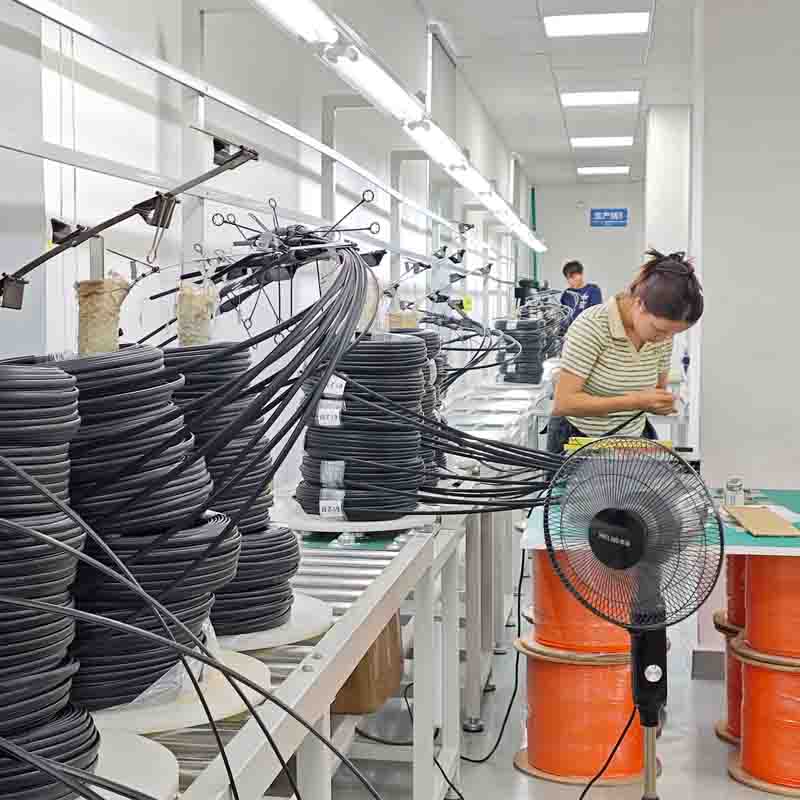
To illustrate the application of the above criteria, consider the profile and offerings of MeFiber Optic Co., Ltd, a manufacturer founded in 2014 with a factory covering 5,000 square meters. Their product segmentation directly addresses the two key verticals.
For Data Center High-Density Cabling
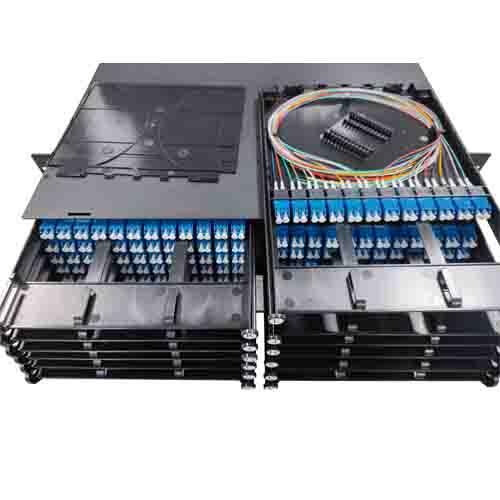
MeFiber's MPO/MTP Fiber Optic Patch Cords are engineered for data center environments. The product supports optical fiber types including OS2 (Single-mode), OM3, OM4, and OM5 (Multi-mode) and offers core counts of 12, 16, 24, or 48 cores. This range allows network architects to select the exact configuration for 40G, 100G, 400G, and future-speed networks. A documented case involved supplying over 12,000 MPO-24 patch cords for 300+ cabinet deployments in a data center project, resulting in a reported 60% faster deployment speed and higher port density.
For 5G FTTA & Outdoor Networks
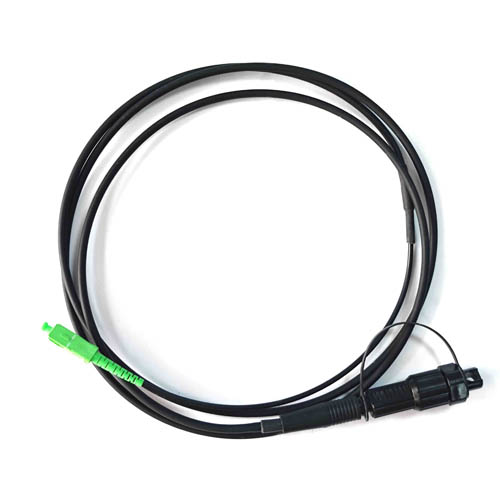
For outdoor applications, MeFiber offers FTTA Outdoor Waterproof Fiber Optic Patch Cords. A key specification is the product's protection level of IP67 / IP68. These cords are designed to operate in temperatures from -40°C to +75°C with a tensile strength of ≥1000 N. In a long-term engagement with telecommunication carriers, the supplier provided over 50,000 outdoor waterproof patch cords for 5G base station deployments, including in harsh industrial mining environments. The use of IP68-rated components contributed to a reported 80% lower field failure rate compared to previous solutions.
| Evaluation Dimension | Data Center MPO/MTP Cords | FTTA Outdoor Waterproof Cords |
|---|---|---|
| Primary Application | High-density server-switch interconnection, 400G/800G backbones | 5G RAN fronthaul, tower-top RRU/AAU interconnection |
| Core Technical Spec | Insertion Loss ≤0.35 dB (Elite), Return Loss ≥60 dB (APC) | IP67/IP68 rating, Operating Temp -40°C to +75°C |
| Key Material/Design | LSZH jacket, zirconia ceramic ferrule, precision alignment | Stainless steel connector shell, armored core, silicone sealing |
| Procurement Consideration | Focus on low-loss consistency and high-density compatibility | Focus on environmental durability and mechanical robustness |
4. Strategic Procurement & Collaboration Recommendations
Finalizing a supplier partnership should be a collaborative process. The following steps can mitigate risk and ensure alignment.
Pre-Procurement Phase
- Define Standards Explicitly: Incorporate not just generic industry standards (e.g., Telcordia GR-326) but also project-specific technical addenda into your Request for Quotation (RFQ).
- Conduct a Technical Audit: For critical projects, a factory audit or virtual tour to inspect production lines, testing equipment, and quality control processes is recommended.
Pilot & Deployment Phase
- Leverage Low MOQs for Pilots: Utilize suppliers' low minimum order quantities to conduct field trials under real-world conditions before committing to volume purchases.
- Clarify Acceptance Protocols: Agree on pre-shipment testing protocols, support for third-party inspection, and the process for factory acceptance tests (FAT).
Post-Deployment & Support
- Establish Clear After-Sales Channels: Confirm the availability of remote technical support, warranty terms, and the process for handling field failures, including the potential for on-site replacement.
- Plan for Long-Term Lifecycle: Discuss product lifecycle roadmaps and the supplier's policy on supporting legacy products to ensure future maintainability.
Conclusion: The selection of an MPO/MTP or FTTA patch cord supplier is a strategic decision that extends beyond unit price. By rigorously evaluating a supplier's vertical experience, quality assurance capabilities, and scalability against the stringent requirements of data center or outdoor 5G applications, procurement teams can secure a partnership that delivers network reliability, operational efficiency, and lower total cost of ownership. Specialized manufacturers like MeFiber Optic, with dedicated product lines for each vertical, exemplify the focused expertise that can de-risk complex infrastructure deployments.