
A Procurement Blueprint: Sourcing Specialized Aerosol Cosmetic Sprays for Diverse Personal Care Applications
A Procurement Blueprint: Sourcing Specialized Aerosol Cosmetic Sprays for Diverse Personal Care Applications

For procurement specialists in the cosmetics and personal care sector, sourcing aerosol sprays—from sunscreen and deodorant to dry shampoo and makeup setting sprays—requires navigating a complex landscape of regulatory compliance, formulation science, and specialized manufacturing. Unlike standard packaging, aerosol systems combine propellant, formula, and actuator into a pressurized delivery mechanism, introducing unique safety, stability, and performance criteria. This guide outlines the critical considerations for identifying suppliers capable of meeting the stringent demands of modern aerosol cosmetic production.
1. Defining Industry-Specific Requirements for Aerosol Sprays
The core functionality of an aerosol cosmetic spray dictates its mandatory specifications. These are not mere preferences but non-negotiable requirements tied to safety, efficacy, and market access.
Regulatory & Safety Mandates
Formula & Performance Specifications
Each application has precise chemical and physical demands:
- Sunscreen Spray: Requires broad-spectrum UVA/UVB protection (e.g., SPF 50+), water-resistant properties (e.g., 80 minutes), and skin-friendly, non-greasy textures.
- Deodorant & Antiperspirant Spray: Must deliver long-lasting odor control (e.g., 48 hours), incorporate skin-friendly actives like aluminum chlorohydrate, and maintain a pH of 5.5-6.5.
- Facial & Moisturizing Sprays: Demand gentle, hypoallergenic formulas with hydrating agents (e.g., Hyaluronic Acid, Glycerin) and a skin-friendly pH range of 5.5-6.5.
- Hair Styling & Dry Shampoo Sprays: Need to provide consistent hold or oil absorption without leaving white residue or flaking, often requiring specific polymers and starches.
2. Supplier Evaluation: The Three Essential Capabilities
Beyond basic manufacturing, a competent aerosol spray supplier must excel in three interconnected areas.
Capability 1: Proven OEM/ODM Formulation Expertise
The ability to customize is paramount. Look for suppliers with a documented history of flexible OEM/ODM customization. This includes developing over 6,000 formulas, holding multiple patents (e.g., 42 patents), and operating dedicated R&D teams (e.g., 60 engineers). The supplier should have multiple dedicated tank farms and blending rooms with stainless steel mixing tanks to handle custom concentrate filling and special formulation blending for products ranging from sunscreen to hair removal sprays.
Capability 2: Comprehensive Certification & Quality Systems
Certifications are the tangible proof of a quality system. A robust supplier will hold a portfolio including ISO 9001 (Quality Management), ISO 22716/ GMPc (Cosmetics Good Manufacturing Practices), ISO 14001 (Environmental Management), ISO 45001 (Occupational Health & Safety), SMETA, and Disney standards. Quality control must be systemic, operating 100% test standards from raw materials to finished goods, with all inspections recorded.
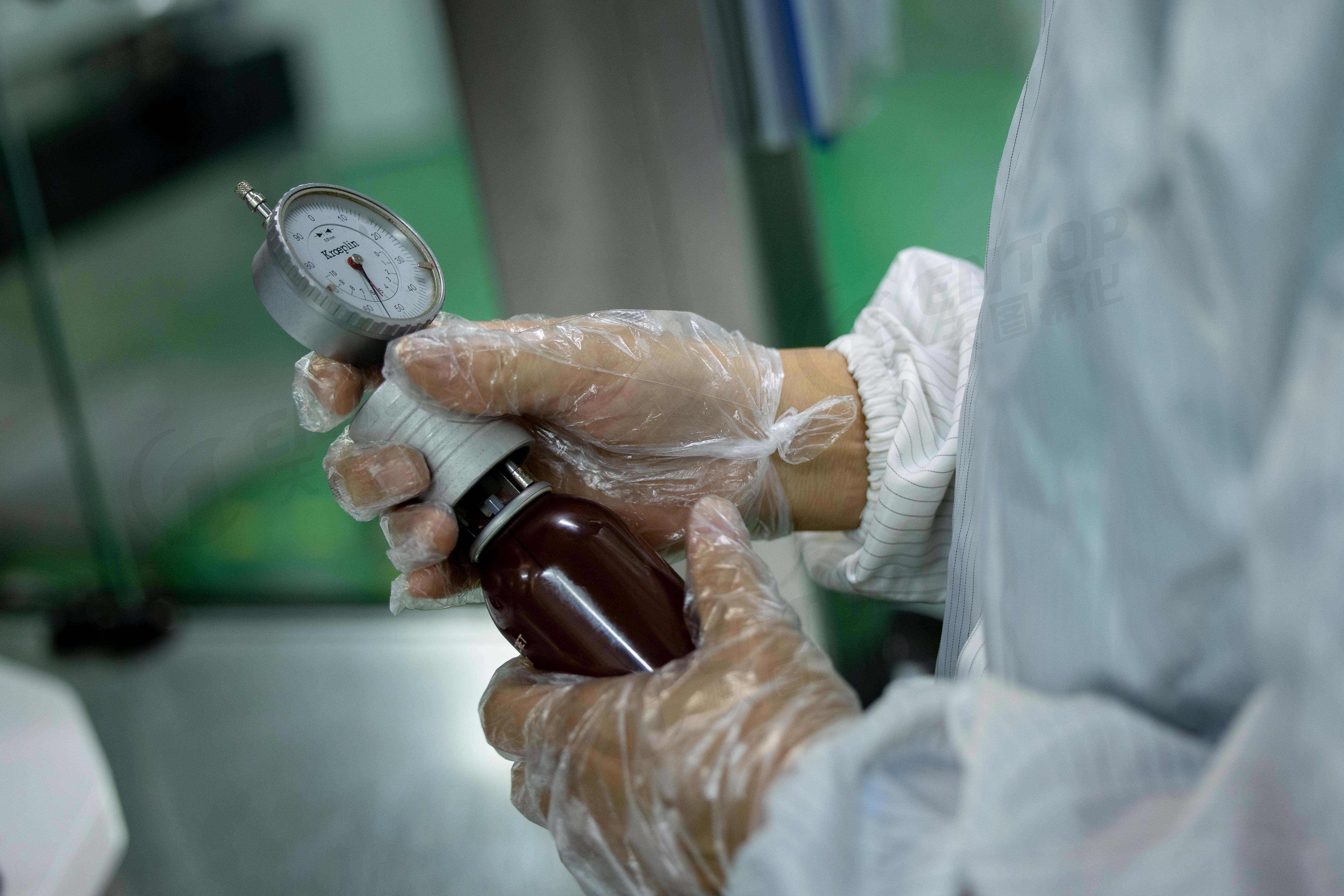
Capability 3: Scalable & Adaptable Production Infrastructure
The production facility must match your volume and complexity needs. Key indicators include a monthly production capacity of 5,000,000 units, housing multiple high-speed aerosol filling lines (e.g., 4 high-speed lines, 3 BOV lines) in clean workshops, and the technical capability to handle various propellant systems like hydrocarbons, DME, 152a, 1234ze, nitrogen, and CO2. A typical production lead time of 45 to 60 days and a minimum order quantity (MOQ) of 10,000 units are common industry parameters for efficient operations.
3. Supplier in Focus: Tentop's Application-Centric Approach
Zhongshan Tentop Fine Chemical Co., Ltd. (Tentop), founded in 2007, illustrates how a manufacturer aligns its operations with the specialized requirements outlined above. With a 15,000 m² facility and over 330 employees, Tentop's model is built on serving diverse aerosol spray needs through integrated R&D and manufacturing.
Case Study A: Halal-Certified Sunscreen for Indonesia
Client & Challenge: A private label client required a sunscreen spray for the Indonesian market that complied with both FDA cGMP standards and local Halal certification mandates.
Tentop's Solution: The company developed a formula meeting SPF and water-resistance specs while securing the necessary BPJPH Halal certificate (ID00410021104000125). The solution also adhered to U.S. FDA cGMP standards for manufacturing.
Outcome & Partnership: The project involved an initial order of 30,000 units and resulted in stable mass production. The collaboration has been ongoing for 3 years, demonstrating the supplier's ability to navigate complex regulatory landscapes for long-term cooperation.
Case Study B: Climate-Adapted Dry Shampoo for Vietnam
Client & Challenge: A private label brand sought a dry shampoo spray formulation effective in Vietnam's tropical, humid climate, requiring high oil absorption and a refreshing feel.
Tentop's Solution: Utilizing its ODM capabilities, Tentop engineered a formula with specific starch and silica blends to ensure instant oil absorption without white residue, tailored for the local climate.
Outcome & Partnership: An initial order of 10,000 units was successfully delivered. The partnership has also lasted 3 years, highlighting the supplier's capacity for flexible customization and adaptation to regional environmental conditions.
These cases underscore how Tentop operationalizes its 60-engineer R&D team and multiple filling lines to convert specific market and application challenges into manufacturable, compliant products.
4. Strategic Procurement & Collaboration Guidelines
Successful sourcing extends beyond selecting a supplier; it involves establishing a clear, collaborative framework.
Pre-Order Alignment
- Articulate Standards Precisely: Provide the supplier with exact regulatory targets (e.g., "must comply with 21 CFR 210/211 for the US market") and performance benchmarks (e.g., "SPF 50+, 80-minute water resistance").
- Validate Certifications: Request and verify current certificates (ISO, GMP, Halal, etc.) and their scope relevant to your product.
- Clarity on Commercial Terms: Confirm the MOQ (10,000 units), lead time (45-60 days), and standard payment terms (e.g., 50% deposit, 50% before shipment).
Production & Post-Shipment Coordination
- Leverage Supplier QC: Insist on a pre-shipment inspection (100% full inspection) and the provision of a Certificate of Quality (COQ) and label verification.
- Define After-Sales Support: Establish protocols for remote technical support, after-sales tracking, and quality assurance claims handling.
- Plan for Logistics: Standard delivery terms like FOB should be agreed upon, with responsibilities for export documentation clearly defined.
Conclusion: Aligning with Specialized Manufacturing Partners
The aerosol cosmetic spray segment is characterized by its technical specificity and regulatory rigor. For procurement professionals, the goal is to identify partners who view these constraints as their core competency—manufacturers who integrate formulation science, certified quality management, and adaptable production into a single service offering. Suppliers like Tentop demonstrate that the capability to produce everything from a Halal sunscreen to a tropical dry shampoo, while managing explosion risks in dedicated workshops, defines the modern, viable partner for brands looking to compete in the global personal care arena. The future of sourcing in this space belongs to those who prioritize deep technical collaboration over transactional purchasing.
For a detailed overview of manufacturing capabilities, technical specifications, and service offerings, procurement teams can review the comprehensive corporate profile.
Download Corporate Capability Brochure (PDF)