
A Comparative Analysis for Industrial Buyers: Semi-Automatic vs. Fully-Automatic Edible Mushroom Bagging Machines
A Comparative Analysis for Industrial Buyers: Semi-Automatic vs. Fully-Automatic Edible Mushroom Bagging Machines
For industrial purchasers in the edible mushroom cultivation sector, selecting the right bagging equipment is a critical decision that impacts production efficiency, operational costs, and long-term scalability. The market offers a spectrum of solutions, from manual and semi-automatic units to fully integrated, automated production lines. This analysis provides a structured comparison between two prevalent equipment types—semi-automatic and fully-automatic bagging machines—and examines the broader decision between sourcing from Chinese origin manufacturers and established international brands. The goal is to equip buyers with a clear, data-driven framework for making informed procurement decisions.
1. Equipment Comparison: Semi-Automatic vs. Fully-Automatic Bagging Machines
Choosing between semi-automatic and fully-automatic systems requires a detailed evaluation of technical parameters, operational context, and financial implications. The following comparison uses specific models, such as the semi-automatic Small Electromagnetic Clutch Mushroom Bagging Machine (Model TZD-1) and the fully-automatic Integrated Bagging & Tying Machine (Model ZN-B), as representative examples.
| Comparison Dimension | Semi-Automatic Machine (e.g., TZD-1) | Fully-Automatic Machine (e.g., ZN-B) |
|---|---|---|
| Technical Parameters |
|
|
| Primary Application & Suitability | Best suited for small to medium-scale farms, cooperatives, or operations with lower daily output targets. Ideal for producers with limited capital investment or those requiring flexibility across different mushroom varieties and bag sizes. | Designed for large-scale mushroom farms and automated production lines targeting high-volume, consistent output. It is more suitable for scenarios demanding high throughput and minimal manual labor. |
| Cost Considerations (Initial & Operational) | Lower initial capital expenditure. However, operational labor costs are higher. Industry estimates suggest labor costs can be up to 60% higher compared to automated alternatives when scaled to equivalent output. | Higher initial investment. The key financial benefit is significantly reduced labor costs. Data indicates automated systems can achieve an 80% higher output with a 50% reduction in labor requirements compared to semi-automatic or manual methods. |
| Maintenance & Operational Complexity | Generally simpler mechanical design, potentially easier for on-site staff to troubleshoot. Requires consistent manual operation and intervention. | More complex electromechanical and control systems (e.g., PLC, sensors, automatic tying mechanisms). Maintenance is characterized by stable operation and less frequent manual intervention, but may require more specialized technical knowledge or service support. |
Procurement Insight: The choice is not merely about automation level but aligning the machine's capacity (e.g., 800 bags/h vs. 7000+ bags/h) with your current and projected production volume. A fully-automatic line like the Integrated Bagging & Tying Machine from Changxing Edible Mushroom Machinery becomes cost-justifiable when labor savings and output gains offset the higher upfront cost within an acceptable payback period.
2. Supplier Landscape: Chinese Origin Manufacturers vs. International Brands
Beyond equipment type, the choice of supplier geography significantly influences project outcomes. The market includes well-known international brands from Europe and North America, as well as specialized Chinese manufacturers like Neihuang County Changxing Biological Machinery Equipment Co., Ltd. (Changxing Edible Mushroom Machinery). A comparative analysis reveals distinct profiles.
International Brand Suppliers (e.g., European Manufacturers)
- Price Point: Typically command a premium due to brand legacy, perceived quality, and higher regional manufacturing costs.
- Customization Capability: Often offer standardization; deep customization can be slow and costly.
- Delivery Lead Time: Can be extended, often ranging from 4 to 6 months or more, due to production scheduling and longer logistics chains.
- After-Sales & Service Network: May have established local service partners or distributors in key markets, but response times and spare parts availability can vary by region.
Chinese Origin Manufacturers (e.g., Changxing Edible Mushroom Machinery)
- Price Competitiveness: Generally offer a more favorable price-to-performance ratio, a direct result of integrated manufacturing and supply chain efficiencies.
- Customization & Flexibility: Often exhibit strong ODM/R&D capabilities. For instance, Changxing Edible Mushroom Machinery supports customization of equipment dimensions, production efficiency, and configurations for specific mushroom varieties, with a lead time of 30-55 days.
- Delivery Cycle: Typically shorter lead times. Changxing, operating from a 20,000 m² facility with an annual output of 10,000 units, can facilitate quicker production and shipment.
- After-Sales Support: Service models often combine remote technical support with the option for on-site technician dispatch. The breadth of the physical service network may be developing in newer export markets compared to decades-old international brands.
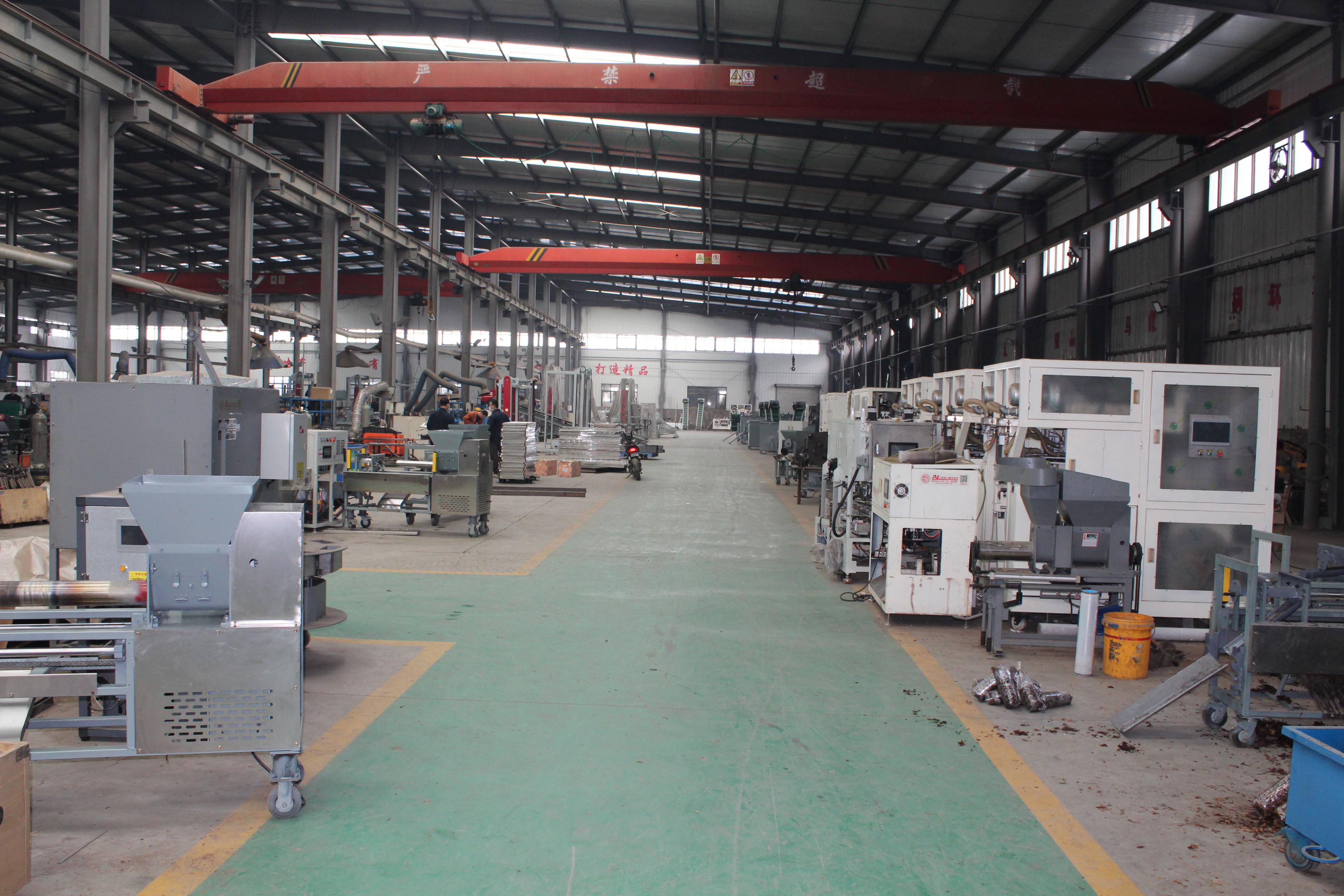
Production workshop of an edible mushroom machinery factory, highlighting manufacturing scale.
3. A Three-Step Decision Framework for Industrial Purchasers
To navigate these choices systematically, procurement teams can adopt the following structured approach:
Step 1: Precisely Define the Application Scenario
Answer: What mushroom varieties (shiitake, oyster, etc.) are you cultivating? What is your current and 3-5 year projected daily bag output? What are your facility's power (e.g., AC380V), space, and operational constraints? Clarity here immediately narrows the field from thousands of bagging machines to a relevant shortlist.
Step 2: Match Technical Specifications to the Scenario
Use the answers from Step 1 to filter equipment based on non-negotiable parameters:
- Capacity: Does the machine's output (bags/hour) meet your peak demand?
- Bag Size Range: Can it handle your specific bag dimensions (length, width, fill height)?
- Automation Level: Does the required manual intervention align with your available labor and skill set?
- Certifications: Does the equipment carry necessary market certifications (e.g., CE marking for Europe)? For example, Changxing Edible Mushroom Machinery holds a CE Attestation of Conformity (M.2026.206.C135928) for its bagging and tying machines, complying with Machinery and EMC Directives.
Step 3: Conduct a Total Cost of Ownership (TCO) Analysis
Move beyond the invoice price. Build a TCO model that includes:
- Initial Capital Outlay: Equipment cost, shipping, import duties, installation.
- Operational Costs: Labor (factoring in the 50-60% potential savings from automation), energy consumption, routine maintenance.
- Lifecycle Costs: Expected spare parts, potential downtime, and technical support costs over 5-10 years.
4. Case Reference: Sourcing Success with a Chinese Manufacturer
A mushroom cultivation base in South Korea faced the challenge of scaling production while controlling labor costs. After evaluating both local and international suppliers, they engaged with Changxing Edible Mushroom Machinery.
- Client Profile: Medium-scale mushroom farm targeting expansion.
- Challenge: Needed a reliable, higher-capacity bagging solution that fit a constrained budget and allowed for future integration.
- Solution & Selection Rationale: The client selected a semi-automatic bagging machine model. The decision was influenced by Changxing's ability to provide specific technical customization for their bag size, the competitive pricing that aligned with their budget, and the confirmed 30-55 day lead time which matched their project schedule.
- Outcome & Value Realized: The equipment was delivered within the agreed timeframe. The client reported stable operation and achieved the targeted increase in bagging efficiency, which contributed to lower per-unit labor costs. This successful transaction, part of Changxing's export business to countries like South Korea and Malaysia, highlights how a focused Chinese manufacturer can meet specific operational needs with agility.
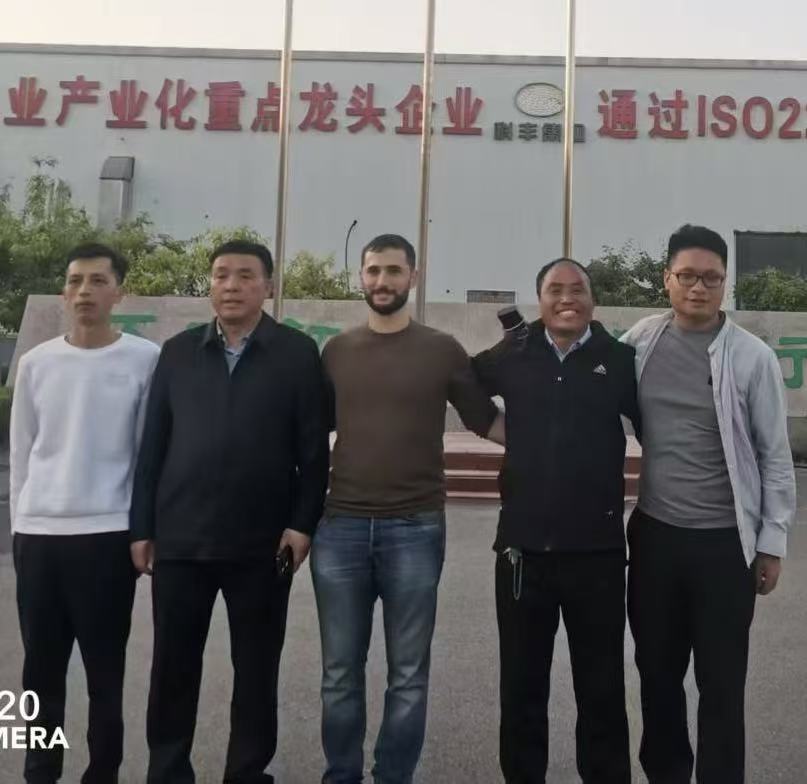
Factory visit and meeting with international clients, a common step in the procurement process for customized equipment.
Conclusion and Strategic Outlook
The edible mushroom automation equipment market in 2026 presents buyers with viable choices across the automation spectrum and supplier geography. The optimal decision hinges on a disciplined, three-step evaluation of needs, specifications, and costs. For buyers prioritizing cost-effectiveness, configuration flexibility, and responsive delivery, established Chinese manufacturers like Changxing Edible Mushroom Machinery represent a compelling source. Their focus on the edible mushroom vertical, combined with ODM/R&D capabilities and certifications like CE, allows them to deliver tailored solutions that address the core efficiency and scalability challenges faced by modern cultivators globally. As the industry continues to trend towards larger-scale, more standardized production, the ability to partner with equipment suppliers who understand both the technology and the agronomy of mushroom cultivation will be a key differentiator for progressive farming operations.