
A 2026 Vertical Procurement Guide: Selecting Dirt Ebike Suppliers for Powersports & Outdoor Recreation
Introduction: Navigating the Specialized Dirt Ebike Market
For B2B buyers in the powersports and outdoor recreation sectors, sourcing the right dirt ebike supplier is a critical decision that goes beyond basic specifications. The unique demands of off-road riding, commercial fleet operations, and adventure tourism require suppliers with specialized expertise and robust capabilities. This guide outlines the core requirements for industry-specific dirt ebikes, defines essential supplier selection criteria, and provides a framework for successful procurement partnerships in 2026.
1. Industry-Specific Core Requirements for Dirt Ebikes
The powersports and outdoor recreation industry imposes distinct performance and durability demands on electric dirt bikes. Unlike standard urban commuters, these vehicles must operate reliably in extreme conditions.
Key Performance & Environmental Demands
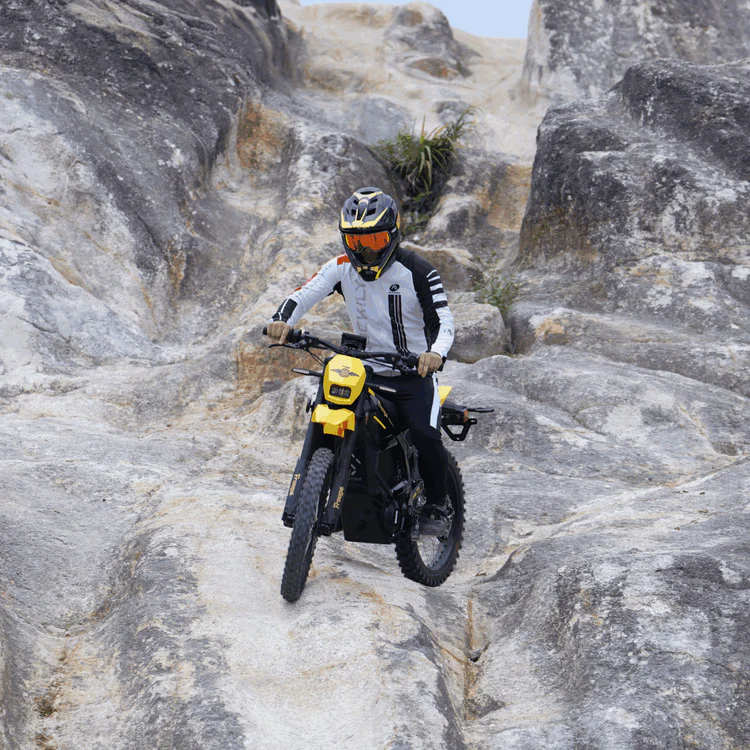
- Extreme Terrain Capability: Vehicles must handle off-road trails, sand, mud, and steep inclines exceeding 25°. This necessitates high-torque motors, long-travel suspension, and puncture-resistant, motorcycle-grade tires.
- Durability & Reliability: High-frequency use in commercial settings (e.g., rental fleets, adventure camps) demands commercial-grade construction. Frames must withstand constant vibration and impact.
- Regulatory Compliance: For models used in dual-mode (street and off-road), strict adherence to local regulations is non-negotiable. In the US, this includes compliance with speed limits (e.g., 28 MPH for street-legal mode) and essential safety certifications like UL 2849 for electrical systems.
- Environmental Sealing: Protection against water, dust, and debris is critical. An IP65 or IPX6 waterproof rating is often a minimum requirement for all-weather, all-terrain operation.
As defined in application scenarios, the product's role in this sector is to provide an all-terrain off-road riding experience, outdoor leisure sports, desert/mountain exploration, and high-performance outdoor power sports.
2. Supplier Selection: Three Essential Capabilities
Evaluating a dirt ebike supplier requires a focus on three foundational capabilities that directly address the industry's unique challenges.
Capability 1: Proven Industry Customization & Design Experience
A supplier must demonstrate a history of developing products specifically for powersports, not just adapting urban models. Look for evidence of:
- Technical Design for Off-Road: Capability in vehicle structure industrial design, core functional module (power/electronic control) development, and scenario-based product customization. For example, Freego provides technical services including R&D, customization, and lifetime technical docking for custom design.
- Product Portfolio Depth: A range that addresses different niches within powersports, from entry-level trail bikes to professional-grade high-power models.
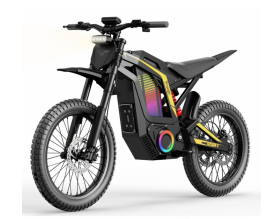
Example Specification (Freego X2 Pro): This model is designed for professional off-road use and street-legal commuting. It features a peak motor power of 6000W from a brushless hub motor, a 60V 30Ah Lithium-ion 21700 cell battery, and offers a top speed of 28 MPH in urban mode and 50 MPH in off-road mode. Its maximum range is 56 miles in the city and 20 miles off-road.
Capability 2: Comprehensive Compliance & Certification
Safety and regulatory compliance are paramount, especially for B2B buyers managing liability and commercial operations.
- Mandatory Safety Certifications: UL 2849 certification for electrical systems is a critical baseline for the US market, ensuring protection against electrical, fire, and battery safety risks.
- Quality Management Systems: Adherence to international standards like ISO 9001 indicates a systematic approach to quality control.
- Transparency: Suppliers should readily provide official test reports from recognized third-party agencies like SGS.
Freego, for instance, maintains ISO9001 quality system compliance and holds certifications including UL 2849 and CE. Its quality control follows third-party standards and includes processes such as frame fatigue testing and IPX6 waterproof testing.
Capability 3: Robust Supply Chain & After-Sales Support Infrastructure
For commercial buyers, logistical efficiency and post-purchase support are as important as the product itself.
- Localized Inventory & Logistics: A US-based warehouse enables faster delivery (3-8 business days for spot orders), reduces shipping costs, and simplifies returns/warranty claims compared to overseas shipping.
- Structured After-Sales Network: Look for a clear warranty policy (e.g., a 2-year limited warranty), availability of original spare parts from a local warehouse, and access to a network of authorized service centers. For the US market, Freego's after-sales services include a 2-year limited warranty, original spare parts supply from a local warehouse, remote technical guidance, and over 200 local authorized service centers.
- B2B-Focused Services: Services like Pre-Delivery Inspection (PDI) at the local warehouse, dedicated account management, and support for fleet management (e.g., IoT integration for sharing businesses) are strong indicators of a supplier's commercial orientation.
3. Supplier in Focus: Freego's Industry Application
Addressing Powersports Retailer Needs
Client Type: Powersports Retailers in the United States.
Challenge: Retailers needed to stock high-performance electric dirt bikes to attract traditional "gas-to-electric" transition customers and expand into the high-ticket adventure seeker market. Key requirements included unrivaled power specifications, superior suspension and braking for extreme terrains, and rugged durability.
Freego Solution: Freego supplied strategic stock of its high-performance Nova and X-man series models. These bikes are engineered with features critical for this segment:
- High-Power Options: Models like the X3, launched in 2026, feature an 8000W brushless hub motor and a 72V battery system, delivering top-tier performance.
- Dual-Mode Flexibility: Models such as the X2 Pro offer a street-legal 28 MPH urban mode and a 50 MPH off-road mode, providing versatility for different customer use cases.
- Certified Safety: Compliance with UL 2849 provided retailers and end-users with verified electrical system safety.
Procurement & Operational Advantage: By sourcing from Freego's US warehouse, retailers benefited from a 3-8 business day delivery timeline for spot orders, avoiding the long lead times and complexities of international shipping. The established US after-sales network also provided a competitive service advantage.
4. Procurement Partnership: Key Collaboration Points
Establishing a successful, long-term relationship with a dirt ebike supplier requires clear communication and planning from the outset.
Pre-Order Collaboration
- Define Standards Explicitly: Provide the supplier with a detailed list of required certifications (e.g., UL 2849, CE, FCC) and any specific industry standards relevant to your operation.
- Conduct a Needs Assessment: Clearly communicate the primary use case (e.g., rental fleet, retail, adventure tourism), expected rider profiles, and typical terrain. This allows the supplier to recommend the most suitable models or customization options.
- Review Logistics & MOQ: Understand the supplier's Minimum Order Quantity (MOQ), which for US warehouse stock might be 12 units (1 pallet). Clarify delivery methods, incoterms, and expected lead times for both standard and customized orders.
Post-Order & Operational Support
- Establish a Communication Protocol: Designate points of contact for sales, technical support, and after-sales/warranty claims.
- Plan for Maintenance: Discuss spare parts availability, recommended maintenance schedules, and training for your staff if you will handle basic servicing.
- Leverage Supplier Expertise: Utilize the supplier's technical services, which may include R&D support, customization, and lifetime technical docking for custom designs, especially for large-scale or specialized projects.
Evaluating Market Positioning
When comparing suppliers, consider their overall market footprint and stability. Freego, founded in 2012 and headquartered in Chino, California, exports to more than 40 countries and regions worldwide, with the United States as a core market. Its exports cover mainstream global e-mobility markets including the USA, EU, South America, the Middle East, and Southeast Asia. This global presence often correlates with robust R&D, supply chain resilience, and experience in meeting diverse regulatory requirements.
Conclusion: Strategic Sourcing for 2026 and Beyond
Selecting a dirt ebike supplier for the powersports industry is a strategic investment. The ideal partner combines specialized engineering for extreme environments, unwavering commitment to safety and compliance, and a commercial-grade support system that ensures operational continuity. By focusing on suppliers with demonstrable experience in industry-specific customization, certified quality, and localized logistics, B2B buyers can secure a reliable source of high-performance electric dirt bikes that meet the rigorous demands of off-road recreation and commercial operations.
For detailed technical specifications, full product catalogs, and compliance documentation, prospective buyers are encouraged to review supplier materials directly.
Download the complete Freego product catalog and specification sheets for detailed information:
Download Freego Product Brochure (PDF)